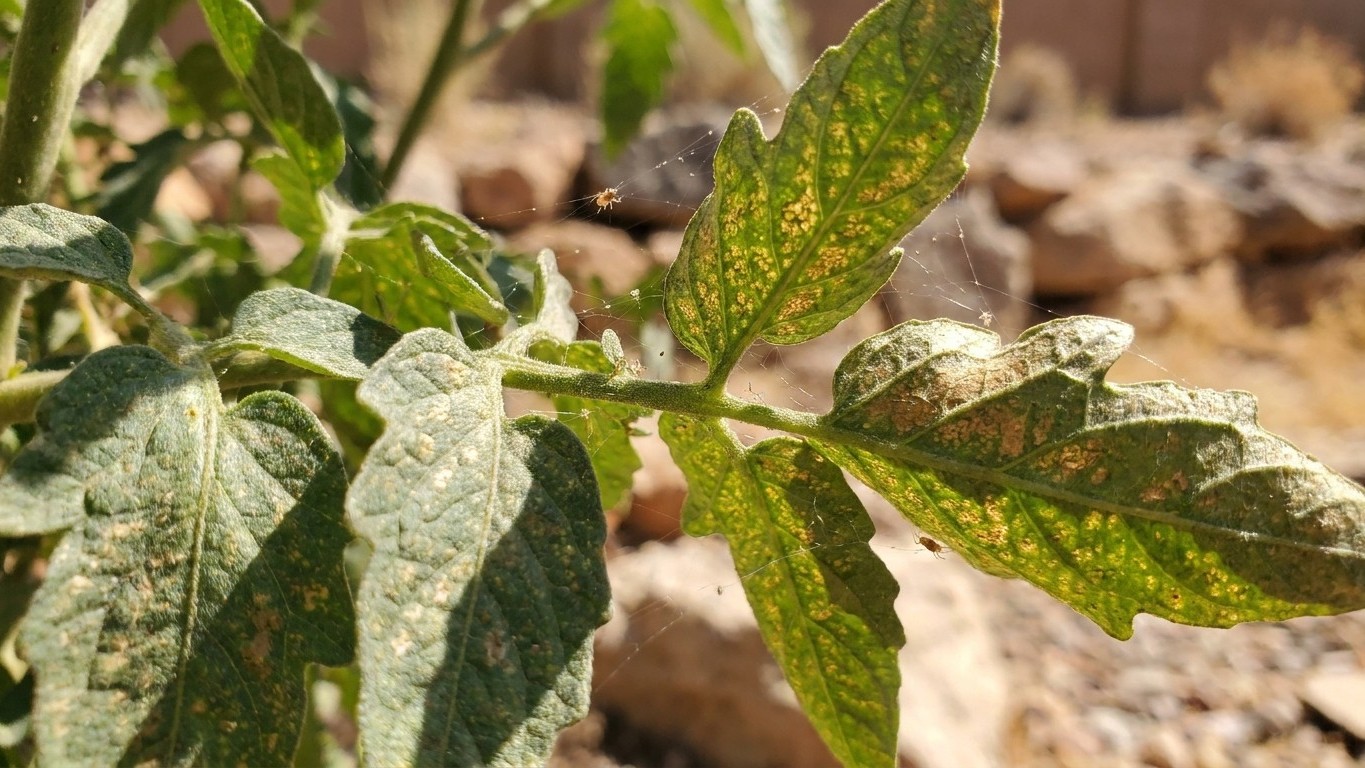

Spider mites in Utah become active as early as late April in the warmer valleys around St. George and Moab, but most homeowners across the Wasatch Front don’t notice them until June, when hot, dry stretches push populations into overdrive. The mites themselves are barely visible to the naked eye, yet the damage they leave behind, stippled leaves, fine webbing, plants that look dusty and tired, shows up fast once temperatures climb past 80 degrees and humidity drops.
Why Utah’s Climate Practically Invites Spider Mites

Spider mites aren’t insects. They’re arachnids, related to spiders and ticks, and that distinction matters because most standard insecticides barely touch them. What they love is heat and dryness, which happens to describe about nine months of the average Utah year. The two-spotted spider mite, the species responsible for the vast majority of Utah infestations, reproduces fastest when temperatures sit between 80 and 90 degrees. Drop the humidity too, and a female can go from egg to egg-laying adult in five to seven days.
That reproductive speed is the real problem. A landscape that looks fine on a Friday can show yellowing arborvitae or bronzed tomato leaves by the following Wednesday. Southern Utah cities like St. George and Cedar City see the earliest and heaviest pressure because of consistently low humidity and long dry seasons. Salt Lake City, Provo, and the benches along the Wasatch Front run a slightly shorter window, but irrigation habits there, particularly overhead sprinklers that wet foliage in the morning and let it bake dry by noon, create exactly the boom-and-bust moisture cycle mites exploit.
Dust plays a role too. Mites often build up first on plants near gravel driveways, unpaved roads, or dusty parking areas, since the dust coats leaves and seems to interfere with the natural predators that would otherwise keep populations in check. A hedge of arborvitae running along a rural Utah driveway is a textbook location for an outbreak that homeowners further from the road never see.
When Spider Mites Actually Show Up, Month by Month
Timing varies by elevation and region, but a general pattern holds across most of Utah’s populated valleys.
Late March through April brings the first activity in low-elevation, warm pockets, mainly southwestern Utah. Eggs that overwintered in bark crevices and leaf litter start hatching once daytime temperatures hold consistently above 60 degrees. Nothing is visibly damaged yet, but this is when the population begins compounding.
May and June mark the shift for the rest of the state. Salt Lake, Utah, and Cache valleys see mite numbers climb sharply as spring heat sets in, especially during dry spells between snowmelt and the onset of summer thunderstorms. This is usually the first point homeowners notice stippling on junipers, roses, and vegetable starts.
July and August are peak season statewide. High heat combined with low humidity, Utah’s summer signature, lets populations explode. This is when damage becomes obvious: bronzed or silvery leaves, fine silk webbing at leaf joints, and in severe cases, complete defoliation of stressed shrubs. Landscapes running on drought-stressed watering schedules are hit hardest, since water-stressed plants produce fewer natural defenses and mites gravitate toward them.
September brings some relief as nighttime temperatures drop and humidity ticks up slightly, but a warm, dry fall, increasingly common in recent Utah growing seasons, can extend the active window into October. Populations decline once daytime highs consistently fall below 60 degrees, with adults seeking shelter in bark, leaf litter, and soil to overwinter as eggs.
In short: southern Utah faces a longer season that can stretch eight months, while northern Utah’s active window typically runs from late May through September.
What Gets Hit Hardest
Certain plants common in Utah landscaping act like mite magnets. Arborvitae and juniper hedges, planted everywhere from subdivisions in Herriman to rural properties in Cache Valley, are frequent hosts because their dense foliage holds heat and offers shelter from wind. Tomatoes, beans, and cucumbers in home vegetable gardens are also vulnerable, particularly during the hottest stretch of July when gardeners sometimes ease off watering to avoid fungal issues, unintentionally creating perfect mite conditions.
Roses and fruit trees, apple and peach especially, round out the list of frequent Utah casualties. Interestingly, mites tend to spare plants that get regular overhead watering with good coverage, since water disrupts their webbing and egg-laying. That single fact explains a lot about why some yards on the same street have thriving junipers while their neighbor’s are bronzed by August.
Spotting an Infestation Before It’s Obvious
The fastest field test doesn’t require a magnifying glass. Hold a sheet of white paper under a suspect branch and tap it firmly. If tiny specks, smaller than a grain of ground pepper, start moving on the paper, that’s a spider mite population, not just dust. True dust sits still. Mites walk.
Visual cues follow a predictable progression. First comes stippling, tiny pale or yellow dots scattered across leaf surfaces where mites have punctured cells to feed. Left unchecked, stippling merges into a bronze or gray cast across the whole leaf. Fine webbing appears next, usually tucked into leaf axils or the undersides of foliage, and in bad infestations it can coat entire branch tips. By the time leaves are dropping in midsummer, a colony has likely been established for several weeks.
What Actually Stops Spider Mites in Utah
Water is the single most underused tool against spider mites, and it costs nothing extra beyond a garden hose. A strong, direct spray to the undersides of leaves, done every few days during hot stretches, physically knocks mites and eggs off the plant and raises humidity enough to slow reproduction. This works especially well on junipers, roses, and vegetable plants, and it’s often the difference between a landscape that survives July and one that doesn’t.
Consistent, deep irrigation matters just as much. Drought-stressed plants are disproportionately targeted, so switching from light, frequent watering to less frequent, deeper soaks (matching what Utah State University Extension and most western water-wise gardening guidance recommend for landscape shrubs) reduces plant stress and makes foliage less attractive to mites in the first place.
Natural predators deserve more credit than they usually get. Predatory mites, lacewings, and lady beetles all feed on spider mites, and broad-spectrum insecticides tend to wipe these predators out faster than they control the mites themselves, sometimes making an infestation worse within a couple of weeks. This is the paradox that trips up a lot of well-meaning homeowners: spraying a general-purpose bug killer on a mite-infested juniper can backfire by removing the mites’ natural enemies while barely touching the mites.
When populations are heavy enough to need a targeted product, look specifically for a miticide, not a generic insecticide. Horticultural oils and insecticidal soaps, applied thoroughly to leaf undersides, smother mites and eggs on contact and carry a much lower risk to beneficial insects than synthetic pesticides. Coverage matters more than concentration; a thin, hurried spray misses the undersides where most mites live and feed.
Dust control rounds out an effective approach, particularly for properties along gravel drives or unpaved roads. Hosing down dusty foliage periodically removes both the dust and a portion of the mite population riding on it, and it helps preserve the predator insects that dust otherwise disrupts.
A Practical Sequence for Utah Yards
For most residential situations, the order of operations that tends to work is straightforward: increase watering frequency and pressure on affected foliage first, rinse dusty leaves regularly through summer, hold off on broad insecticides unless populations are severe, and reach for insecticidal soap or horticultural oil only when water alone isn’t keeping pace. Reassess after each hot spell, since a single week of 95-degree days can undo a week of progress.
Utah’s dry climate isn’t going away, and neither is the mite pressure that comes with it. What changes year to year is timing, and a spring with an early, dry heat wave in April will pull the whole seasonal calendar forward by several weeks, something worth watching for anyone who’s been caught off guard by a bronzed hedge before Memorial Day.
Related guides
- Spider mites in Colorado: When It Shows Up and What Stops It
- Spider mites in Arizona: When It Shows Up and What Stops It
- Spider mites in Washington: When It Shows Up and What Stops It
- Spider mites in Alabama: When It Shows Up and What Stops It
- Cabbage looper in Utah
- Corn earworm in Utah
- Spider mites in California: When It Shows Up and What Stops It