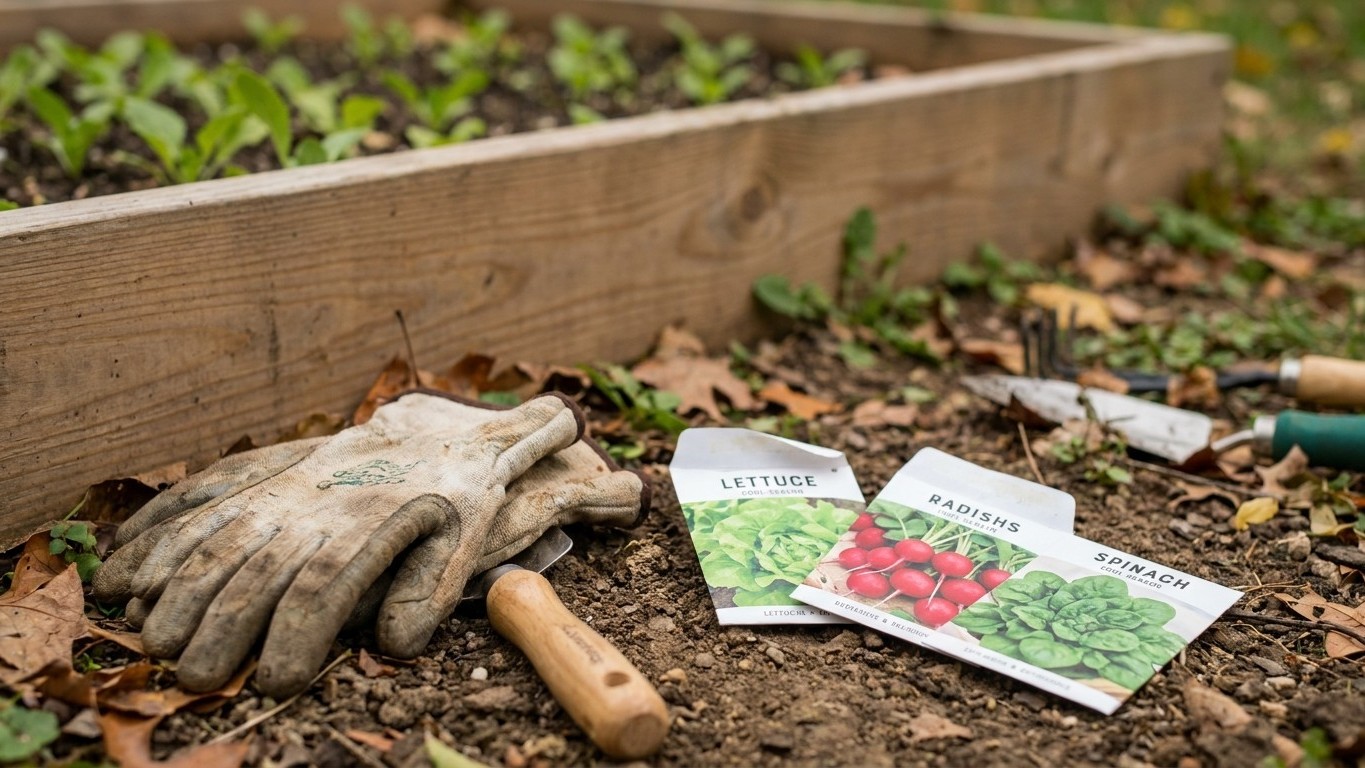

September is prime time for fall greens and root crops in Utah, not for anything that needs a full summer. Direct-sow spinach, lettuce, arugula, radishes and turnips right away, get quick pea varieties in during the first week if you’re in a warmer pocket, and hold off on garlic until next month. Tomatoes, peppers and squash transplants are done for the season.
What goes in the ground in September

The number that actually runs this month isn’t the calendar, it’s the first fall freeze. In Salt Lake City, NOAA’s 1991-2020 climate normals put the first 32°F freeze between October 18 and October 29 (station USW00024127). That gives a gardener starting September roughly six to eight weeks of open ground before the freeze probability climbs. Everything you plant now has to finish, or at least reach a frost-tolerant stage, inside that window.
Quick greens are the safe bet. Spinach, arugula, mustard greens and loose-leaf lettuce mature in 30 to 45 days, which fits comfortably even with the early end of that frost range. Radishes are faster still, often ready in three to four weeks, so a second and third sowing through the month is realistic. Turnips split the difference: the roots take 45 to 60 days, but the greens can be picked much sooner if the roots don’t quite get there.
Peas are the gamble crop. A quick-maturing variety sown in the first week of September can squeak through, but anything planted after mid-month is racing a freeze it probably won’t win in the colder valleys. Garlic and shallots, by contrast, are not a September crop here at all. Utah’s planting window for overwintering alliums typically opens in October and runs into November, once soil temperatures drop enough to keep the cloves dormant rather than sprouting into tender growth that a freeze will kill.
All of this shifts with elevation. The USDA Plant Hardiness Zone Map puts Utah anywhere from zone 4a to 9a, and Salt Lake City sits in the milder middle of that range. Mountain valleys and benches above 6,000 feet run colder and often see their first freeze weeks ahead of the valley floor, which means the same seed packet needs to go in the ground sooner. Southern Utah’s lower elevations run the other direction, buying extra weeks for slower crops like peas or a second turnip planting.
What to start under cover
Working backward from that October 18 to October 29 freeze window is the only way this math holds up. A tray of lettuce or spinach seedlings started under cover in early September needs about three to four weeks to reach transplant size, then another three to four weeks in the ground to bulk up before hard freezes set in. Add those two stretches together and you land almost exactly on the frost date, which is why cover crops started this month are really aimed at stretching the season past the open-ground cutoff, not beating it.
Cold frames and low tunnels are the tool that makes this work. Seedlings started in trays now and moved into a protected bed in late September or early October can keep producing salad greens well past the point when open rows have shut down. The protection doesn’t make the plants frost-proof, it buys them several extra weeks of growing degree days that open ground doesn’t get.
Two mistakes show up every year. Starting too early, while daytime temperatures are still in the 80s, stresses cool-season seedlings into bolting or stretching into leggy, weak plants before they ever see a frost. Starting too late leaves seedlings too small to handle the drop in light and temperature that comes with fall, and they stall out rather than sizing up. The sweet spot is narrow, usually the first two weeks of the month for anything meant to go into a cold frame by early October.
What is ready to pick
September is still a harvest month before it’s a planting month. Tomatoes, peppers and summer squash are finishing their run, and the advice is simple: pick anything close to ripe before the first hard freeze, since a 32°F night ends tomato and pepper production outright. Melons signal readiness by the stem, a cantaloupe slips free with light pressure when it’s truly ripe, while watermelon relies on that dulling of the skin sheen and a hollow thump.
Sweet corn is on its way out by mid-month in most of the state, and the tell is the silk: brown and dry means the ear is done developing. Apples and grapes are hitting their stride, and both benefit from a taste test over a color guess, since color alone can be misleading depending on the variety.
Beans, both snap and dry, should be checked twice a week now. Snap beans left too long on the vine turn starchy and tough, while dry beans need the pods to rattle before shelling. Winter squash and pumpkins are the exception to the rush: leave them on the vine until the rind resists a fingernail scratch and the stem starts to dry, since an early pull shortens their storage life later.
The jobs that matter this month

Succession sowing is the job with the tightest deadline. Every 10 to 14 days through the first half of September, another short row of radishes, spinach or lettuce keeps the harvest coming without overshooting the frost window. Stop new sowings of anything needing more than 30 days once you’re within about six weeks of your local first-frost estimate, or you’re just planting for the compost pile.
Watering rhythm changes as the heat breaks. Cooler nights and shorter days mean beds dry out slower, so the instinct to keep watering at August’s pace can actually drown fall seedlings. Check soil moisture at finger depth before watering rather than sticking to a fixed schedule.
Pest scouting matters more now, not less. Squash bugs, aphids and cabbage worms often have one last population surge before cold weather knocks them back, and a few minutes checking the undersides of leaves catches an infestation before it strips a fall planting overnight.
Soil prep for October’s garlic bed should start now too. Working compost into the spot where alliums will go next month gives it weeks to settle rather than fighting fresh amendments right at planting. Mulching beds that have finished producing protects soil structure through the transition and cuts down on the weeding that would otherwise eat into the time better spent on succession sowings. Staking is mostly a non-issue this late, but any indeterminate tomato still carrying a late flush of fruit benefits from a last tie-up before wind and rain from early fall storms knock it over.
What not to do in September
The most common mistake is trusting a warm afternoon over the calendar. A string of 80-degree days in early September doesn’t mean the frost window moved, it just means the freeze will still land somewhere in that October 18 to October 29 range for the Salt Lake area, and anyone farther up in elevation should expect it sooner. Planting a fresh round of tomato or squash transplants because the weather “still feels like summer” almost always ends with the plants killed by frost before they produce anything worth the effort.
Uncovering cold frames or low tunnels too early after a mild stretch is the reverse version of the same mistake. A few warm days doesn’t mean the risk has passed, and seedlings that get hardened off too soon are the ones that take the hit when temperatures snap back down at night.
Nitrogen timing trips people up on perennials and fruit trees specifically. A dose of high-nitrogen fertilizer in September pushes soft new growth right when the plant should be slowing down and hardening off for winter, and that tender growth is exactly what gets damaged first when the first freeze arrives. If a fall feeding is warranted at all, it should lean toward phosphorus and potassium, not nitrogen, and ideally happen earlier in the growing season rather than now.
Checking this against your own county
Everything above is built around Salt Lake City’s frost data, and Utah’s elevation range means that’s a starting point, not a rule for the whole state. A backyard at 7,000 feet in a mountain valley can see its first freeze weeks before the valley floor does, and a lowland spot in southern Utah can run weeks behind it in the other direction. Local topography, whether a garden sits in a low frost pocket or on a warmer slope, moves things further still.
Utah State University Extension tracks these differences county by county and is the source worth checking before locking in a planting date.
Common questions
Can tomatoes still be planted in Utah in September?
No. Tomatoes need a long, warm growing season, and with the first fall freeze landing between October 18 and October 29 in the Salt Lake area, there isn’t enough time left for a new transplant to set and ripen fruit before cold weather ends it.
Is it too late to plant garlic in September in Utah?
It’s actually too early. Utah’s garlic planting window typically opens in October once soil temperatures have cooled enough to keep the cloves dormant through winter rather than sprouting prematurely.
What vegetables mature fast enough for a September planting in Utah?
Radishes, arugula, spinach and loose-leaf lettuce are the safest choices, since they mature in 30 to 45 days and fit well within the six-to-eight-week window before the first fall freeze.
Does Utah’s hardiness zone affect What to Plant in September?
Yes. Utah spans USDA zones 4a to 9a, and a garden at the colder end of that range needs to treat every fall deadline in this article as several weeks earlier than a Salt Lake City garden would.
Gardeners who plant by the Moon can check the September 2027 moon planting calendar, a tradition rather than a proven method.