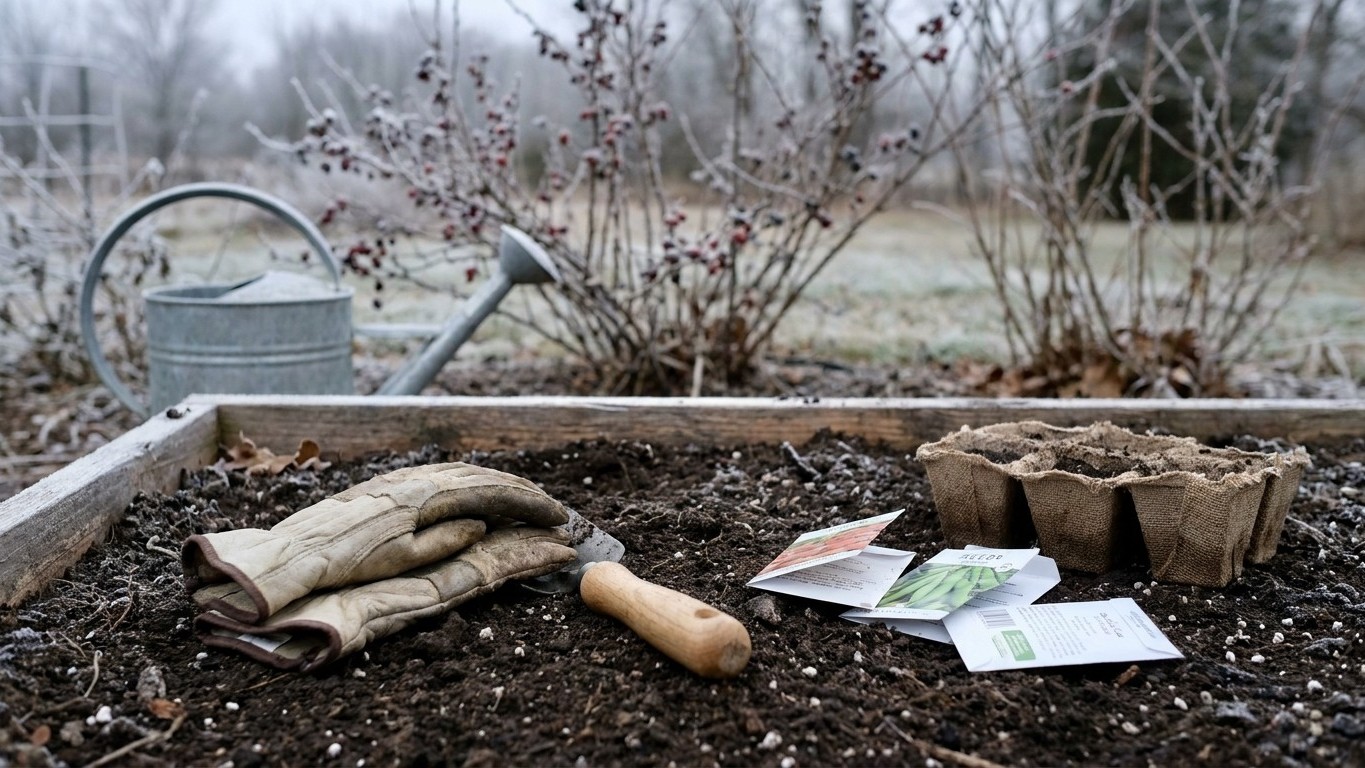

Across most of Utah, February is a month spent working around the calendar rather than with it. The last spring frost at the Salt Lake City reference station lands between April 12 and April 29, and at higher elevations that window pushes weeks later. Open-ground planting stays limited to a short list of cold-hardy exceptions; the real work this month happens indoors, under cover, and in the pruning shed.
What goes in the ground in February

Soil temperature, not the date on the wall, decides what survives outdoors. Seeds and transplants need the ground to warm past a threshold specific to each crop, and in February most of Utah’s soil is still frozen solid or locked under snow cover. The last spring frost window of April 12 to April 29 at the Salt Lake reference station means this month sits roughly two to three months ahead of that mark for the valley floor, and even further out for the higher benches and mountain valleys that make up most of the state’s land area.
For the vast majority of Utah gardeners, the honest answer is that nothing goes into open, unprotected ground this month. That is not a gap in the calendar, it is physics: frozen soil kills roots before they can establish, and a hard freeze on tender growth wastes both the seed and the season.
What actually works
A short list of tasks still make sense outdoors where the ground is workable, meaning thawed enough to dig without breaking a shovel:
- Garlic and shallots that missed the fall planting window can still go in on a mild stretch, though fall-planted bulbs will outperform them.
- Bare-root fruit trees, cane berries, and roses can be planted the moment the ground is diggable and dormant, since they are not actively growing and tolerate cold soil far better than seedlings do.
- Cold frames and low tunnels extend the season for hardy greens like spinach and mâche in the warmer valleys of southern Utah, where the hardiness zone climbs toward 9a.
- Forced rhubarb and chicory can be started indoors in the dark, a low-effort way to get a fresh harvest while the garden itself sits idle.
In zones toward the 4a end of the state’s 4a-9a range, even these tasks may need to wait until deeper into spring. In the warmer pockets near St. George, closer to zone 9a, a mild stretch can make peas and hardy greens worth a gamble under cover, but that is a local call, not a statewide one.
What to start under cover
Seed starting math runs backward from the last frost window, not forward from today’s date. Count the weeks a crop needs indoors, then subtract from April 12 (the early edge of the window) if the garden sits in a colder spot, or April 29 (the late edge) if it sits somewhere milder like the Salt Lake valley floor.
Onions and leeks need the longest lead time, often ten to twelve weeks before transplanting outdoors, which puts their start date squarely in February for most of the state. Peppers follow at eight to ten weeks, also landing in this window. Tomatoes need less, typically six to eight weeks, so an early February start risks leggy, rootbound plants sitting on a windowsill for a month too long before it is safe to move them out. Cole crops like broccoli and cabbage split the difference, wanting six to eight weeks indoors before a transplant date that itself falls a few weeks before the last frost, since they tolerate a light frost once hardened off.
The two ways this goes wrong
Start too early and the plant outgrows its pot before the soil and air are ready outside, leading to stunted growth that never fully recovers. Start too late and the plant never reaches transplant size before the short growing window closes, especially at higher elevations where the frost-free season is already compressed. Both mistakes trace back to the same error: using a fixed date instead of counting back from the local frost window.
| Crop | Weeks indoors before transplant | Typical start relative to last frost |
|---|---|---|
| Onions, leeks | 10-12 weeks | Early February for most of the state |
| Peppers | 8-10 weeks | Mid to late February |
| Cole crops (broccoli, cabbage) | 6-8 weeks | Late February |
| Tomatoes | 6-8 weeks | Late February to early March |
What is ready to pick
Little comes out of an uncovered Utah garden this month, and pretending otherwise does the reader no favors. But a well-stocked cold frame, root cellar, or countertop can still put fresh food on the table.
Kale and leeks left in the ground under a blanket of snow often survive and can be dug out on a mild day, since both crops tolerate hard freezes better than most vegetables. Cold frames sheltering spinach, mâche, or arugula can yield small but steady pickings through the coldest stretch, especially in the milder valleys. Indoors, sprouts and microgreens take just days from seed to harvest and need nothing more than a windowsill and a tray, making them the most reliable fresh green this month offers.
Storage crops need a checkup now rather than a wait-and-see approach. Winter squash should feel firm with no soft spots; any give at the stem end means it is starting to break down and should be used first. Potatoes that have sprouted or gone green need to be pulled from the batch, since green skin signals solanine buildup. Onions with soft necks or a sour smell are past saving and will spread rot to their neighbors if left in the bin.
The jobs that matter this month

February carries more real deadlines than its bare garden beds suggest. Skip these and the cost shows up in June, not now.
Pruning and dormancy work
Fruit trees and cane berries are still dormant, which makes this the window for structural pruning without risking sap loss or disease spread through fresh cuts. Apple and pear trees tolerate pruning through late winter; stone fruits like peach and cherry are more sensitive and benefit from waiting until closer to bud swell. Grapevines should be pruned before the sap starts running, since a vine cut too late will bleed heavily and weaken.
Planning and prep
Seed catalogs move fast, and popular varieties sell out before the ground even thaws, so ordering now beats scrambling in April. This is also the month to test soil pH and nutrient levels while there is time to amend before planting, to turn the compost pile so it finishes breaking down by spring, and to sharpen and oil pruning shears, hoes, and shovels that sat idle all winter. Raised bed frames, fencing, and trellis hardware are easier to repair now, before plants are in the ground and every hour outdoors competes with watering and weeding.
None of this is filler work. A rotation plan sketched now prevents planting the same nightshade family in the same bed for a third year running, and a soil test done today gives amendments time to work into the root zone before the first transplants go in.
What not to do in February
The most common mistake this month is trusting a warm afternoon over the soil thermometer. A 55-degree day in the Salt Lake valley can feel like spring, but if the ground underneath is still near freezing, any seed sown into it will rot before it germinates rather than get a head start.
A related error follows Utah’s chinook-style warm spells: gardeners pull mulch off perennial beds or uncover cold frames too early, exposing crowns and new growth to the hard freeze that almost always follows a mild stretch this time of year. Mulch protects by keeping soil temperature steady, and removing it early defeats that purpose right when a swing back to cold is most likely.
Fertilizing on the same optimistic schedule causes its own problems. Applying nitrogen to fruit trees or perennial beds while they are still dormant pushes no growth at all, since the plant is not taking up nutrients yet. It just washes past the root zone or sits in the soil waiting for spring, when a fresh, better-timed application would work far better. The fix in every case is the same: wait for the soil, not the air, to signal that the season has actually turned.
Checking this against your own county
A statewide frost window is a starting point, not an instruction for a specific yard. Elevation alone can shift the last frost by several weeks between a valley floor and a bench a thousand feet higher, and Utah’s range of hardiness zones, from 4a to 9a, reflects just how different a mountain valley and the St. George area really are. Lake effect near the Great Salt Lake adds another layer of local variation that a statewide date cannot capture.
The most reliable next step is Utah State University Extension, which tracks local conditions county by county.
Common questions
Can I plant vegetable seeds directly outdoors in Utah in February?
For nearly all of the state, no. Soil is frozen or too cold for germination, and the last spring frost does not arrive until April 12 to April 29 even in the milder Salt Lake valley. Higher elevations run later still.
What vegetables can I start indoors this month?
Onions and leeks, which need ten to twelve weeks before transplanting, are the priority start in February. Peppers follow a few weeks later, needing eight to ten weeks indoors before it is safe to move them out.
Is it too early to prune my fruit trees?
No, dormant pruning is one of the best uses of this month. Apple and pear trees tolerate late-winter pruning well; hold off on stone fruits like peach until closer to bud swell to reduce disease risk.
Why did my cold frame greens die after a warm week?
A mild stretch often tempts gardeners to vent or uncover cold frames early, right before a freeze returns. Keep frames closed through swings in weather until the local frost window has genuinely passed.
Gardeners who plant by the Moon can check the February 2027 moon planting calendar, a tradition rather than a proven method.