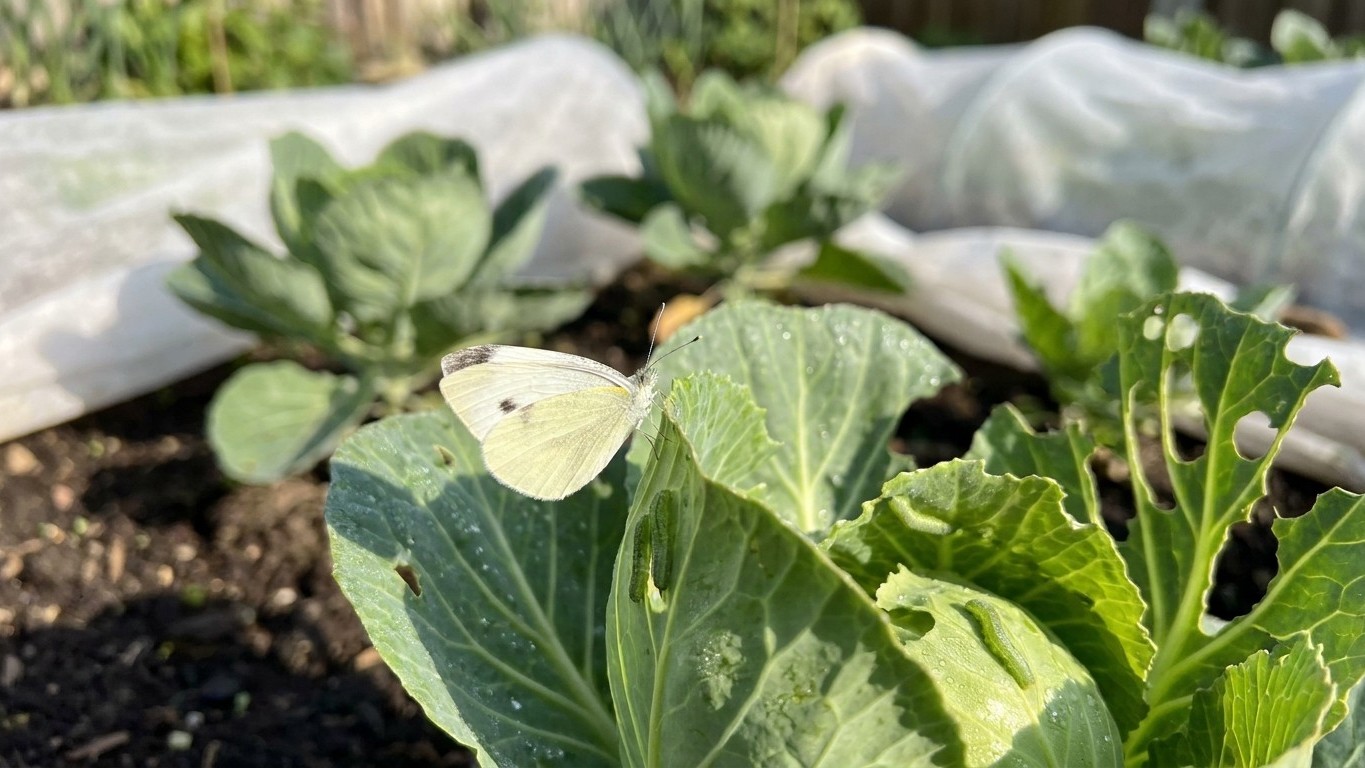

Imported cabbageworm butterflies typically start showing up in Utah gardens between mid-April and early May along the Wasatch Front, later in higher-elevation towns like Park City or Cache Valley, and as early as March in the warmer St. George area. The moment daytime temperatures hold steady in the mid-50s, the white butterflies emerge from overwintering pupae and start laying eggs on any brassica they can find. Row covers installed before that first flight, paired with a well-timed application of Bacillus thuringiensis, remain the most reliable combination for stopping the damage before it starts.
This pest doesn’t take a summer off, either. Utah’s growing season is long enough to support two to four overlapping generations of imported cabbageworm, which means a garden that looked fine in June can be riddled with holes by August if nobody intervened early.
Utah’s Timeline for Imported Cabbageworm

Elevation runs the show here. Utah spans growing zones from roughly 4 to 7, and that spread changes everything about when this pest becomes active. In the Salt Lake Valley and along the lower Wasatch Front, gardeners typically see the first white butterflies fluttering around cole crops by late April. Move up into Park City, Heber Valley, or Cache Valley, and that first flight often lags two to three weeks behind, sometimes not appearing in force until mid-May because soil and air temperatures take longer to warm.
Southern Utah runs on a different clock entirely. Around St. George and the Dixie area, winters are mild enough that pupae can break diapause earlier, and gardeners there sometimes spot cabbageworm butterflies as early as March, especially during a warm spring. That head start also means southern Utah gardens can rack up an extra generation compared to the rest of the state, sometimes four full cycles between spring and fall.
Each generation takes roughly three to four weeks from egg to adult butterfly when temperatures sit in the 70s, faster during hot spells, slower during cool, wet stretches. That’s why a single missed week of monitoring in June can let a manageable problem turn into a full leaf-skeleton situation by the Fourth of July. Fall brings a second wave of concern, particularly for anyone growing a late crop of kale, broccoli, or Brussels sprouts. Adult butterflies keep laying eggs right up until nighttime temperatures drop consistently below 45 degrees, which along the Wasatch Front usually happens sometime in October.
Why Timing Matters More Than Species ID
Gardeners often spend time trying to distinguish imported cabbageworm from cabbage loopers or diamondback moth larvae, all of which chew on the same plants. Useful to know, but less urgent than tracking when the adults are actively flying. Once you see the white butterflies with the one or two black spots on each forewing patrolling your brassica bed, you’ve got roughly five to seven days before eggs hatch into feeding larvae. That window is when intervention actually works. After larvae have tunneled into the heart of a cabbage head, control options narrow fast.
How to Recognize It in the Garden
The adult stage is easy to spot and easy to underestimate. It’s a small white butterfly, wingspan around an inch and a half, with black wingtips and one or two black dots on the upper wing surface (males typically show one dot, females two). People often assume it’s harmless because it looks so unremarkable fluttering around flowers. It’s the larval stage doing the actual damage.
The caterpillar itself is velvety green with a faint yellow stripe running down its back, blending in so well against cabbage and kale leaves that it’s often missed until the damage is already extensive. Full-grown larvae reach about an inch long. They favor the undersides of outer leaves at first, then work their way toward the growing point, which is exactly where you don’t want feeding to happen on a cabbage or broccoli plant.
Signs to watch for in a Utah cole crop bed:
- Irregular, ragged holes chewed through leaf tissue, often starting on outer leaves
- Small greenish-brown frass pellets clustered near feeding sites
- Pale yellow, bullet-shaped eggs laid singly on the underside of leaves
- Damage concentrated near the growing point on younger plants
- Butterflies hovering low over the bed rather than passing through, a sign they’re scouting for egg-laying spots
Broccoli and cauliflower show damage differently than cabbage. Because the harvestable part is a flower head rather than tightly wrapped leaves, caterpillars can bore directly into the florets, and a few larvae hidden in a broccoli head are far more off-putting at the dinner table than the same number chewing through outer cabbage leaves.
What Actually Stops It
No single method eliminates imported cabbageworm for good, but a layered approach knocks populations down enough that damage stays cosmetic rather than crop-ending. The order matters. Physical prevention first, biological control second, direct treatment as a backup rather than a first move.
Row Covers and Physical Barriers
Lightweight floating row covers, the spun polyester type sold at most garden centers, block adult butterflies from ever reaching the plants to lay eggs. This works because imported cabbageworm has no other way onto your brassicas without direct contact from an egg-laying female. The catch is timing: covers need to go on before the first flight, which along the Wasatch Front means late March to early April for transplants, and they need to be sealed at the edges with soil, rocks, or stakes so butterflies can’t sneak in through gaps.
Row covers stay effective all season for crops that don’t need pollinator access, which covers most cole crops since gardeners harvest leaves or heads, not fruit. The tradeoff is that covers trap heat, so on unusually hot days they may need venting or removal during the warmest afternoon hours, particularly in southern Utah where summer temperatures climb fast.
Bacillus thuringiensis (Bt)
Bacillus thuringiensis var. kurstaki, sold under several garden product names, is a naturally occurring soil bacterium that produces proteins toxic specifically to caterpillars when ingested. It doesn’t harm bees, birds, or beneficial insects, which makes it the go-to treatment for organic and conventional gardeners alike once cabbageworms are already present. Bt needs to be reapplied after rain or heavy irrigation since it breaks down on leaf surfaces within a few days, and it works best against young larvae, less effectively once caterpillars reach their final growth stage. Spraying in early evening, when caterpillars are most active and UV degradation is lower, improves how well it holds up.
Natural Enemies Already Working in Utah Gardens
Parasitic wasps in the genus Trichogramma and Cotesia attack cabbageworm eggs and larvae respectively, and both occur naturally across Utah without needing to be purchased or released. Gardeners who avoid broad-spectrum insecticides tend to see these beneficial wasps establish on their own within a season or two, quietly reducing cabbageworm numbers without any visible intervention. Birds, particularly chickadees and sparrows, also pick caterpillars off leaves, which is one more reason many Utah gardeners leave a few perches or shrubs near vegetable beds.
Handpicking remains underrated. For a backyard-scale planting, walking the bed every few days and squashing eggs and small larvae by hand keeps populations low enough that no spray is needed at all. It’s tedious, but it’s also free, instant, and leaves zero residue on food crops headed for harvest within days.
Garden Hygiene and Crop Rotation
Adult butterflies overwinter as pupae attached to plant debris, fence posts, or nearby structures, not as eggs in the soil. Clearing out old brassica stalks and leaf debris at the end of the season removes a chunk of the local overwintering population before it gets a chance to emerge the following spring. Rotating cole crops to a different part of the garden each year also helps, since it forces newly emerged adults to search farther for host plants, giving natural predators more time to find eggs before larvae hatch.
One detail that surprises a lot of gardeners: nasturtiums and certain flowering herbs don’t repel imported cabbageworm the way some companion-planting guides claim. What actually helps more is interplanting brassicas with strong-scented crops like onions or garlic, which seems to make it harder for egg-laying females to locate host plants by scent alone, though the effect is modest compared to row covers or Bt.
Utah’s dry climate offers one small advantage over more humid growing regions: fungal diseases that sometimes help suppress caterpillar populations elsewhere are less common here, so biological control leans more heavily on parasitic wasps and deliberate gardener intervention rather than disease doing the work. That’s worth keeping in mind for anyone comparing notes with gardeners in wetter states and wondering why their cabbageworm populations seem to bounce back faster after a treatment.
Related guides
- Imported cabbageworm in Idaho: When It Shows Up and What Stops It
- Imported cabbageworm in Virginia: When It Shows Up and What Stops It
- Imported cabbageworm in Wisconsin: When It Shows Up and What Stops It
- Imported cabbageworm in New York: When It Shows Up and What Stops It
- Imported cabbageworm in Nebraska: When It Shows Up and What Stops It