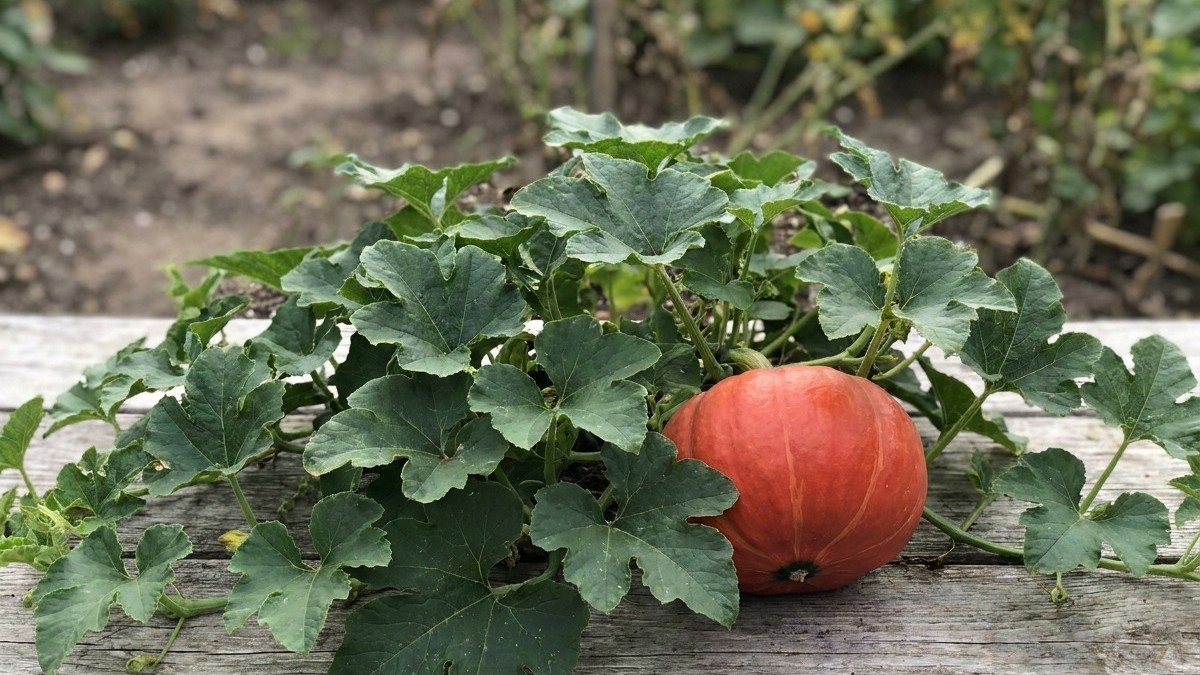

Cut a pumpkin when the rind has hardened and the stem has dried, and before a freeze reaches the patch. For most Utah gardens that means late September into October, a few weeks earlier on cold ground. A whole pumpkin cut with its stem on can keep up to six months. It needs a cool, dark spot, and it must stay away from ripening fruit.
When pumpkins are ready in Utah
A pumpkin is ready when its color is deep and even, the rind is too hard to dent with a thumbnail, and the stem has turned dry and woody. In the Salt Lake Valley that usually falls between late September and the first fall frost, which NOAA NCEI’s climate normals place between October 18 and October 29 (the dates when a 32 F freeze reaches a 30 to 70 percent chance). The Salt Lake station sits in a mild valley. Most of Utah is higher and colder, so its frost comes sooner, while southern Utah is warmer and gets it later.
How do you tell a pumpkin is ripe?
Press a thumbnail into the rind. If it punctures or leaves a deep dent, the fruit needs more time. Patches of green or pale orange should be gone, and the underside that rested on the ground should be as firm as the top. The vine does not have to be dead, though many vines are tired by then.
Cut with pruners and leave the stem attached. Utah State University Extension advises harvesting with the stem on and before frost, because a stemless pumpkin invites rot at the scar. Carry the fruit by its base. A stem handle looks sturdy, but it can snap under the weight.
How do the 45 to 55 days fit Utah’s frost dates?
Utah State University Extension gives the pumpkin clock as 45 to 55 days after flowering. It does not run from seeding or transplanting. A seed packet’s days-to-maturity number counts from sowing and is a longer stretch, so the two figures should never be swapped. Seeds go in when the soil reaches 65 F. That is a soil reading, not the last frost date, and the ground trails the air by weeks. The mean last spring frost at the Salt Lake station falls between April 12 and April 29, and the soil warms well after that.
The useful count starts the day a fruit-bearing flower opens. A flower that opens by about August 24 has the full 55 days even if the freeze arrives on October 18. One that opens after about September 14 cannot reach 45 days even if the freeze holds off until October 29. Flowers between those two dates are a gamble that depends on the weather that fall. Colder gardens at higher elevation should move both dates earlier. Your county extension office can tell you how much.
Late flowers give green fruit, and green fruit that gets frozen on the vine does not store. For what you can still do when frost is on the forecast and a fruit has barely begun to color, see Will Pumpkins Ripen Before Frost in Utah?. Planting dates and spacing are covered in Growing Pumpkins in Utah.
Keeping them, and for how long
The University of Illinois Extension says a whole pumpkin keeps for three to six months in a cool, dark location between 45-50 F. Six months is the ceiling under those conditions. A pumpkin with a thin rind, a bruise or a warm shelf gets less. Utah State University Extension keeps the rule simpler: store them where they will not freeze. A freeze is the one event that ends storage at once, because the flesh turns watery and the fruit collapses.
Why shouldn’t pumpkins sit next to apples?
The Illinois guidance includes a second rule that few people know: keep pumpkins away from ripening fruit and vegetables such as apples, potatoes and tomatoes. Ripening fruit gives off a gas, ethylene, and that gas ages a pumpkin. A pumpkin parked beside the apple crate on the porch or in the cellar is the worst arrangement, even if the temperature is right. Give the pumpkins their own shelf or their own corner, as far from the fruit as the room allows.
What shortens a pumpkin’s storage life?
Damage comes first. Chewed spots, gouges and cracks let rot in, and a pumpkin that was fed on all summer is a poor candidate for months of storage. Squash bugs and cucumber beetles are the usual culprits in Utah gardens, and What Eats Pumpkin in Utah, and When covers when each one shows up. Eat or cook the blemished fruit first and save the clean, firm ones for the shelf.
A missing stem comes next, and so does a fruit that was cut before the rind hardened. Both are best used within a few weeks and left out of the long-term stash.
The 45-50 F range belongs to an uncut pumpkin. A carved pumpkin is open flesh, and the whole-pumpkin figures do not apply to it. Carve close to the day you plan to display it, and keep the whole ones whole until then. That way the long-keeping fruit is not spent on a jack-o’-lantern in early October.
Where in the house that actually is
A refrigerator runs colder than 45-50 F, and a whole pumpkin would crowd out the groceries anyway. A heated living space runs warmer than that range, which is why a pumpkin on the kitchen counter or by the fireplace does not make it to the new year. A garage swings with the weather. It can be fine in October and then drop to freezing on a January night, and a frozen pumpkin cannot be saved.
Which room comes closest?
Many Utah homes have a basement, and an unheated basement room or cold-storage room is the nearest match to the range. An interior closet against a basement foundation wall works too, as does a spare room with the heat vent closed and the door shut. The spot should be dark, which also helps. Set the pumpkins on a shelf or a board, spaced so they do not touch. Keep them well away from any crate of apples, potatoes or tomatoes in the same space.
What should the thermometer read?
Put a thermometer that records the daily low and high beside the pumpkins for several days before you commit them to a spot, and include a cold night in that stretch. Skipping this step risks a ruined stash, because rooms are often colder or warmer than they feel to the hand. Read the low first. It should stay above freezing, and the closer the room sits to 45-50 F, the better the odds of a long keep. A basement that reads in the 60s is still usable, but expect a shorter shelf life than the three to six months the range allows.
Check the pumpkins every couple of weeks. A soft spot or a weeping stem is a sign to use that fruit soon, and to move it away from the others so the rot does not spread.
Common questions
Can I leave pumpkins on the vine after the leaves die?
Yes, as long as the fruit has not frozen and the rind is hard. Dead leaves do not harm a ripe pumpkin. Frost is the deadline, so cut with the stem attached before the freeze arrives, and watch the forecast through October. Higher and colder parts of Utah should plan on an earlier cut than the Salt Lake Valley.
Is 65 F soil the same as the last frost date?
No. The soil reaching 65 F is the signal for sowing pumpkin seed, and it comes weeks after the air has stopped freezing. At the Salt Lake station the mean last spring frost falls between April 12 and April 29. Sowing on that date would put seed into cold ground, where it sits or rots. Colder valleys and mountain towns warm later still.
How long does a whole pumpkin keep?
The University of Illinois Extension gives three to six months in a cool, dark location between 45-50 F. Treat six months as the best case. A pumpkin with damage, a short stem or a warm shelf will not reach it. Keep them where they will not freeze, which is the guidance from Utah State University Extension.
Does a carved pumpkin keep as long as a whole one?
No. The three-to-six-month range and the 45-50 F temperature apply to a whole, uncut pumpkin. Once carved, the pumpkin is a cut fruit and the clock runs much shorter, so carve close to when you want it on display. Hold the pumpkins you want to keep as whole fruit in storage until then.