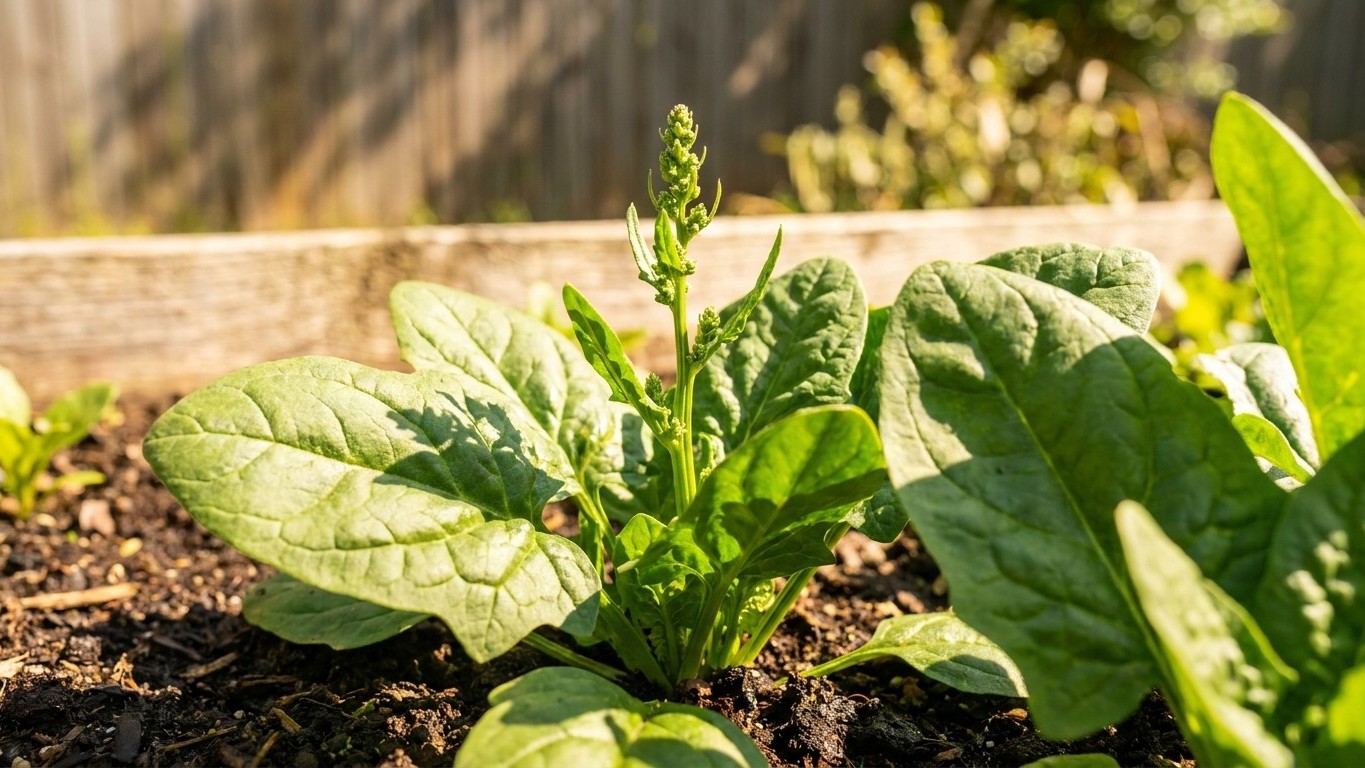

In Utah, spinach gets cut in two short windows: spring, from seed sown a few weeks before the last frost, and autumn, from seed sown once the soil cools. Summer is closed. Once the leaves reach the kitchen, the clock is short too, because spinach holds good quality for no more than two weeks even at 32 F. Here is how the calendar, the thermometer and the refrigerator shelf fit together. Salt Lake City numbers are the baseline, with notes for the rest of the state.
The short answer
On the longest day of the year, Salt Lake City gets 14 h 56 of daylight. That is nearly fifteen hours of sun, and for spinach it is a problem no cool breeze can fix. Utah State University Extension says spinach bolts, meaning it sends up a flower stalk and stops making good leaves, during long days and warm temperatures. Either condition can start it. Long days alone are enough to trigger flowering, so a cool summer does not buy extra weeks the way it might for a crop that only objects to heat.
Both limits apply here
In Utah the limit is day length and heat together, and they arrive in the same season. Day length follows latitude, not elevation, so a mountain garden that stays chilly in July still sits under those long days. The valley floor adds heat on top: the Salt Lake station averages 52.1 days a year at 90 F or more. The same extension source says spinach grows best where temperatures do not exceed 75 F, and that number is also where leaves turn bitter. One number, two consequences.
Spinach is therefore a crop for the edges of the year. In spring, cut between the first usable leaves and the first run of warm afternoons. In autumn, cut from the cooling weeks until the season’s frost. Cut while the leaves are tender and before a stalk starts rising from the center of the plant, because after that the flavor goes. The full flowering story is in Will Spinach Bolt Early in Utah?
How long it keeps once cut
Spinach is a two-week crop at best. The UC Davis Postharvest Technology Center lists the optimum storage temperature as 32 F with 95 to 98 percent relative humidity, and states that spinach is highly perishable and will not maintain good quality for more than 2 weeks. Wilting, yellowing and decay become likely after 10 to 14 days. At 41 to 50 F, the range of common distribution conditions, the decline is faster.
A fridge door lives in that warmer range, every time it opens. Put the bag at the back of the bottom shelf, away from the door’s warm air. And read two weeks as a ceiling, not a plan. The source gives a limit, not a promise, so spinach cut from the garden is best eaten within a few days.
How long the spring window really is
Two rules frame the season. Seed goes in 2 to 3 weeks before the last frost, and growth stops being good above 75 F. Between them sits the usable spring, and in Utah it is tighter than the calendar suggests. Here is the arithmetic for Salt Lake City.
- Find the last frost. NOAA NCEI climate normals for the Salt Lake station put it between April 12 and April 29, the band where the odds of another 32 F freeze run between 30 and 70 percent.
- Count back 2 to 3 weeks. Three weeks before April 12 is March 22, and two weeks before April 29 is April 15. The sowing window therefore runs from about March 22 to April 15, a span of roughly three and a half weeks. Sow in several batches across it and the cuts stagger instead of arriving all at once.
- Wait for leaves, not a number. The source publishes no days-to-maturity for spinach, so there is no sowing-to-harvest count to quote here. Cut when the leaves are a usable size and still tender.
- Watch the thermometer for 75 F. It is a growth ceiling, never a calendar date, and the facts behind this page carry no date for when afternoons start passing it. The valley’s 52.1 days at 90 F or more show how hot the summer behind that threshold gets.
- Cut everything before a stalk rises. Once afternoons sit above the ceiling and the days approach their longest, a spring bed is finished. Pulling the plants early beats harvesting bitter leaves.
So the answer in words: sowing alone spans about three and a half weeks, and cutting runs from the first good leaves until warm afternoons take over. That is weeks, not months. The exact count depends on how fast your own spring warms, and no published figure settles it.
Higher and lower Utah
Salt Lake sits in a mild valley. Most of Utah is higher and colder, so the last frost comes later and the whole sowing window slides later with it. Southern Utah is warmer, which pulls the window earlier and brings the heat sooner. Exact frost dates for those places are not published here, so check a local source before you count back. Spinach that survives the season can also lose leaves to insects, a topic covered in What Eats Spinach in Utah, and When.
The autumn crop, and when the soil lets you sow
Autumn spinach has the opposite problem from spring. The days are shortening and the air is cooling, which helps, but the seed has to start in the leftover heat of summer.
Warm soil blocks the seed, not cold
Utah State University Extension notes that seed germination is reduced when the soil is above 80 F. The obstacle in late summer is warmth. A bed that felt fine in air temperature can still be too hot underneath, since soil lags behind the air by days or weeks. In a valley that logs 52.1 days a year at 90 F or more, the soil is slow to give up its heat.
The window opens when the soil falls, not on a set date. A soil thermometer pushed to seed depth tells you more than a calendar does. Higher, colder gardens tend to cool sooner, and southern Utah later, so the same crop gets sown at different times across the state.
The frost that ends the season
The other limit is the first fall frost. For the Salt Lake station, NOAA NCEI climate normals put it between October 18 and October 29. Treat that band as the planning deadline. Utah State University Extension’s advice for a fall crop is to plant 50 to 75 days before the date you want to harvest. Count back from the two ends of the frost band:
- Harvest by October 18: sow between August 4 and August 29.
- Harvest by October 29: sow between August 15 and September 9.
The full span runs from August 4 to September 9, but the early end is the problem. Early August in a valley this hot is where the soil is most likely to sit above 80 F, so the later dates in the range are the safer bet. Note that 50 to 75 days is the planting lead from the extension advice, not a published maturity figure for any variety. Gardens above the valley should count back from an earlier frost date, and those in southern Utah from a later one.
Common questions
Does a cool Utah summer let spinach keep going into July?
No. Long days alone can trigger flowering, and Salt Lake City reaches 14 h 56 of daylight at the solstice. Cool air at elevation lowers the heat load but does nothing to the day length. See Growing Spinach in Utah for the wider planting picture.
How many days from sowing until I can cut?
The source publishes no days-to-maturity for spinach, so no honest figure exists here. The only count it gives is for fall: plant 50 to 75 days before the date you want to harvest. For spring, cut by leaf size and tenderness.
Which variety should I grow?
Utah State University Extension names Bloomsdale, Melody, Teton and Olympia. It publishes no data about any of them, so nothing here can say which bolts later or tolerates heat better.
How long does cut spinach keep in the fridge?
UC Davis puts the ceiling at no more than 2 weeks, and only at 32 F with 95 to 98 percent humidity. At 41 to 50 F it declines faster, and wilting, yellowing and decay become likely after 10 to 14 days. Keep it at the back of the bottom shelf, never in the door, and eat it early.