
Two things eat into a Utah spinach season: long days and heat. At Salt Lake City the longest day carries 14 h 56 of daylight, and the valley logs 52.1 days a year at 90 F or higher. Spinach grows best where temperatures stay at or below 75 F, so the crop gets a short spring stretch and a fall stretch that opens only after the soil cools. This page covers the calendar side. Insect and animal pests are not part of the verified data here.
The short answer
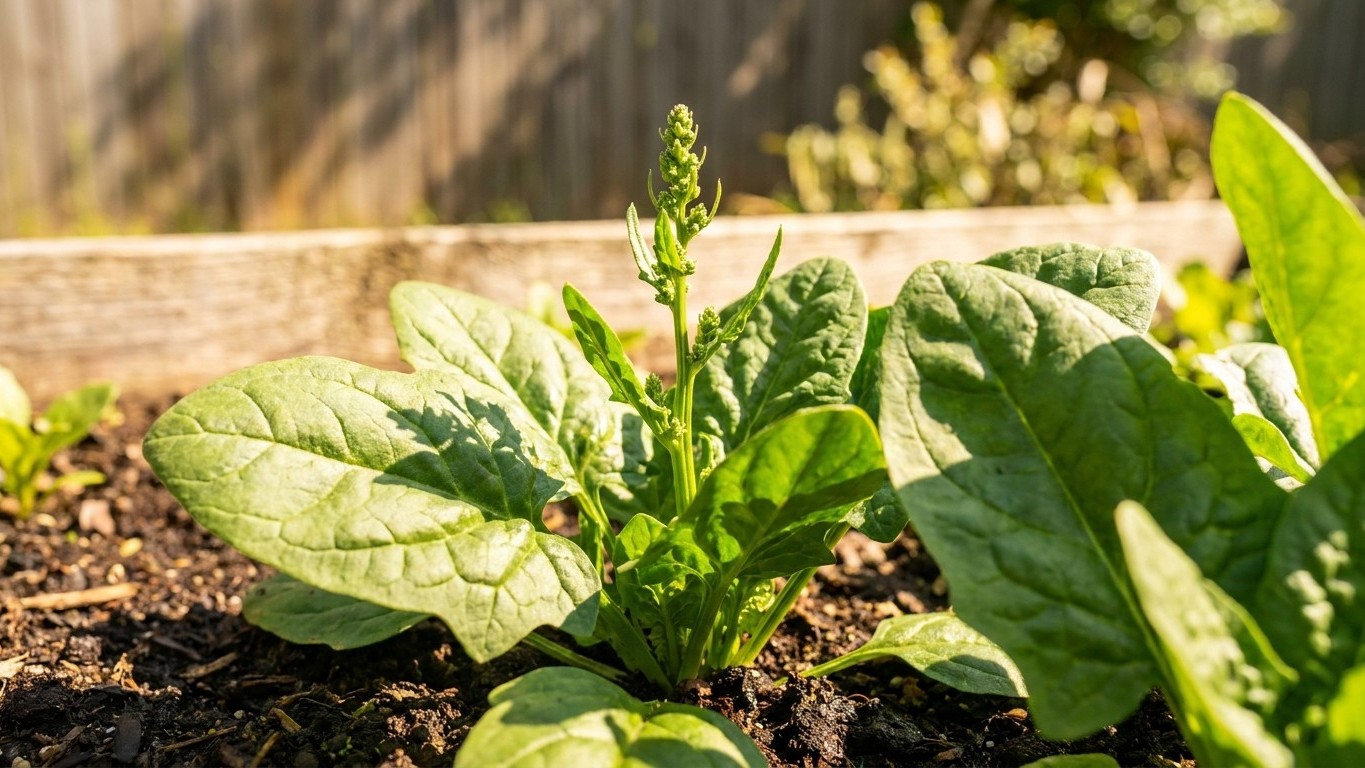
On the longest day of the year, Salt Lake City gets 14 h 56 of daylight. That number matters more than most Utah gardeners expect, because spinach bolting is triggered by long days as well as by warmth, according to Utah State University Extension. Long days alone are enough to push a plant toward flowering. Once a plant sends up a seed stalk, the leaves turn bitter and the harvest is over.
This undercuts a popular bit of garden logic. Cool-summer places are supposed to stretch the spinach season, and in a far northern garden with a 16-hour June day, they don’t. A cool July does not cancel a 14 h 56 day. Utah’s summer light is already well past what spinach tolerates, so weather cannot rescue a crop that is still standing in June.
So which limit applies here? Both. Day length sets a hard outer edge on the season, and heat arrives well before that edge. The same extension source puts the comfortable ceiling at 75 F. That one figure does double duty: above it, growth is no longer good, and it is also the point where leaves turn bitter. It is a temperature to watch, never a date on the calendar, and it shows up earlier in a hot year than in a cool one.
The heat load is not small. Salt Lake City averages 52.1 days a year at 90 F or more, and that is the mild valley floor. Much of Utah sits higher and runs colder, which pushes dates later in spring and earlier in fall. Southern Utah runs warmer, which squeezes the spring window from the other side. Treat every date in this article as a Salt Lake reference point and adjust for your elevation.
The extension source names four varieties: Bloomsdale, Melody, Teton and Olympia. It publishes no data about any of them, so there is no sound basis here for ranking them, or for claiming that one resists bolting better than another. Choose by what your seed packet states, and treat the packet’s days-to-harvest number as the seed seller’s claim rather than a Utah measurement.
What does that leave? Two usable windows. One is spring, which ends when afternoons climb past 75 F. The other is autumn, which begins when soil drops below the germination problem and ends with the first hard frost. The next two sections work through each one. The broader picture is in Growing Spinach in Utah.
How long the spring window really is
Spring spinach is sown two to three weeks before the last frost. Salt Lake City’s last 32 F freeze falls between April 12 and April 29, based on NOAA NCEI climate normals for the 30 to 70 percent probability band. Counting forward from those dates shows how much room you actually have.
- Find the sowing date. Two to three weeks before April 12 lands around March 22. Two to three weeks before April 29 lands around April 8 to April 15. In the valley, that makes the sowing window roughly the last week of March through mid-April, once the ground can be worked.
- Know what you can’t count. The source publishes no days-to-maturity for spinach, so there is no honest way to say which date the first leaves are ready. Expect to harvest on the plant’s own schedule, not on a number printed here.
- Watch for 75 F. Growth stops being good once temperatures pass that mark, and bitterness comes with it. The date this happens is not published, and it moves from year to year. Treat the first run of warm afternoons as the closing bell.
- Remember the day-length cap. The 14 h 56 June day sits behind everything. Even a cool spring cannot carry a crop that far, since long days alone trigger flowering.
Put that together and the usable spring is short: a handful of weeks of real harvest, not a season. The early sowing buys you a head start, but the ending is controlled by heat, and the heat count is high. With 52.1 days a year at 90 F or above, the valley moves from cool to hot faster than people expect.
The practical lesson is to sow at the front of the window rather than the back. A row sown in the first days of April has more cool weather ahead of it than one sown in late April. Higher, colder parts of Utah shift every date later, and the spring window there can start after the valley’s has nearly closed. Southern Utah shifts the other direction, so the start comes earlier and the closing bell comes much sooner.
The autumn crop, and when the soil lets you sow
Fall is the better of the two seasons for most Utah gardeners, and it has two obstacles, one at each end. The extension rule is simple: plant 50 to 75 days before the date you want to harvest. The trick is picking a realistic harvest date and counting back from it.
Warm soil blocks germination
The obstacle that surprises people is not cold. It is warmth. Seed germination drops once soil climbs above 80 F, and in a Utah August the top few inches of a garden bed can sit well past that. Seed sown into hot soil may come up thinly, or not at all, even though the air feels fine at dusk.
In a hot region, then, the window does not open on a date. It opens when the soil falls back under that mark. A cheap soil thermometer pushed into the bed tells you more than any calendar. Shading the bed or watering it before sowing can help cool the surface, but the 80 F line is the one to respect. The detailed timing is covered in When to Sow Autumn Spinach in Utah.
The frost that ends the season
At the other end sits the first fall frost. In Salt Lake City it falls between October 18 and October 29, again from NOAA NCEI climate normals using the 30 to 70 percent band. Take those as your harvest-by dates and count back.
For a harvest by October 18, sowing 50 to 75 days earlier means roughly August 4 to August 29. For October 29, the same arithmetic gives about August 15 to September 9. Across both dates, the full span runs from early August to early September.
The early end of that range is the trouble spot. A sowing on August 4 lands in the hottest part of the year, when soil is most likely to be above 80 F. The later end, late August into early September, is easier on germination but leaves less slack if the season ends early. Because the source gives no days-to-maturity, the 50 to 75 day rule is a planning range and not a promise for any particular variety.
Colder, higher parts of Utah get their first frost sooner than the valley does, which pulls every sowing date earlier. Those gardens face the same warm soil in a shorter season, and that is the toughest combination in the state. Warmer southern Utah has the opposite problem, with a later frost but soil that stays hot far longer.
Common questions
Does day length or heat matter more in Utah?
Both limit the crop, but heat usually arrives first. At 14 h 56 of daylight on the longest day, long days alone can trigger flowering, while temperatures above 75 F stop good growth and bring bitterness. A cool summer does not offset the long days.
What about insects and animals that eat spinach?
The verified data behind this page covers timing, not pests. No pest names or damage periods are given, so none are listed here. For identification and control in your county, Utah State University Extension is the authority to ask.
What is the earliest I can sow in spring?
Two to three weeks before the last frost. In Salt Lake City that points to roughly late March through mid-April, since the last 32 F freeze falls between April 12 and April 29. Higher Utah gardens should expect later dates, and southern Utah earlier ones.
How long does harvested spinach keep?
Two weeks is a ceiling, not a plan. UC Davis Postharvest says spinach is highly perishable and will not maintain good quality for more than 2 weeks, and only at 32 F with 95 to 98 percent humidity. At 41 to 50 F, which is what a fridge door often holds, it yellows much faster. Keep it at the back of the bottom shelf, where it runs coldest, in a bag or container that holds humidity.