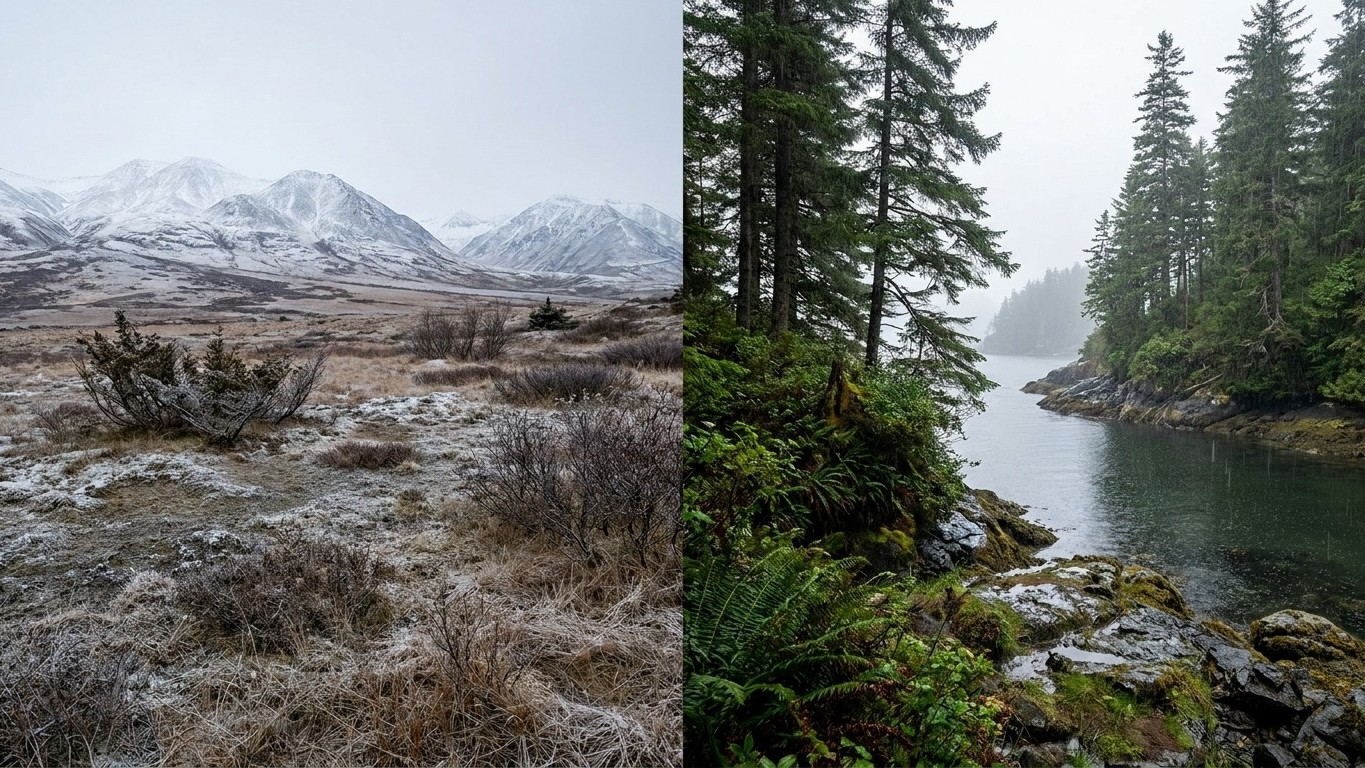

Utah’s hardiness range runs from USDA zone 4a in the high mountain valleys to 9a in the low desert basins near St. George. Cross that spread against the 65 landscape species this site tracks, and the split comes out uneven: 25 survive the winter anywhere in the state, 40 only in part of it, and zero fail everywhere. Which bucket a given plant falls into depends entirely on where in Utah you’re standing.
What will not survive a winter in Utah

Start with the number that matters most for a reader who just wants a straight answer: of the 65 species this site documents against Utah’s 4a-9a range, none are hardy in no part of the state. That’s a different statement than “everything survives here.” It means every plant on this list has at least one corner of Utah where its winter-hardiness range overlaps the local zone. Whether that corner is the reader’s own backyard is a separate question, one the next section answers.
This is worth sitting with for a moment, because it’s easy to misread. Utah’s zone range is wide, 4a at the cold end, 9a at the warm end, which means almost any temperate species documented by a university extension database is going to clear the bar somewhere in the state. A gardener in a 4a mountain valley and a gardener in a 9a desert basin are gardening in climates as different from each other as Minnesota is from central Texas. The state line doesn’t unify the growing conditions; it just draws a border around several of them.
There’s a second thing worth saying plainly, because it trips people up every year: hardy means the plant survives the cold, not that it’s comfortable. The warm end of a species’ range, that 8a-9a territory, is frequently a heat limit rather than a cold one. A shrub rated hardy to zone 9a can still sulk through a St. George summer, dropping leaves or failing to set flower, even though it technically “survives” the winter that follows. Hardiness ratings describe whether the plant lives through the cold season. They say nothing about whether it thrives the rest of the year, and that distinction matters more in a state with Utah’s summer heat swings than it does almost anywhere else in the Mountain West.
So the honest framing for this page isn’t a list of doomed plants. It’s a warning against the opposite mistake, the one where a reader assumes that because Utah as a whole spans a wide enough range to fit nearly everything, any given plant is a safe bet anywhere in the state. It isn’t. The real risk in Utah isn’t a plant that fails everywhere, since none of the 65 documented species do. The real risk is a plant that fails in your part of the state while thriving two hundred miles away, which is exactly the situation the next section maps out.
The plants that work in part of the state and not the rest
Forty of the 65 documented species are hardy in part of Utah’s 4a-9a range and not the rest. That’s the largest single group on this page, and it’s the reason a state-level answer to “will this survive here” is often incomplete. The failures split into three patterns: plants that struggle at the cold end of the state’s range, plants that struggle at the warm end, and a small handful that struggle at both ends at once.
Fails in the coldest part of the state
These species drop out of zones 4a and 4b, and in some cases 5a, 5b, or 6a/6b as well, meaning the high mountain valleys and the coldest benches are where they come up short.
| Plant | Fails in |
|---|---|
| Asimina triloba (fruit) | 4a, 4b |
| Ficus carica (fruit) | 4a, 4b, 5a, 5b, 6a, 6b |
| Fragaria virginiana (fruit) | 4a, 4b |
| Fragaria x ananassa (fruit) | 4a, 4b |
| Prunus persica (fruit) | 4a, 4b |
| Lavandula angustifolia (perennial) | 4a, 4b |
| Hydrangea macrophylla (shrub) | 4a, 4b, 5a, 5b |
| Itea virginica (shrub) | 4a, 4b |
| Cornus florida (tree) | 4a, 4b |
| Lagerstroemia indica (tree) | 4a, 4b, 5a, 5b |
| Liquidambar styraciflua (tree) | 4a, 4b |
| Magnolia grandiflora (tree) | 4a, 4b, 5a, 5b |
Fails in the warmest part of the state
These species drop out at the 9a end, and in a few cases pull back as far as 7b or 8a, meaning the low desert basins in the state’s southwest corner are where they fall short.
| Plant | Fails in |
|---|---|
| Aronia melanocarpa (fruit) | 9a |
| Prunus avium (fruit) | 9a |
| Pyrus communis (fruit) | 9a |
| Rubus idaeus (fruit) | 9a |
| Rubus occidentalis (fruit) | 9a |
| Sambucus canadensis (fruit) | 9a |
| Vaccinium angustifolium (fruit) | 9a |
| Vaccinium corymbosum (fruit) | 9a |
| Echinacea purpurea (perennial) | 9a |
| Iris sibirica (perennial) | 9a |
| Phlox paniculata (perennial) | 9a |
| Salvia nemorosa (perennial) | 9a |
| Hydrangea paniculata (shrub) | 9a |
| Physocarpus opulifolius (shrub) | 9a |
| Spiraea japonica (shrub) | 9a |
| Syringa vulgaris (shrub) | 7b, 8a, 8b, 9a |
| Viburnum dentatum (shrub) | 9a |
| Weigela florida (shrub) | 7a, 7b, 9a |
| Acer saccharum (tree) | 9a |
| Amelanchier canadensis (tree) | 8b, 9a |
| Picea abies (tree) | 8a, 8b, 9a |
| Pinus strobus (tree) | 9a |
| Quercus rubra (tree) | 9a |
| Thuja occidentalis (tree) | 8a, 8b, 9a |
| Tilia americana (tree) | 9a |
Fails at both ends
Three species narrow out at both extremes of the state’s range, ruled out in 4a/4b and again in 9a, which leaves them a middle band of Utah to work with and nothing at either edge.
| Plant | Fails in |
|---|---|
| Amsonia hubrichtii (perennial) | 4a, 4b, 9a |
| Buxus sempervirens (shrub) | 4a, 4b, 9a |
| Fothergilla gardenii (shrub) | 4a, 4b, 9a |
Finding which of these zones covers your own address is the whole ballgame here, and it’s not something a statewide article can settle for you. The site’s insulation page carries the county-level zone picture for Utah, and that’s the fastest way to see whether your county sits in the 4a-5b band, the 6a-7b middle, or the 8a-9a low desert before you commit to any plant in the tables above.
The soil and the summer they will be planted into
Utah’s representative state soil, the Mivida series, is an Aridisol, the soil order that forms under dry climates and typically carries alkaline chemistry and accumulated salts. The surface pH runs about 8.1, distinctly alkaline, and the texture is sandy: 72 percent sand, 9 percent clay, 19 percent silt, with organic matter around 1.5 percent. It’s classified well drained. For a woody plant, that drainage detail is the one that matters most, because winter wet around the roots kills more shrubs and young trees than winter cold does. A sandy, well-drained profile like Mivida sheds water quickly, which lowers the odds of the kind of root rot that shows up in heavier soils after a wet spring.
None of that is a guarantee for any specific yard. Mivida is the series USDA lists as representative of the state, not a description of every garden in it. River-bottom ground, hill country, and any lot a builder has graded or filled will read completely differently, and the low organic matter figure here describes an undisturbed surface horizon, not a bed that’s been amended. A soil test is still the only way to know the actual pH and texture a new tree or shrub will be planted into.
Summer rainfall at the reference station comes to about 2.0 inches total across June, July, and August, out of 15.5 inches for the year. July is the driest of the three, at just 0.49 inches, with June at 0.95 and August at 0.58. Those are precipitation totals, not a humidity reading and not a watering schedule. The same 0.49 inches behaves differently depending on what it lands on: on the sandy Mivida profile it drains through within the day, while the same rain on a heavier clay soil elsewhere in the state would sit around the root zone for a week. Cross the rainfall figure with the soil under a given plant before drawing any conclusion about how dry the season will actually be, and treat a rain gauge on the actual property as the only number that settles it.
When to plant, here
At the reference station, the last spring frost falls between April 12 and April 29, and the first fall frost arrives between October 18 and October 29. Those windows frame two different planting seasons, and the reasoning behind picking one over the other matters more than the calendar dates themselves. A newly planted tree or shrub needs time to grow roots before it’s asked to either push out leaves in spring heat or face a hard freeze in winter. Roots, not top growth, are what get a plant through its first year.
| Season | Best suited for | Main risk |
|---|---|---|
| Spring (after April 12-29) | Most trees, shrubs, and perennials, especially ones with borderline hardiness for the local zone | A late frost can still hit newly emerged growth before the soil has fully warmed |
| Autumn (before October 18-29) | Establishing root systems while soil is still warm and the plant is heading into dormancy | Less time to root before the ground freezes, especially at the cold end of the state’s range |
In the coldest part of Utah’s range, the 4a and 4b zones in the higher valleys, autumn planting leaves noticeably less runway. The gap between a typical first fall frost in mid-to-late October and the onset of hard ground freeze is short at that elevation, which tips the balance toward spring planting for anyone gardening at the cold end of the state. Gardeners in the warmer 8a-9a zones have more autumn flexibility, since their fall freeze arrives later relative to their milder winters overall.
Two caveats matter here. These frost dates are averages built from 1991-2020 climate normals at one reference station, not a promise for any specific year or any specific property; a cold pocket or an exposed hillside can freeze earlier or later than the station average. And whatever a plant’s drought tolerance rating says once established, that rating describes a plant with a developed root system, not one still settling into new ground. Water through the entire first season regardless of how drought-tolerant the label claims the species will eventually be.
Where to read about each one
The 25 species hardy across Utah’s full 4a-9a range split naturally by type. Among trees: Acer rubrum, Betula nigra, Carpinus caroliniana, Cercis canadensis, Ginkgo biloba, Juniperus virginiana, Nyssa sylvatica, Platanus occidentalis, and Quercus alba. Among shrubs: Aronia arbutifolia, Clethra alnifolia, Ilex glabra, Ilex verticillata, and Kalmia latifolia. Among perennials: Achillea millefolium, Asclepias tuberosa, Baptisia australis, Anacis verticillata, Heuchera americana, Monarda didyma, Rudbeckia fulgida, and Hylotelephium spectabile. Three fruiting trees round out the fully hardy group as well: Diospyros virginiana, Morus rubra, and Prunus domestica.
Any of the 40 partial-range species from the tables above can also work well, provided the reader’s own county falls outside the failing zones listed for that plant. A Weigela florida in a 6a valley, for instance, is in an entirely different situation than the same species planted in a 9a desert basin, even though both addresses are in Utah.
The hardiness ranges behind every plant named here come from a university extension plant database, crossed against Utah’s local zone picture as tracked on this site. These are winter-hardiness ranges specifically, not the same thing as the apple variety adaptation ranges held elsewhere on this site, which measure something different and shouldn’t be read as interchangeable with the figures above.