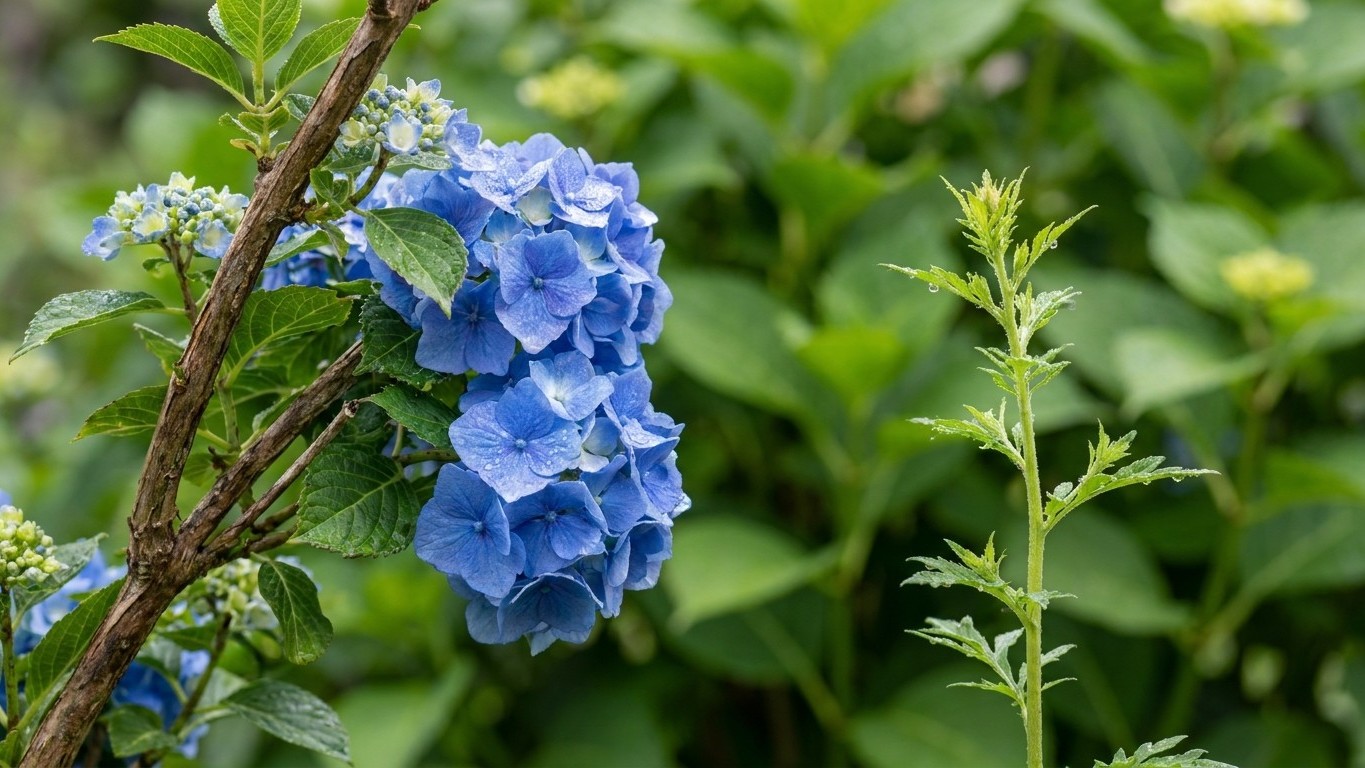

Prune hydrangeas that bloom on new wood (smooth and panicle types) in late winter or early spring, before the leaves open. Prune the ones that bloom on old wood (bigleaf, mountain and oakleaf) only right after the flowers fade, and stop by mid-August. Vermont’s short season narrows the window for old-wood types. A hard winter also makes the call harder, because stems that look dead in April are often alive.
What this comes down to in Vermont

In Burlington, the reference city for these dates, the last spring frost typically falls around April 30 to May 10 and the first fall frost around October 3 to October 13. That gives new-wood hydrangeas a pruning window from late March through April, and old-wood hydrangeas a window that opens when the flowers fade and closes around mid-August. Cut outside those windows and you lose either the blooms or the plant’s winter hardiness.
The reason is where the flower buds sit. Bigleaf, mountain and oakleaf hydrangeas set next summer’s buds on this summer’s stems, usually by late summer or early fall. A spring haircut removes those buds along with the stems. Smooth and panicle hydrangeas do the opposite. They push new shoots after the last frost and form flowers at the tips of that fresh growth, so there is nothing to lose by cutting them before they leaf out.
The mid-August cutoff is a rule of thumb based on the fall frost window. Pruning prompts a flush of soft new shoots, and those shoots need time to firm up before cold arrives. Counting back about seven weeks from October 3 to October 13 puts a reasonable limit in mid to late August for a garden with Burlington’s season. A garden with an earlier first frost needs an earlier cutoff.
| Type | Flowers on | Best time to prune | How much to cut |
|---|---|---|---|
| Smooth (such as ‘Annabelle’) | New wood | Late winter to early spring, as buds swell | Down to a low framework or near the ground |
| Panicle (such as ‘Limelight’) | New wood | Late winter to early spring, as buds swell | Shorten stems by about a third, or less |
| Bigleaf (mophead and lacecap) | Old wood; some reblooming types also on new | Just after flowering, by mid-August | Remove spent blooms and dead stems only |
| Mountain | Old wood | Just after flowering | Light shaping and dead stems |
| Oakleaf | Old wood | Just after flowering | Light shaping and dead stems |
Burlington sits on Lake Champlain, one of the milder parts of the state. The Green Mountains and the Northeast Kingdom run substantially shorter, so treat every date above as the generous end of the range.
Working it out for your own garden
Dates shift with the weather, the elevation and the year. A method holds up when the calendar does not. Start by identifying the type of hydrangea you own, because that decides everything else. Then use the plant’s own signals alongside the frost window.
How do you find the pruning window for an old-wood hydrangea?
Take a mophead bigleaf of the classic blue-and-pink kind, such as ‘Nikko Blue’. It blooms only on old wood. Its flowers fade somewhere in July or August. Prune soon after that, but finish by about seven weeks before your first fall frost. At Burlington, with the first frost between October 3 and October 13, that gives a cutoff in mid to late August. The result is a range, never a single day.
Now the harder question: will that bloom ever appear? The 2023 USDA Plant Hardiness Zone Map rates Vermont from 4a to 6a, based on the average annual extreme minimum temperature. A classic bigleaf is marginal at the warm end of that range and a long shot at the cold end, because winter kills the buds even when the stems survive. Pruning cannot fix that. A reblooming bigleaf such as ‘Endless Summer’ does better. It also flowers on new wood, so a late, smaller show arrives even when winter takes the old buds.
How do you time pruning for a new-wood hydrangea?
Take ‘Annabelle’, a smooth hydrangea. It flowers on shoots grown this season, so you can prune from late winter until growth starts, ideally as the buds begin to swell. Waiting for visible swelling protects the new shoots from a late cold snap. Even if winter kills every stem to the ground, the plant usually still blooms the same summer. That makes it a safe choice in the colder parts of the state.
How do you tell why a hydrangea has no flowers or looks dead?
Scratch the bark of a bare stem with a thumbnail. Green underneath means the stem is alive. Brown and dry means dead. Look at the buds too. Plump buds along the stem mean flowers are coming on an old-wood type. A bigleaf that leafs out well but never blooms has usually lost its buds to winter cold or was pruned in the wrong season. A smooth or panicle hydrangea that stays leafy usually needs more sun, not different pruning.
What changes across the state
A garden in Burlington does not live in the same climate as one in Island Pond or on a ridge near Stowe. Lake Champlain softens the cold along the western edge, delaying fall frost and ending spring frost earlier. Move east into the Green Mountains and elevation takes over. Each step uphill brings a later spring, an earlier fall and colder winter lows.
The Northeast Kingdom is the cold end of the state. Winters there are long, and the growing season is short enough that late spring pruning dates push into May. The 4a–6a zone range reflects this spread. The warm end of that range sits in the southern river valleys and parts of the Champlain Valley. The cold end covers the high country and the north.
Terrain matters at a smaller scale. Cold air drains downhill and pools in low spots, so a hydrangea at the bottom of a slope can be hit by frost when one at the top is not. Snow cover also changes the picture. A deep, steady snowpack insulates the base of the plant, which is why a bigleaf in an open yard that loses its tall stems may still send up healthy shoots from low buds. A windswept spot with little snow loses those too.
Put together, the calendar shifts by place. At higher elevations and farther north, wait longer in spring before judging winter damage, and move the summer cutoff for old-wood types earlier. Near the lake, the Burlington dates work as written. In between, let the plant’s own buds and bark tell you when to start.
The mistakes this state punishes

A common error is a spring cleanup on a bigleaf. A tidy-minded gardener cuts every stem back in April, and that summer the plant produces leaves and no flowers. Wait until leaf buds open, remove only what is clearly dead, and leave the rest.
The second is judging stems too early. After a hard winter, a bigleaf often looks lifeless well into May, and in Vermont leaf-out can come after the last spring frost window of April 30 to May 10 has passed. Cutting at the first brown look removes live wood that would have leafed out in a few weeks. Scratch the bark first, and give it until growth shows.
The third is a warm spell in March. A week of mild weather tempts people into early pruning and fertilizing. A panicle or smooth hydrangea tolerates the cut, but a new flush of shoots can get nipped by the freeze that follows. Hold off until buds swell and the forecast settles.
The fourth is late summer pruning. Cutting an old-wood type in September removes next year’s buds and prompts soft growth that has no time to harden before October frost. If a stem is dead, take it out. Leave everything else until after the plant has gone dormant, then wait for spring.
Last, avoid fall cleanup on old-wood hydrangeas. The standing stems and spent flower heads protect the buds underneath, and they hold snow. Leave them through winter and remove them in spring once you can see which stems survived.
Checking this against your county
A state-wide figure is a starting point, and the Burlington dates describe only one corner of Vermont. A regional office of University of Vermont Extension can tell you how your town’s frost dates and winter lows compare, and which hydrangea problems are showing up locally. For the rest of the picture, from site and soil to variety choice, see the state guide to growing hydrangeas in Vermont.
Common questions
Can I prune hydrangeas in fall in Vermont?
Only to remove dead stems or spent flower heads on new-wood types. Old-wood hydrangeas have already set next year’s buds by then, and any cut risks removing them. Fall cuts on any type can also push soft growth right before the first frost, which falls between October 3 and October 13 at Burlington.
When should I cut back panicle hydrangeas?
In late winter or early spring, when buds begin to swell and before leaves open. Shorten the stems by about a third, or less, to keep a sturdy framework. Heavy cutting produces larger flower heads on weaker stems that flop.
Why did my bigleaf hydrangea leaf out but not bloom?
Either winter killed the flower buds or a pruning cut removed them. Cold is a common cause in Vermont. Plants that were healthy but never flower often sit in a spot that is too cold for old-wood buds to survive. A reblooming type that also flowers on new wood is a more reliable choice there.
How low can I cut a smooth hydrangea like ‘Annabelle’?
It tolerates a cut to within a few inches of the ground, and it will still bloom that summer because it flowers on new growth. Many gardeners leave a framework of sturdy stems for a sturdier plant. A yearly hard cut is also a safe default where winter dieback is common.