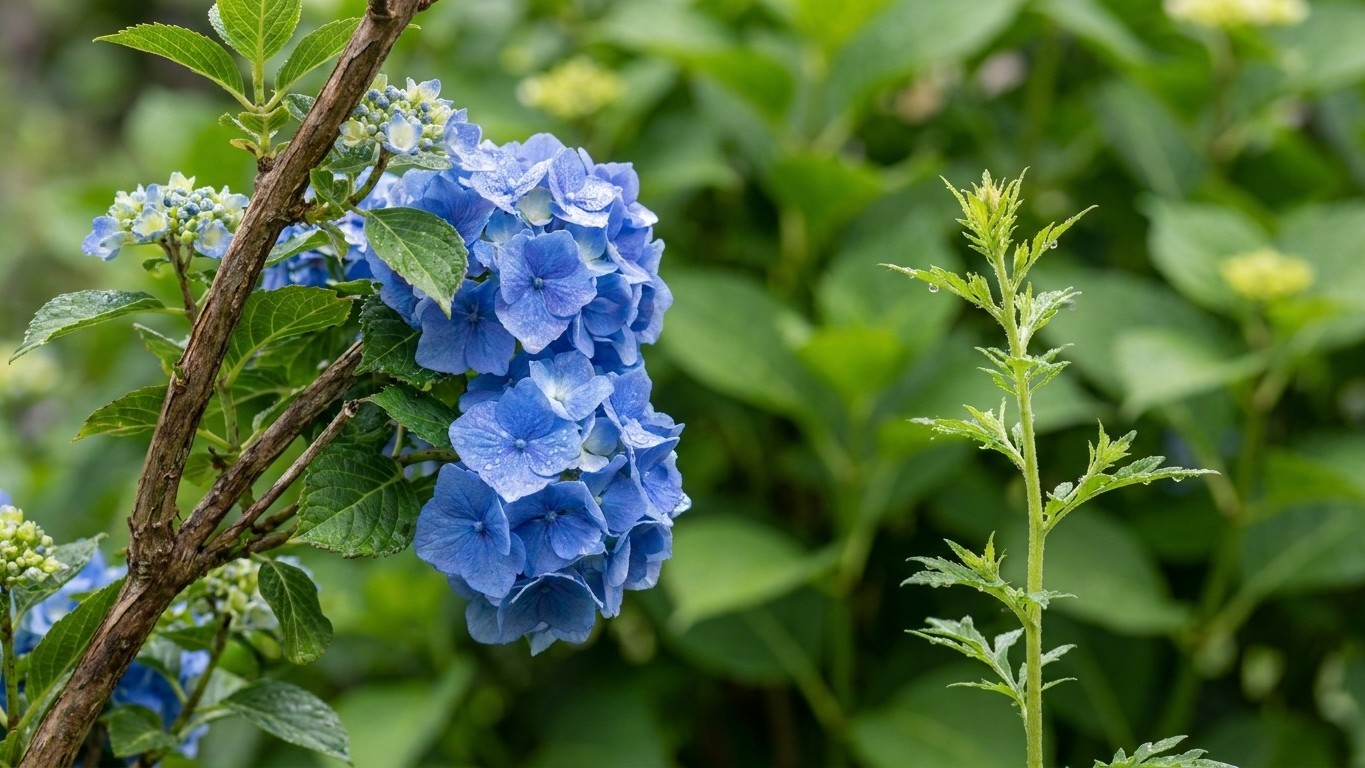

Panicle hydrangeas such as Quick Fire, Bobo and Limelight, along with smooth hydrangeas such as Annabelle, survive Vermont winters statewide. They bloom on wood grown in the current season. Bigleaf and oakleaf types are the gamble, because their flower buds form the summer before and a hard winter can kill them. On the 2023 USDA Plant Hardiness Zone Map, Vermont runs from zone 4a to 6a, so the choice matters.
What this comes down to in Vermont

Hydrangeas that bloom on new wood survive a Vermont winter and still flower, because they build their flower buds after the last spring frost, which at Burlington falls between April 30 and May 10. The first fall frost there arrives October 3 to October 9, and that is the stretch of season the shrub has to grow stems and open blooms. Burlington sits on Lake Champlain, one of the mildest corners of the state, so the Green Mountains and the Northeast Kingdom get a shorter season than this.
The USDA hardiness system rests on one number, the average annual extreme minimum temperature. It tells you whether the stems and roots live through January. It does not tell you whether the flower buds made it, and that gap is what sorts the cultivars below. They run from the most forgiving in a short season to the ones that need the longest, mildest run.
Quick Fire
A panicle hydrangea (Hydrangea paniculata) typically listed for zones 3 to 8. It opens white and fades to pink and red, and it blooms on new wood. It is among the earliest panicles to flower, which makes it a sound pick for mountain towns where fall frost comes early.
Bobo
A compact panicle, usually listed for zones 3 to 8, with white blooms on new wood. Its small size suits foundation beds and cold exposures. Winter dieback at the tips costs it little, since the flowers come from spring growth.
Annabelle
A smooth hydrangea (Hydrangea arborescens), usually listed for zones 3 to 9, with white blooms on new wood. It often dies back to the ground in a hard winter and still flowers the same summer. That habit makes it one of the surest bets across the colder parts of the state.
Limelight
Another zone 3 to 8 panicle, blooming on new wood. The flower heads open lime green, turn cream and then pink as fall approaches. It flowers later than Quick Fire, so it is best in the Champlain Valley, in river valleys and in other warmer pockets.
Endless Summer
A bigleaf hydrangea (Hydrangea macrophylla) typically listed for zones 4 to 9. Blooms are blue or pink depending on soil acidity, and it flowers on both old and new wood. After a cold winter the old-wood buds often die, and the new-wood flush arrives late. That works in a mild year and risks a frost-cut show at higher elevations.
Snow Queen
An oakleaf hydrangea (Hydrangea quercifolia) typically listed for zones 5 to 9. It carries white cones that age to pink, and it blooms on old wood. Only the warmest, most sheltered Vermont sites come close to its comfort zone. Elsewhere you would grow it for the leaves and accept few flowers.
Working it out for your own garden
The method has two questions. On which wood does the cultivar bloom, and does the season at your address leave enough room after the ground thaws? Take the Burlington frost window as the anchor, then shorten it for elevation, a north-facing slope or a cold valley floor. A neighbor a few hundred feet higher can lose days, sometimes more, at each end.
Will your hydrangea bloom before the first fall frost?
Work it through with Quick Fire. A container-grown shrub goes in after the spring frost window closes (April 30 to May 10 at Burlington), so the second half of May is a safe planting time. It opens its white heads in midsummer, which leaves a long gap before frost arrives October 3 to October 9. Even if your site loses weeks at the front and back of the season, the bloom still lands comfortably inside it.
Now try Endless Summer, a longer-season cultivar. If winter kills its old-wood buds, the plant relies on new growth, and the flowers don’t open until late summer. Shorten the season by several weeks and the blooms may open just as the first frost arrives. The plant lives, the leaves look fine, and the flower show is poor. Snow Queen is the extreme case. Its buds were set the previous summer, so a single hard winter can erase the whole year’s bloom.
The pattern holds for any cultivar you meet at a nursery. Check the species, then check whether it flowers on new wood. A zone number alone does not settle it.
| Type | Blooms on | Winter risk in Vermont |
|---|---|---|
| Panicle | New wood | Low; stems may tip-kill, flowers still form |
| Smooth | New wood | Low; can die to the ground and regrow |
| Climbing | Old wood | Moderate; hardy, but slow to settle and bloom |
| Bigleaf | Old and new wood (reblooming types) or old wood only | High; flower buds often killed |
| Oakleaf | Old wood | High; marginal outside the mildest sites |
How can you tell winter damage from other problems?
Wait. Bigleaf and oakleaf hydrangeas leaf out late, and gardeners often cut them to the ground too soon. Scratch a stem with a fingernail. Green and moist underneath means it is alive. Brown and dry means it is dead. Cut back to the first pair of live buds, and leave the rest alone.
Leaves blackened and limp after a spring frost are a separate matter. That is damage to tissue already open, and the plant usually pushes out a fresh set of leaves. Spots or powder on leaves in summer have nothing to do with winter, and the shrub’s winter hardiness has no bearing on them.
What changes across the state
Vermont is not one climate. Lake Champlain moderates the Champlain Valley, where the water holds heat into fall and softens spring cold snaps. That is why Burlington gets some of the mildest numbers in the state. Move east and up into the Green Mountains and the season shortens, with later springs, earlier falls and colder winter minimums.
The Northeast Kingdom is colder still, partly from distance to the lake and partly from elevation and cold air that pools in broad valleys. This is where the zone 4a end of the range lives, and where early-flowering panicles such as Quick Fire and Bobo, and smooth hydrangeas, are the most dependable choices. A shrub there can experience frost at both ends of the growing season well outside the Burlington window.
The southern part of the state, including the Connecticut River valley, tends to run milder than the high country to its north. Even so, elevation inside any county can matter more than latitude. A hilltop and a hollow a mile apart can differ in hardiness.
Snow is the quiet variable. A deep, early blanket insulates the lower stems and buds, so bigleaf hydrangeas buried in snow often keep their flower buds below that line. In a thin-snow winter, the same plant is exposed to the full cold. Wind-scoured sites lose snow first, so a shrub on an open slope faces more risk than one tucked beside a house.
The mistakes this state punishes

Planting after a warm spell in April is a classic. The soil warms, the nursery has stock, and then a freeze arrives in early May. Wait for the Burlington window to close (April 30 to May 10), and later at elevation, before setting out new shrubs.
Buying a long-season or old-wood cultivar for a cold site is another. A bigleaf hydrangea labeled hardy to zone 4 can survive at a zone 4 address and still never flower there. If you want one, choose a sheltered spot and treat bloom as a bonus. Plant a panicle or smooth hydrangea for the dependable show.
Feeding late in summer pushes soft growth that the first hard freezes will kill. Stop fertilizing and let stems harden. Mulch helps, but pull it back from the stems so it doesn’t hold moisture against them.
Pruning at the wrong time can undo the rest. Cut an old-wood bloomer in fall or early spring and you remove the buds that would have flowered. The timing for each type is covered in When to Prune Hydrangeas in Vermont.
Finally, don’t remove winter protection too early. Pulling off burlap or leaf cages before the frost window has closed exposes tender buds to the very freezes you were guarding against.
Checking this against your county
A statewide figure is a starting point. The frost dates here come from Burlington, and your own garden may sit weeks away from them. Your county University of Vermont Extension office can tell you what hardiness and frost timing look like locally. For planting basics, soil and care, see the broader guide to growing hydrangeas in Vermont.
Common questions
Will bigleaf hydrangeas come back after a Vermont winter?
The plant often does. The flowers are what’s at risk. Bigleaf types set buds the previous summer, and a hard winter kills them, so you may get leaves and no blooms. Reblooming types will usually flower later on new growth.
Which hydrangea is hardiest for the coldest parts of Vermont?
Panicle hydrangeas such as Quick Fire and Bobo, and smooth hydrangeas such as Annabelle, are the most dependable choices here. Limelight is just as hardy but blooms later, so it suits milder spots. They bloom on new wood, so winter dieback rarely costs them their flowers.
Do hydrangeas that die back to the ground still bloom?
New-wood bloomers do. Annabelle often dies to the ground and flowers the same summer. Old-wood bloomers such as oakleaf hydrangeas lose their flower buds when stems die back.
Should you protect hydrangeas for winter?
Panicle and smooth types rarely need it. Bigleaf and oakleaf types benefit from a sheltered site, a mulch layer after the ground cools and, in exposed spots, a cage filled with leaves or a burlap wrap. Take it off once the frost window has closed.