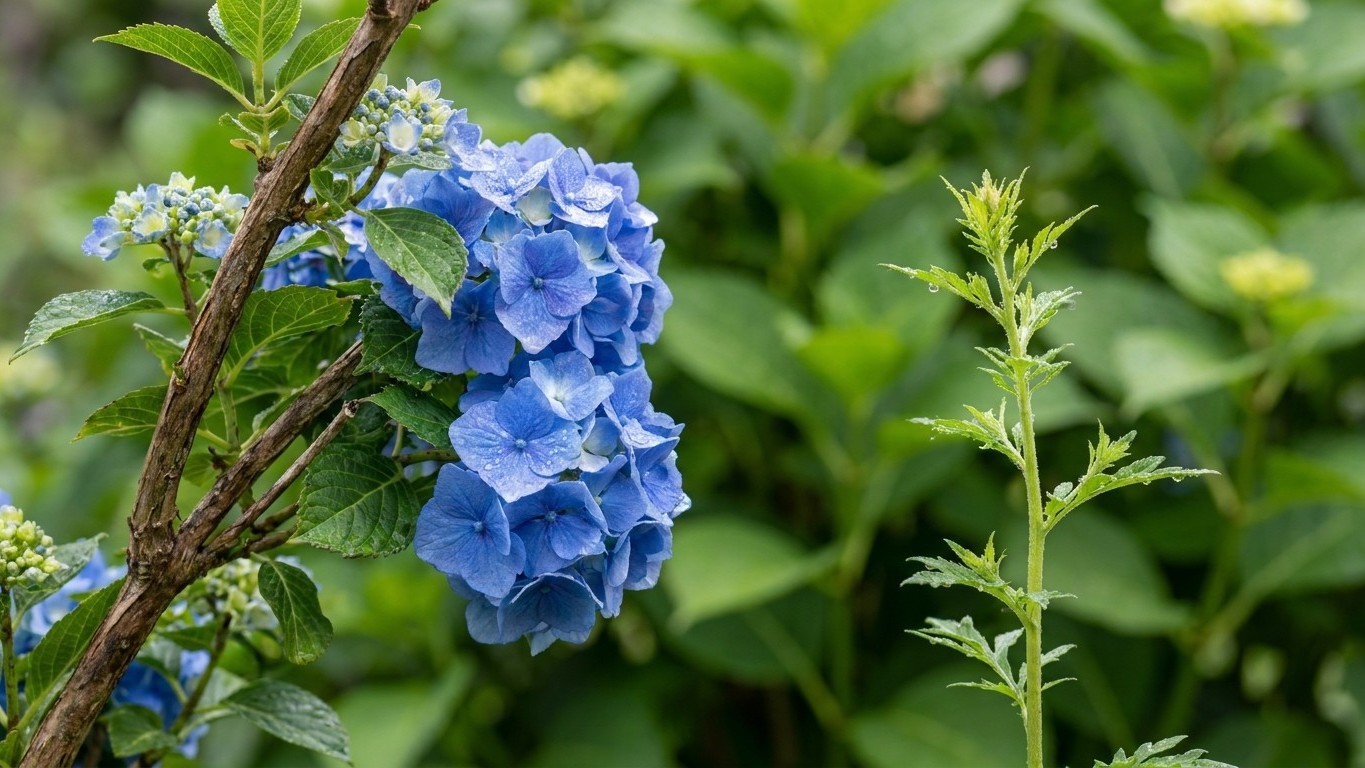

Most Vermont hydrangeas need little more than a layer of mulch and good timing. Smooth and panicle types bloom on new wood and shrug off the cold. The ones worth protecting are the old-wood bigleafs, whose flower buds sit on last summer’s stems and die when a hard winter reaches them. Coverings go on after the leaves drop and the ground starts to stiffen. They come off in stages once the spring frost window has passed.
What this comes down to in Vermont

The reference city for Vermont’s frost window is Burlington, where the last spring freeze typically falls between April 30 and May 10 and the first fall freeze between October 3 and October 13. Those two ranges frame your protection calendar. Covers go on after fall freezes have arrived and the shrub is dormant, and they come off after the spring window closes.
Burlington sits on Lake Champlain, one of the milder parts of the state. The Green Mountains and the Northeast Kingdom run substantially shorter, so both ends of the calendar shift as you leave the lake. The USDA hardiness system, which rates a place only by its average annual extreme minimum temperature, puts Vermont anywhere from zone 4a to 6a on the 2023 map. That single number says nothing about wind, snow cover or January thaws, and those three often decide whether a hydrangea flowers.
When should you cover hydrangeas in Vermont?
Not at the first frost. A fall freeze only kills the foliage, and the plant still needs time to shut down. Wait until the leaves have dropped on their own and the top inch of soil is firming up on cold nights. At Burlington that usually means late October into November, and earlier as you go up in elevation.
Mulch laid over warm soil also gives mice and voles a cozy home against the stems. Putting cover on late keeps the ground cold and the rodents elsewhere.
Spring is often the riskiest moment, not midwinter. A warm spell in April wakes the buds, and a freeze afterward kills them. Uncovering in stages, and keeping a cover within reach until the window of April 30 to May 10 has passed (and later in colder places), protects against that swing.
Which hydrangeas actually need winter protection?
Bigleaf hydrangeas (Hydrangea macrophylla) and mountain hydrangeas (H. serrata) form flower buds on old wood. Oakleaf hydrangeas do too, though they tolerate cold better. Those are the shrubs to cage and mulch. Smooth hydrangeas (H. arborescens) and panicle hydrangeas (H. paniculata) flower on new wood, so they bloom even if winter cuts them back to the ground. A first-year plant of any type still appreciates a mulch blanket over its roots.
Reblooming bigleafs fall in between. They set buds on both old and new wood, so a harsh winter costs the early flush but not the whole season. For a variety-by-variety look at how each type handles the state’s cold, see Which Hydrangeas Survive a Vermont Winter.
For a bigleaf, the usual setup is a ring of hardware cloth or wire fencing set out from the stems and filled loosely with dry oak leaves or straw. A burlap screen on the windward side cuts the wind that dries out buds. Plastic wrap traps moisture and heat on sunny days, so skip it.
Working it out for your own garden
How do you set protection dates for your own garden?
Start with Burlington’s ranges, then adjust for your site. In fall, the first freeze falls between October 3 and October 13. Leaf drop and a stiffening ground follow a few weeks later, which puts cover work in late October and November. Colder ground comes sooner as you gain elevation, so move the job earlier. A hollow where cold air settles or an open hilltop gets the same treatment.
In spring, work from the other end of the window. The last freeze at Burlington falls between April 30 and May 10. Open the top of the cage near the start of that band, so air moves and the buds don’t cook on sunny afternoons. Pull the burlap and leaves as the band ends. Keep a sheet or a bucket handy for a surprise freeze after buds have swollen. If you garden in the mountains or the Northeast Kingdom, add a week or two and let the forecast settle it.
Will a given hydrangea flower after a Vermont winter?
Take Annabelle, a smooth hydrangea. It is usually rated hardy to zone 3, so it is hardy beyond even the coldest Vermont zones. It blooms on new wood. If a hard winter kills every stem above ground, the roots send up fresh shoots once the last-frost window passes, and those shoots carry white flower heads by midsummer. It usually flowers after a normal winter and even after a brutal one.
Now take a classic old-wood bigleaf such as Nikko Blue, typically listed for warmer zones. Its buds form on the stems in late summer and fall. A winter that kills stems back to the snowline kills those buds with them. The shrub still leafs out from the base and looks healthy, but it may produce few or no flowers that year. In Burlington’s milder corner, a well-built cage and good snow cover may carry the buds through. Farther up the hills, expect leaves and few or no blooms. Gardeners who want blue flowers from a bigleaf will find the soil side covered in Why Hydrangeas Are Pink in Vermont, and How to Turn Them Blue, but color only matters if the buds survive.
How can you tell winter injury from disease?
Scratch the bark of a stem with a fingernail in late spring. Green underneath means live wood. Tan or brown means dead. Hydrangeas leaf out late, so a bare shrub in early May is often just slow. Wait until the new leaves appear before you cut, then prune back to the first live buds.
Dead stems that end at a roughly even height, usually near the snowline, point to cold. Gnawed bark and tunnels near the base point to rodents. Spots on leaves that appear in midsummer on otherwise healthy stems are a different problem entirely, and they belong in a separate diagnosis.
What changes across the state
Vermont’s winter varies more from place to place than most gardeners expect. Elevation drives most of it. Air cools as you climb, so a village high in the Green Mountains starts winter earlier and ends it later than a yard in the Champlain Valley. The Northeast Kingdom is the coldest part of the state, and its growing season is substantially shorter than Burlington’s.
Lake Champlain softens things along its shore. Open water holds heat into the fall, which delays the first hard freeze, and the lake also slows spring warming enough to hold buds back from a false start. Farther from the lake, those effects fade.
North versus south matters less than height, but it still counts. Low river valleys in the southern half of the state tend to run milder than the hills around them, though cold air still drains into hollows on still nights and sits there. A frost pocket at the bottom of a slope can be colder than a site higher up.
How much colder is it away from Burlington?
Often enough that Burlington’s dates are closer to a best case than an average. Treat them as the earliest you could uncover in spring and the latest you could cover in fall. Higher up, lean toward new-wood hydrangeas and keep any bigleafs in the most sheltered spots, such as against a south-facing foundation.
Snow complicates the picture in a helpful way. Mountain towns get deeper and more reliable snowpack, and snow insulates the roots and lower stems. Wind-scoured ridgelines get the cold without the cover.
The mistakes this state punishes

Is it a mistake to uncover hydrangeas during an April warm spell?
Yes, and it is a common way for Vermont gardeners to lose a year of flowers. A warm run in April feels like spring, but the last-frost window at Burlington does not open until April 30, and later elsewhere. Buds exposed and swollen by warm weather will not survive the next freeze. Open the cage gradually, and keep the burlap and a cover cloth within reach until the window closes.
The opposite error is mulching too early. Heavy mulch on soil that has not yet chilled keeps the crown warm and gives voles a winter shelter. Wait for the ground to firm up first.
Which fall chores hurt hydrangeas?
Pruning old-wood types in fall removes next summer’s flowers. Fertilizing late pushes soft new growth that freezes. Both are easy to avoid by putting the shears and the fertilizer away after midsummer.
A subtler error is counting on a wrap to rescue a poor choice. A bigleaf planted on an exposed hillside in the colder zones of the state may leaf out every year and never bloom, whatever you do with burlap. If flowers matter, plant a panicle or smooth type there and keep the bigleaf in a sheltered spot.
Road salt is a local problem too. Snow plowed or shoveled off a salted driveway and piled on a shrub can burn the stems and harm the roots. Keep hydrangeas away from the plow line.
Checking this against your county
A state-wide frost window is a starting point. Your own hillside, valley or lakeshore can run a week or two off Burlington’s dates in either direction. University of Vermont Extension has staff and Master Gardener volunteers who know your county’s local conditions, and they can tell you how recent winters treated shrubs near you. For the broader picture of site, soil and care, the full write-up on growing hydrangeas in Vermont covers what this guide leaves out.
Common questions
Should I wrap hydrangeas in burlap?
A burlap screen works as a windbreak on the windward side of a bigleaf. As a full wrap, it does little unless it surrounds a cage of dry leaves. Never use plastic, which holds moisture against the stems and overheats on sunny days.
When should I prune hydrangeas after winter?
Prune panicle and smooth hydrangeas in late winter or very early spring, before new growth starts. For bigleaf, mountain and oakleaf types, wait until leaves have emerged and remove only the stems that scratch brown. Cutting earlier risks removing live buds.
Can potted hydrangeas stay outside through a Vermont winter?
Roots in a pot get far colder than roots in the ground. Move the container to an unheated garage or shed once the plant is dormant, water it lightly every few weeks, and bring it back out after the spring frost window passes.
Does snow help or hurt hydrangeas?
Snow insulates roots and lower stems, which is a real benefit. Heavy, wet snow can bend or snap panicle stems, so knock it off gently with a broom, working from the bottom up. Keep salty plowed snow off the shrubs.