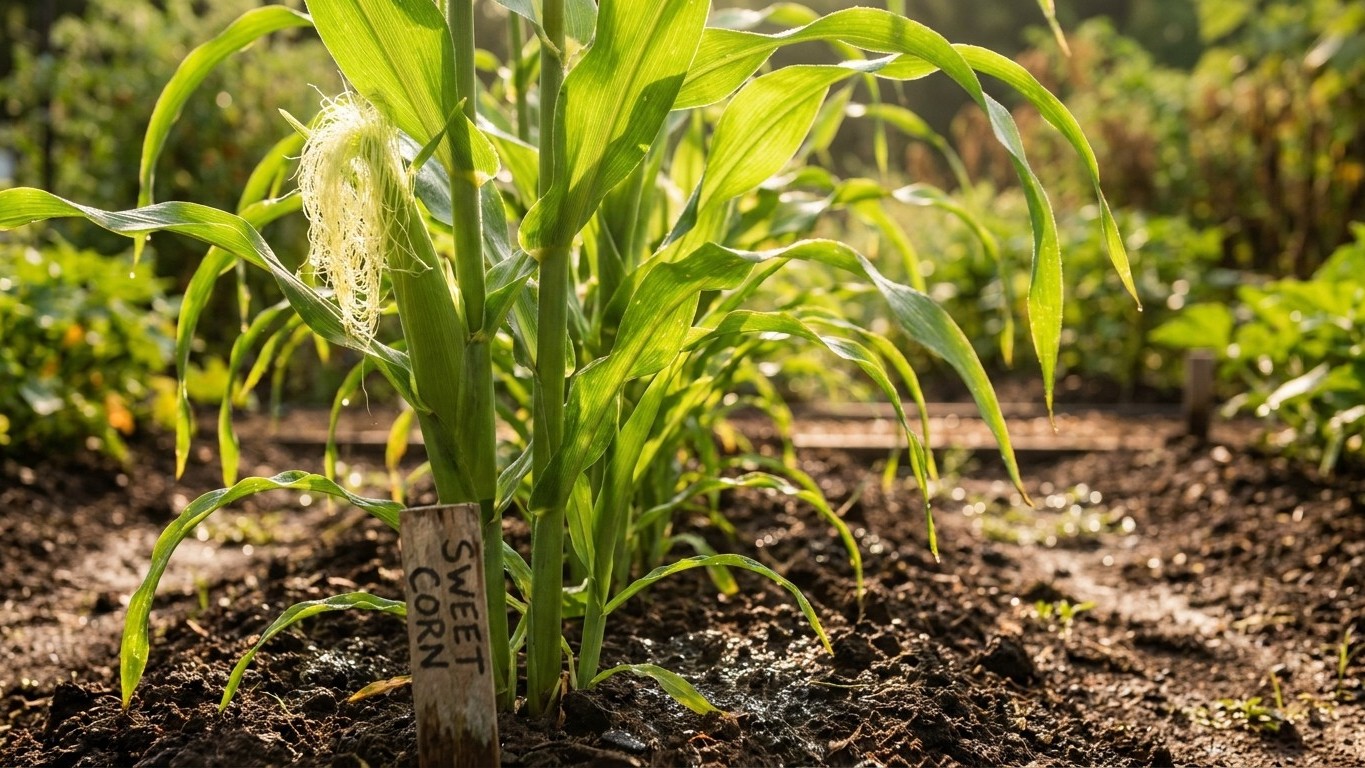

Yes, sweet corn can ripen in Vermont, but only if the calendar math actually works out. The state’s frost-free stretch runs a little over five months in its mildest corner, and corn won’t even think about sprouting until the soil itself warms up, not just the air. Near Lake Champlain, most varieties finish with room to spare. Away from the lake, in the Green Mountains and the Northeast Kingdom, the same crop is racing a much shorter clock.
The short answer
Start with the soil, not the frost date. Sweet corn needs soil temperatures above 60°F before it will germinate reliably, and that threshold arrives well after the last spring frost clears the ground. At the reference station on Lake Champlain, the last spring frost lands somewhere between April 30 and May 10, according to NOAA’s 1991-2020 Climate Normals for station USW00014742. But warm soil is a separate event. Air can stop freezing while the ground underneath is still cold from winter, sometimes by weeks, and that lag is exactly what trips up gardeners who plant on the frost date instead of waiting for the soil to catch up.
Once the soil does hit that 60°F mark, the countdown that actually matters begins: sweet corn needs 60 to 90 days from planting to harvest, per Utah State University Extension’s guidance on the crop. So the real question isn’t “did we miss frost,” it’s “how much runway is left between a realistic planting date and the first fall frost.” That fall frost, at the same reference station, arrives between October 3 and October 13. Counting from the tail end of the spring frost window through to the early edge of the fall frost window gives a growing season of roughly five months, which is generous by the standards of short-season crops but not unlimited once you subtract the weeks the soil spends warming up before planting can even start.
Heat load is the other half of the equation, and here Vermont’s numbers work in the corn’s favor without being dramatic. The reference station averages just 5.4 days a year at 90°F or hotter. That’s a modest heat load, not a scorching one, which means sweet corn here isn’t fighting drought stress or heat-driven pollination failure the way it might in a hotter state. The limiting factor in Vermont isn’t too much heat, it’s whether there’s enough warm season, start to finish, to let the plant complete its cycle before the first fall frost shuts things down.
Put together, the short answer is that sweet corn ripens reliably in the mildest parts of the state, where the season between soil warm-up and fall frost is longest. The tighter the local season runs, particularly at elevation or in the Northeast Kingdom, the more that math starts to pinch, and variety choice becomes the deciding factor rather than an afterthought.
Does a late variety fit here?
The 60-to-90-day range from the source isn’t a suggestion, it’s the whole game. Whichever end of that range a variety falls on determines whether it has any business going into a Vermont garden at all.
A 60-day variety
A variety maturing in roughly 60 days from planting is the safer bet almost everywhere in the state. Even accounting for the soil needing time to reach 60°F after the last spring frost, and even in a region where the frost-free window runs shorter than the Champlain valley’s, 60 days is a modest ask. Planted once the soil is genuinely warm, a 60-day type has a wide cushion before the first fall frost arrives in early-to-mid October at the reference station, and even wider cushion is available in warmer microclimates. This is the type that gives Vermont gardeners the most forgiving margin for a late spring, a cool June, or a planting date pushed back by a wet week.
A 90-day variety
A 90-day type is a different story, and the honest answer is that it does not reliably fit outside the mildest pockets of the state. Near Lake Champlain, where the season runs closest to the full five months described above, a 90-day variety can work if it goes in the ground as soon as the soil hits 60°F, without delay. But the source is explicit that the Green Mountains and the Northeast Kingdom run “substantially shorter” seasons than the Champlain valley reference station. Stack a slow soil warm-up on top of an already-shorter frost-free window, and a 90-day variety simply runs out of season before it finishes in those regions. The plain answer: don’t plant a 90-day type if you’re gardening away from the lake, and even in the mildest valleys, treat it as a tight fit rather than a sure thing.
| Variety type | Days needed (planting to harvest) | Fits near Lake Champlain | Fits Green Mountains / Northeast Kingdom |
|---|---|---|---|
| 60-day type | 60 days | Yes, comfortably | Yes, with normal care |
| 90-day type | 90 days | Tight, but workable if planted promptly | Not reliable |
What goes wrong here
- Soil sown too cold. Planting the moment the last frost has passed, rather than waiting for the soil to actually reach 60°F, is the most common mistake. Seed sits in cold ground, germinates unevenly or rots outright, and the whole planting has to be redone weeks later, eating into the season instead of saving time. The remedy is patience: let the ground warm past the frost date before dropping seed, even if that means planting later than instinct suggests.
- A variety too late for the season. Choosing a 90-day type outside the mildest valleys, or even within them without prompt planting, runs the clock out before the first fall frost. The remedy is matching variety to region: a 60-day type for anywhere away from Lake Champlain, and prompt planting even in the mildest pockets if a longer-season type is the goal.
- Sweetness lost to a tasseling clash, and this one has nothing to do with climate. Utah State University Extension is clear that su, se, and sh2 sweet corn types lose their sweetness if they tassel at the same time as each other nearby. This is a pollination issue, not a weather issue, and it catches gardeners who plant two different sweetness types side by side without staggering them. The source gives no isolation distance to follow, so the fix isn’t a number of feet, it’s timing: stagger plantings so the different types don’t tassel in the same window, and grow each type in its own block of three or more rows rather than a single thin row, since sweet corn pollinates by wind and needs that block shape to pollinate itself properly.
Common questions
Can I plant sweet corn right after the last frost in Vermont?
Not ideally. The last spring frost at the reference station falls between April 30 and May 10, but the soil needs to reach 60°F before sweet corn will germinate well, and that soil warm-up happens later than the frost date itself. Planting on the frost date alone risks cold, slow-germinating seed.
How do I know when sweet corn is actually ripe?
Three signs together, not one alone: the silks have turned dry and brown, the husks are still moist and green, and juice from a punctured kernel runs milky rather than clear or watery. All three need to line up before picking.
Does the Northeast Kingdom really have a shorter corn season than Burlington?
Yes. The reference frost dates cited here come from a station on Lake Champlain, the mildest corner of the state. The Green Mountains and the Northeast Kingdom run substantially shorter frost-free windows, which is exactly why a 90-day variety is a poor fit in those regions even though it can work near the lake.
Do I need to keep different corn varieties a set distance apart?
The available guidance doesn’t specify a distance in feet or rows. What it does say is that su, se, and sh2 types lose sweetness if they tassel at the same time. The practical fix is staggering planting dates so tasseling windows don’t overlap, rather than relying on a spacing number that isn’t published here.