
Will Sweet Corn Ripen in Vermont? Yes, but not on the calendar most gardeners assume. The soil has to warm well past the last frost before seed goes in the ground, and once it does, the growing season here gives a real but sometimes narrow window before autumn cold returns. Where you garden inside the state changes the math substantially.
The short answer
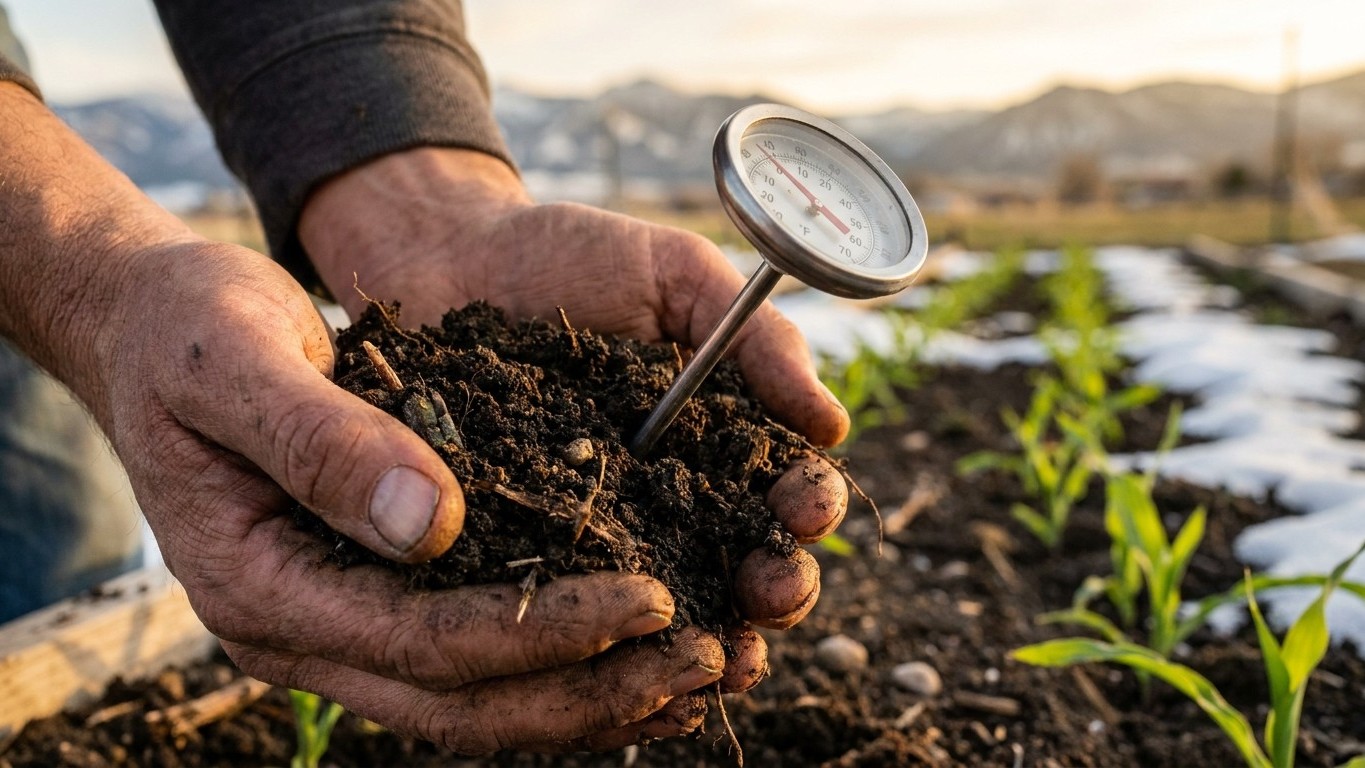
Around Burlington, on the mild shoulder of Lake Champlain, the last spring frost typically falls somewhere between April 30 and May 10. That date matters, but it isn’t the one that decides When to Sow Sweet Corn in Vermont. Sweet corn seed wants soil temperature above 60 F, and soil doesn’t warm at the same pace as the air above it. A patch of ground can sit well below 60 F for weeks after the last frost has passed, especially if it’s shaded, heavy with clay, or still soaked from spring rain. In practice, that means the real planting window at the mildest sites along the lake usually doesn’t open until later in May, sometimes drifting into early June in a slow, wet spring. There’s no published soil-temperature date specific to Vermont to hang a number on here, so the honest approach is to check the ground itself with a soil thermometer rather than trust the frost date alone.
On the other end of the season, the first fall frost at the same reference station arrives between October 3 and October 13. That gives a working season, from the point soil finally clears 60 F to the first fall frost, that runs roughly four and a half months at best in the Champlain Valley. Sweet corn needs 60 to 90 days from planting to maturity depending on the variety, so at this mildest corner of the state, both a quick 60-day type and a longer 90-day type have room to work, at least on paper.
The caution built into that answer is geographic. Burlington sits in the most favorable microclimate Vermont has: lake-moderated, with a longer frost-free stretch than almost anywhere else in the state. The Green Mountains and the Northeast Kingdom run substantially shorter seasons, with frost lingering later into spring and returning earlier in fall. That shrinks the usable window from both ends at once, which is exactly the kind of squeeze that catches out a slow-maturing variety.
One more number worth carrying into this decision: Vermont averages just 5.4 days a year above 90 F. That’s a modest heat load compared to corn country farther south or west, and it means the crop won’t be racing through its growing degree days the way it might in a hot summer climate. Corn here needs its full stretch of days to actually reach maturity, not just calendar days but warm ones. A short, cool summer can stall a crop that would have sailed through in a hotter state.
Does a late variety fit here?
A 60-day variety
A quick-maturing type built around a 60-day timeline is the safer bet almost everywhere in Vermont. Even if soil doesn’t clear 60 F until early June in a cooler valley or higher elevation, a 60-day count from that planting date lands the harvest by early August, comfortably ahead of any first fall frost recorded at the reference station in early October. That leaves a wide safety margin for a cool stretch mid-summer, a slow start, or a need to replant after a poor germination. For gardeners in the Northeast Kingdom or up in the hills, where the frost-free stretch runs noticeably shorter than at the lake, a 60-day variety is really the one that keeps the math comfortable rather than tight.
A 90-day variety
Stretch that same planting date out to a 90-day variety and the picture changes fast. At the mildest Champlain Valley sites, where soil might clear 60 F by late May and frost doesn’t return until early-to-mid October, a 90-day crop can just about fit, though with far less margin for a late spring or an early fall cold snap. Move away from that lakeside pocket, into higher ground or the interior of the state, and the same variety runs into trouble: soil warms later, frost returns sooner, and a 90-day count from a June planting can easily push past the point where the season simply runs out. Put plainly, a late-season 90-day variety does not reliably fit most of Vermont. It’s a gamble even in the most favorable spots, and outside them it’s a bet against the calendar that the calendar usually wins.
What goes wrong here
- Seed sown into cold soil. Planting by the frost date instead of the soil temperature is probably the single most common mistake here, since the last frost can fall in early May while the ground itself stays under 60 F for weeks afterward. Cold, wet soil rots seed or produces thin, uneven stands. The fix is simple: check the soil itself with a thermometer before planting, and hold off until it’s reliably above 60 F rather than trusting the frost date as a stand-in.
- A variety too late for the season. Choosing a 90-day type outside the mildest valley pockets sets the harvest up against a fall frost that may arrive before the ears finish filling. The remedy is matching the variety to the location: 60-day types for higher ground and the Northeast Kingdom, and reserving longer-season varieties for the warmest, lowest sites near the lake, where the frost-free stretch actually supports them.
- Sweetness lost to cross-pollination. This one has nothing to do with Vermont’s climate. Standard (su), sugary-enhanced (se), and supersweet (sh2) types will cross if they tassel at the same time, and the result is corn that tastes starchy instead of sweet, regardless of how well the season treated the plants. There’s no published distance that keeps this from happening, so the working solution is timing: grow only one type at a time, or stagger planting dates enough that the different types aren’t shedding pollen and putting out silk during the same window. Planting in a block of three or more rows, rather than a single thin row, also helps pollination happen evenly within one type.
Checking this against your own county
Every number here comes from a single reference station near Burlington, and that’s the mildest ground Vermont has to offer. A garden in Rutland, Caledonia, or Essex County can see a meaningfully shorter frost-free season than what’s described above, with soil warming later in spring and frost returning earlier in fall. Before committing to a variety, it’s worth checking local planting guidance through University of Vermont Extension, which can speak to conditions in your specific county rather than the lakeside averages used here. Elevation, distance from the lake, and whether a garden sits in a low frost pocket or on a warmer slope all shift the picture more than most gardeners expect.
Common questions
When should I plant sweet corn in Vermont?
Not on the frost date. Wait until the soil itself, checked with a thermometer, holds steady above 60 F. Near Burlington that often means late May at the earliest; in cooler parts of the state it can run into early June.
Can I grow sweet corn in the Northeast Kingdom or higher elevations?
Yes, but lean toward a 60-day variety rather than a 90-day one. The frost-free season there runs shorter than at the lake, and a longer-season variety leaves too little margin against an early fall frost.
How do I know when the corn is ripe?
Look for three signs together, not just one: silks that have turned dry and brown, husks that are still moist and green, and milky juice when a kernel is punctured. Any one of these alone can be misleading. Separately, picking timing usually falls 17 to 24 days after silks first appear, which is a different clock from the 60-to-90-day count that decides whether the crop fits the season at all.
Why did my corn turn out starchy instead of sweet?
Most likely a nearby planting of a different corn type, standard, sugary-enhanced, or supersweet, tasseled at the same time as yours. The pollen crossed, and the sweetness was lost regardless of how the growing season went. Staggering planting dates or growing just one type solves this.