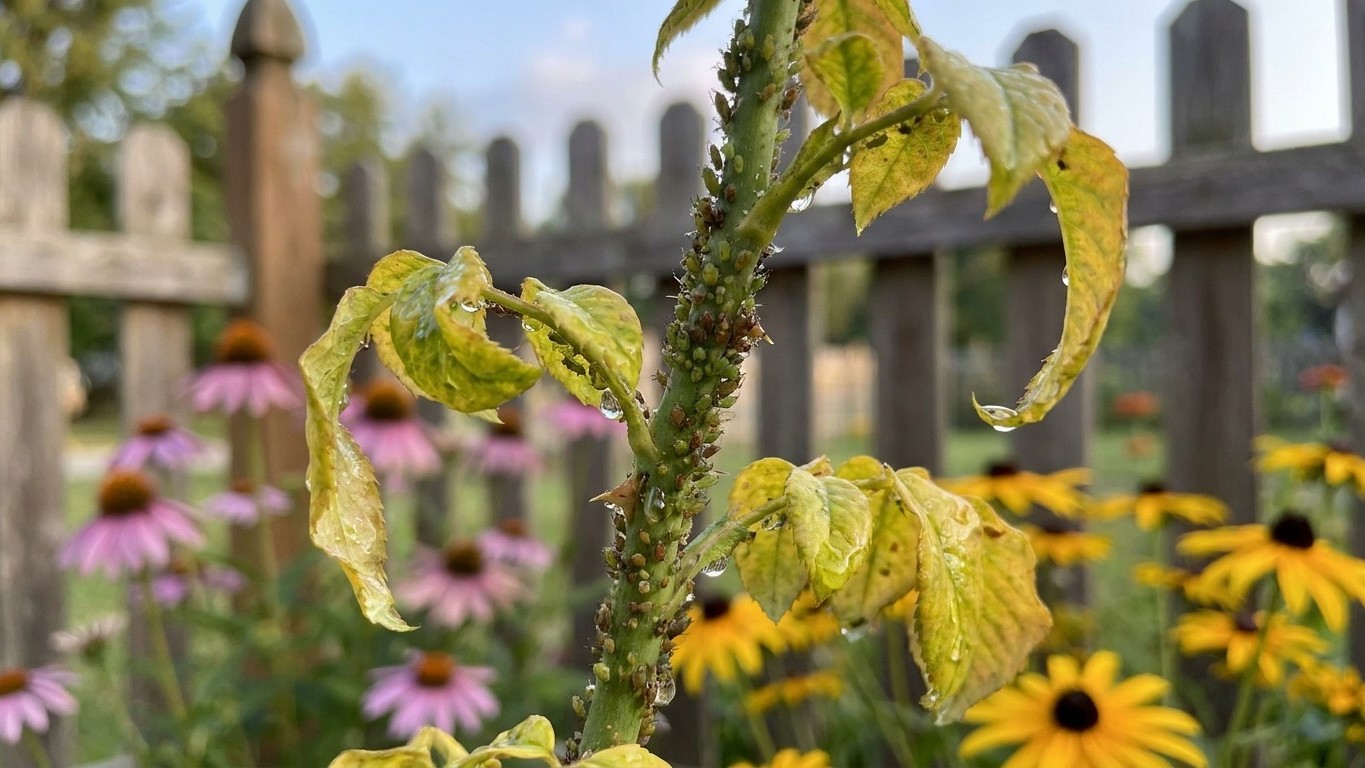

Aphids show up in Wisconsin gardens and fields as early as mid-May in the southern counties and can persist through late September in a mild fall. The state’s cold winters kill off most aphid populations outright, but eggs laid on woody hosts in autumn survive the freeze and hatch the moment spring temperatures climb above 50 degrees Fahrenheit. Control works best when you target that early hatch, before colonies multiply into the honeydew-dripping mess that coats porch railings and car hoods by midsummer.
Wisconsin’s Aphid Season: Timing by Region

Wisconsin spans USDA hardiness zones 3 through 5, which means the aphid calendar shifts by two to three weeks depending on where you garden. In Milwaukee, Madison, and other zone 5 pockets along Lake Michigan and the southern tier, aphids emerge from overwintering eggs in early to mid-May. Head north toward Ashland or Rhinelander, solidly in zone 3, and that first hatch often waits until late May or early June.
Peak populations follow roughly six to eight weeks later, once several generations have stacked up. Aphids reproduce asexually through most of the season, with females giving birth to live young without mating. A single female can produce dozens of offspring in a week under warm, humid conditions, which is exactly what much of Wisconsin delivers in July. That reproductive speed explains why a barely noticeable cluster on a rose stem can become a full infestation in ten days.
Cooler, wetter springs slow the buildup. A late frost or a stretch of chilly, rainy May weather, common in years when Lake Superior keeps the North Woods cool, can push the population curve back by a week or two. Farmers watching for soybean aphid outbreaks pay close attention to these spring patterns because timing dictates when scouting should start in the fields.
The Soybean Aphid: Wisconsin’s Biggest Aphid Problem
For home gardeners, aphids are a nuisance. For Wisconsin’s agricultural economy, one species is a genuine financial threat. The soybean aphid (Aphis glycines) is not native to North America. It was first detected in the United States in 2000 and reached the Upper Midwest within a couple of growing seasons, finding Wisconsin’s soybean acreage and its abundant buckthorn hedgerows an ideal combination.
That buckthorn connection matters. Common buckthorn, an invasive shrub already widespread in Wisconsin woodlots and fencerows, serves as the winter host where soybean aphid eggs survive the cold months. Come spring, newly hatched aphids feed on buckthorn briefly before winged adults migrate to soybean fields, sometimes traveling several miles on wind currents. This two-host life cycle is part of why the pest has proven so hard to eliminate regionally: cutting back one host without addressing the other barely dents the population.
University-based integrated pest management programs across the Midwest recommend an economic threshold of 250 aphids per plant, with populations still trending upward, before applying a foliar insecticide on soybeans. Treating earlier wastes money and kills beneficial insects that would otherwise help suppress the outbreak naturally. Wisconsin growers who scout weekly during July and August, rather than reacting to visible honeydew or sooty mold, consistently report better yield protection and fewer wasted spray applications.
Which Plants in Wisconsin Yards Get Hit First
Outside of farm fields, certain landscape plants act as early-warning signals. Roses, especially new growth and flower buds, are frequent early hosts across the state. Milkweed, ironically the same plant gardeners plant for monarch butterflies, attracts oleander aphids in dense orange clusters that can weaken stems before caterpillars ever arrive. Vegetable gardeners in Wisconsin routinely see aphids on cabbage family crops, peppers, and the undersides of kale leaves by early summer.
Trees carry their own aphid species. Boxelder trees, common as volunteer growth along Wisconsin fence lines and vacant lots, host aphids that drop sticky honeydew onto anything parked or seated underneath. Maple and birch trees, both landscape staples from Green Bay to La Crosse, can show curling leaves and blackened sooty mold on lower branches when aphid populations go unchecked for a season or two.
Indoor and greenhouse growers aren’t exempt either. Aphids overwintering indoors on houseplants can restart an outdoor infestation the moment plants move outside for the summer, a detail that catches a lot of Wisconsin gardeners off guard after a winter of nursing tropicals under grow lights.
Natural Predators Already Working in Your Yard
Wisconsin’s growing season supports a solid lineup of aphid predators, and recognizing them before reaching for a spray bottle saves both money and beneficial insects. Lady beetle larvae, which look more like tiny black-and-orange alligators than the familiar spotted adults, can eat 40 or more aphids a day during their larval stage. Green lacewing larvae are equally aggressive, sometimes called “aphid lions” for good reason.
Parasitic wasps, nearly invisible at a glance because most species measure only a few millimeters, lay eggs inside aphid bodies. The result is a mummified, papery-looking aphid shell that many gardeners mistake for a dead pest rather than evidence of biological control already underway. Finding a few of these tan, bloated aphid mummies on a plant is a good sign, not a bad one.
Syrphid fly larvae, sometimes called hoverfly larvae, round out the predator lineup and are especially active in Wisconsin’s flower borders where adults are drawn to pollen and nectar sources. Planting dill, fennel, yarrow, or alyssum near vegetable beds gives these predators a reason to stick around rather than passing through.
Ants Complicate the Picture
Ants and aphids have a working relationship that gardeners should understand before treating either one. Aphids excrete honeydew, a sugary byproduct of feeding on plant sap, and ants harvest it as a food source. In exchange, ants actively defend aphid colonies from predators like lady beetles and even relocate aphids to fresher feeding sites. A visible ant trail running up a stem is often the clearest sign of an aphid colony forming higher up on the plant, even before the aphids themselves are obvious.
Treatment Options That Actually Work in Wisconsin Conditions
A strong jet of water from a garden hose knocks most soft-bodied aphids off plant stems and leaves, and it’s often the first and only step needed for a light infestation caught early. Aphids have poor climbing ability once dislodged, and many won’t make it back onto the plant, especially if the soil around the base has been disturbed as well.
Insecticidal soap and horticultural oil remain the go-to options for moderate infestations on roses, vegetables, and ornamentals. Both work by disrupting the aphid’s outer coating rather than through systemic toxicity, which means they break down quickly and pose minimal risk to pollinators and predator insects when applied in early morning or evening, outside of active bee foraging hours. Reapplication every five to seven days during an active outbreak usually keeps pace with the aphid reproduction cycle.
Neem oil offers similar contact control while also acting as a mild deterrent against future egg-laying. For woody ornamentals and trees with recurring aphid problems, a dormant oil application in early spring, before buds break, targets overwintering eggs directly and reduces the size of the first hatch.
Systemic insecticides exist for severe cases, particularly on non-edible ornamentals, but they carry a real cost: they persist in nectar and pollen long enough to affect visiting pollinators, which makes them a poor fit for Wisconsin yards with active vegetable gardens or nearby flowering plants that support bees. Reserving them for isolated, non-flowering shrubs limits that risk.
Preventing Recurrence Through the Growing Season
Reducing nitrogen-heavy fertilizer use is one of the most overlooked prevention steps. Excess nitrogen pushes soft, sappy new growth that aphids prefer over tougher, mature foliage. Wisconsin gardeners who switch to slow-release or lower-nitrogen fertilizer formulations, particularly on roses and tomatoes, often see noticeably smaller aphid colonies without any additional spraying.
Removing buckthorn where it’s practical helps break the soybean aphid’s overwintering cycle on a local scale, and it carries the added benefit of controlling an invasive shrub that already crowds out native understory plants across Wisconsin woodlots. For home landscapes, checking new plant purchases for aphid clusters before bringing them home, especially in spring when nurseries are moving fast-growing annuals, stops a lot of infestations before they start.
Row covers on young vegetable transplants keep winged adult aphids from landing in the first place, a low-effort barrier that works particularly well on brassicas through late May and early June. Once plants are established and flowering, covers come off to let pollinators and predator insects do their part for the rest of the season.