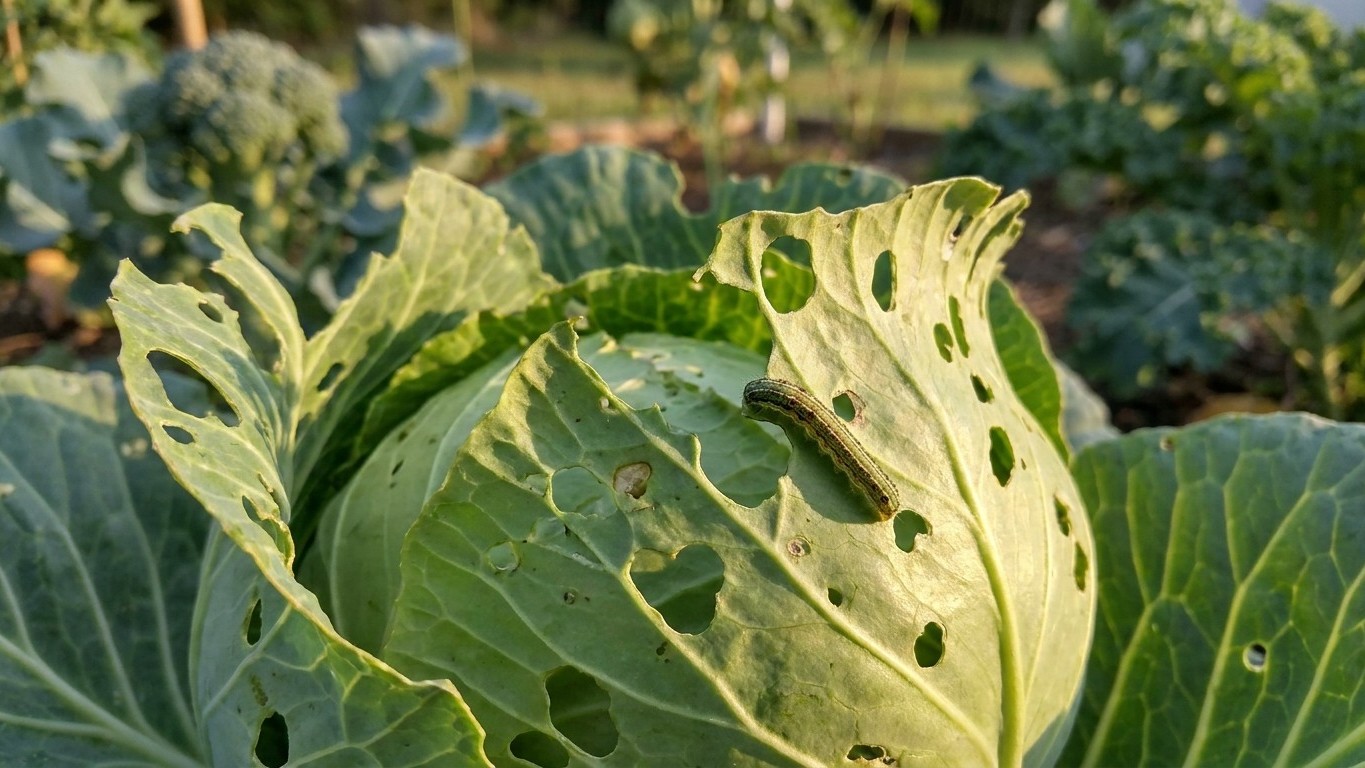

Cross-striped cabbageworm shows up in Virginia mainly from midsummer into fall, not in spring like its cool-season cousins. It targets cole crops such as cabbage, broccoli, and kale, feeding as a caterpillar that chews ragged holes and burrows into heads. Row covers, hand-picking, and fall garden cleanup do more against it than anything sprayed on after the fact.
The weeks to watch
Virginia Cooperative Extension does not publish a specific flight calendar for cross-striped cabbageworm the way it does for some fruit pests, so growers here rely on the general pattern documented across the Mid-Atlantic and Southeast: this insect is a warm-season feeder, active from about July through the first hard frost, with populations building as summer heat peaks rather than tapering off like imported cabbageworm or diamondback moth.
First generation
Moths typically begin laying eggs on cole crops once nighttime temperatures settle into the 60s, which in most of Virginia lands sometime in June or early July. This first wave often goes unnoticed because populations are small and plants are still vigorous enough to outgrow minor feeding.
Later generations
The real trouble comes from the second and third generations, layered on top of each other from August into October. Because the species can complete a generation in roughly three to four weeks under warm conditions, numbers compound fast, and fall brassica plantings, cabbage, broccoli, and kale set out for autumn harvest, take the worst of it.
Reading the calendar from your last frost
Cross-striped cabbageworm doesn’t check a calendar. It responds to soil and air warmth, so a warm spring or a mild fall stretches its active window on both ends. The last spring frost date matters less for predicting this pest directly than it does for setting the whole planting schedule that determines when your fall crop is in the ground and vulnerable during peak caterpillar activity.
- Start with the NOAA 30-year normal for coastal Virginia: last spring frost falls between March 20 and April 3 at the Virginia Beach station (NAS Oceana). That range is a probability band, not a promise, and it applies to the mild coastal edge of the state.
- Work forward from there to plan a fall brassica crop timed to mature before the pest’s late-summer surge: many Virginia gardeners transplant cole crops in mid-to-late summer for fall harvest, and general extension guidance across the region notes that first caterpillar damage on a new planting can appear within roughly four to six weeks of transplanting during warm months.
Gardeners in the Blue Ridge or southwest Virginia should shift this whole schedule later, since frost arrives sooner there in fall and later in spring, compressing the pest’s active season somewhat compared to the coast.
What it attacks, and what the damage looks like
The first sign is rarely the caterpillar itself. Gardeners usually notice ragged, irregular holes chewed through outer leaves, or a strange bored-out look at the center of a developing cabbage or broccoli head, well before they spot anything moving. Young larvae feed on the undersides of leaves, skeletonizing tissue between veins, while older larvae bore directly into the heads of cabbage and broccoli, leaving behind grainy dark frass that’s easy to mistake for dirt.
It’s the larval stage, the caterpillar itself, that causes essentially all the damage. Adults are small, brownish moths that don’t feed on the crop; they exist to lay eggs. That distinction matters for timing any response, since once larvae have tunneled into a dense head, physical controls applied to the plant’s surface have little left to work on.
Crops at risk in Virginia gardens include:
- Cabbage
- Broccoli
- Cauliflower
- Kale
- Collards
- Mustard greens
- Turnip greens
How Virginia sits in this pest’s range
Cross-striped cabbageworm is widespread across the Southeast and Mid-Atlantic, and Virginia falls well within its established range rather than at some edge where its presence is in question. That means the meaningful difference between Virginia and neighboring states isn’t whether the pest shows up, it’s when and how many generations a season allows. Warmer, longer growing seasons to the south typically support more generations packed into a year; Virginia’s mix of coastal, Piedmont, and mountain climates produces a shorter, later-starting window the farther west and higher in elevation a garden sits.
No Virginia-specific severity ranking or trend data accompanies this pest in the way frost dates do, so it’s worth resisting the urge to treat coastal reports of heavy damage as representative of the whole state. A garden in the Shenandoah Valley or far southwest Virginia is working with a compressed fall window compared to Virginia Beach, and that alone can mean the difference between two generations doing real damage and three.
What actually works against it
Cheapest and most effective options come first, and each one has a point where it quits working.
- Time the planting to dodge peak pressure. Setting out fall brassicas slightly earlier, so the crop is past its most vulnerable seedling stage before August’s generation peak, reduces exposure without any added labor. This stops helping once the plant is already in the ground during an active outbreak.
- Install floating row covers at transplant. A physical barrier keeps egg-laying moths off the plant entirely. The mechanism is simple exclusion, no chemistry involved, but it only works if the cover goes on before moths arrive and stays sealed at the edges; once a moth gets underneath and lays eggs, the cover does nothing more.
- Hand-pick caterpillars and egg clusters. Checking the undersides of leaves every few days and removing larvae by hand controls small infestations directly. This becomes impractical, though not useless, once populations climb into the dozens per plant.
- Rotate cole crops to a different bed each year. Pupae that survive in the soil near where crucifers grew have less to feed on if the same family of plants isn’t replanted there. This lowers pressure over time but does nothing about moths flying in from a neighbor’s garden.
- Clear crop debris after harvest. Removing old cabbage and broccoli stalks in fall eliminates a place for pupae to overwinter locally. Once larvae are already boring inside a head at the end of the season, cleanup won’t save that plant, but it reduces next year’s starting population.
Once larvae have tunneled into the dense core of a cabbage or broccoli head, none of these measures reach them anymore. At that point the practical move is removing and discarding the affected head rather than trying to salvage it.
Common questions
Does cross-striped cabbageworm overwinter in Virginia?
Yes, it overwinters as pupae in soil and plant debris near where host crops grew, which is why clearing old cole crop stalks and leaves after harvest reduces the population available to emerge the following summer.
How is it different from cabbage looper or imported cabbageworm?
Cross-striped cabbageworm is easiest to spot by its markings: distinct bluish-gray to black bands across a yellowish body, unlike the smooth green of a cabbage looper or the velvety green of an imported cabbageworm caterpillar. It’s also more of a late-summer and fall problem, while the other two are active from spring onward.
Can floating row covers stay on all season?
They can, as long as the crop doesn’t need pollinator access, which cole crops grown for leaves or heads generally don’t. Covers need to come off, or be checked closely, if plants are allowed to flower or if heat buildup underneath becomes a problem during Virginia’s hottest summer stretches.