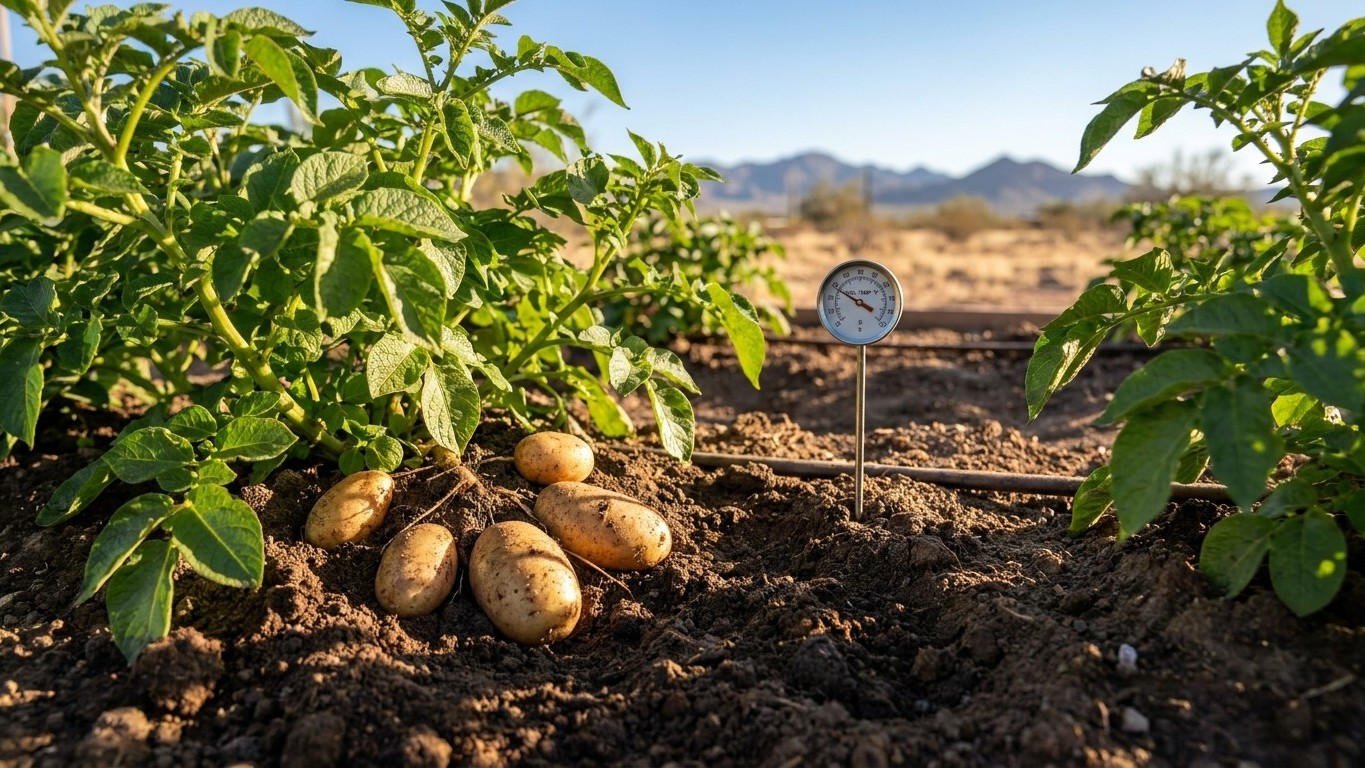

For Washington gardens, the best sweet potatoes are early-maturing, orange-fleshed varieties with compact or medium-length vines, grown from slips on soil you have warmed on purpose. West of the Cascades, summers run mild with little real heat. East of them, the season is shorter still. Fast types, black plastic and patience make the crop realistic in both halves of the state.
The short answer for Washington
Choose by type before you choose by name. Pick quick-maturing, orange-fleshed sweet potatoes with short to medium vines, and skip the big, slow, long-vine types bred for the Deep South. Georgia Jet and Vardaman are the kind of variety names that come up for short seasons and tight beds, though what has actually been trialled near you matters more than any list.
The reason is heat, not frost. At the Seattle reference station, the 32F freeze probabilities (30-70% band) put the last spring frost between February 27 and March 18, and the first fall frost between November 13 and November 30. Those are the dates when the odds of a freeze sit in that band, so any single year can land on either side. The station has a long stretch between the mean last spring frost and the mean first fall frost. Sweet potatoes cannot use most of it, because they stall in cool soil and cool nights. The same station reaches 90F or more on only 3.0 days a year, and that is the number that decides everything else.
A sweet potato builds its storage roots on accumulated warmth. Where summers deliver few hot days, the variety has to finish its job on modest heat and in a window that begins late and ends when fall rain and cool soil return. Slow varieties often produce plenty of vine and thin, stringy roots. Quick ones produce a usable harvest.
Here is how the main types sort out for a typical western Washington garden:
| Type | How it fares in a cool, short-heat summer | Verdict |
|---|---|---|
| Early, orange-fleshed, short-vine | Sizes up on modest warmth and fits a raised bed or large container | Best bet |
| Medium-season, orange-fleshed | Works with black plastic and a warm, sunny site | Worth trying |
| Long-season, long-vine (including many purple and white-fleshed types) | Strong vines, small or late roots | Risky without extra warmth |
Start with the first row and treat the second as an experiment on your sunniest square of ground. The full guide to Growing Sweet Potatoes in Washington covers the growing season from slips to curing. For timing, see When to Plant Sweet Potatoes in Washington.
What will not work here
Three plans fail most often in Washington, and each one can be avoided once you see the reason.
Why does planting at the last frost date fail?
A February or March last-frost window looks generous, and it tempts people to plant early. The ground disagrees. West of the Cascades, spring soil stays cold and wet well past the last freeze, and the light is still low. Slips set into that soil sit with roots that cannot take up water, and the plants stay small or fail outright. Frost is only one of the ways the cold hurts them; cold, soggy soil does the damage even on a night with no freeze at all.
Wait until the bed feels warm to your hand and nights have settled. Laying black plastic over the bed for a couple of weeks before planting helps a lot, since it warms the soil faster than bare ground does. The calendar page gives the planting window in more detail.
Why do slow, long-vine varieties disappoint?
Varieties bred for long, hot seasons need heat that Seattle supplies on about three days a year. The vines still run, because leaf growth needs less warmth than root bulking does, and it looks like success until digging day, when the roots are thin. Purple-skinned and white-fleshed types often fall in this group, so a catalog that sells them for the South is not describing your summer. If you want to grow one, give it the warmest, sunniest spot you have and treat the result as a bonus.
The fall end matters too. The first fall frost arrives from November 13 to November 30 in the mild west, but the roots stop sizing long before then, once soil temperatures drop and the rains return. Waiting for frost to end the season gains you little. Dig before the soil turns cold and soggy, because roots left in wet ground can rot.
Can you rely on summer rain?
Not entirely. June, July and August bring about 3.0 inches of rain together (June 1.45, July 0.6, August 0.97), out of 39.3 inches over the year. July is the driest month, at 0.6 inches, which falls right when the roots are filling out. Established sweet potatoes handle dry weather better than most vegetables, but newly set slips need steady moisture to root, and the bulking roots do better with consistent water than with long dry spells followed by a soaking.
What that rainfall means in practice depends on your soil. A sandy bed lets it through within the day, so it may need water every few days in July. A clay bed holds it for a week or more, and sweet potatoes in heavy, waterlogged clay rot or form misshapen roots. Raised beds or ridges of loose, well-drained soil suit both situations. These are station averages for 1991-2020, so a rain gauge on your own plot tells you what actually fell.
What changes across Washington
The state spans USDA hardiness zones 4a to 9a (USDA Plant Hardiness Zone Map, 2023, built on 1991-2020 normals). That is a wide spread, and no single recommendation fits it. The zone rests on one measure, the average annual extreme minimum temperature, so it tells you how cold winter gets, and only loosely how warm the summer is. For a crop that cares about summer warmth, treat it as a rough guide. Look up your own location on the USDA map rather than guessing from a neighbor’s garden.
The Seattle figures above describe western Washington, mild and maritime. Eastern Washington beyond the Cascades is high desert with a far shorter season. Its frost dates cannot be read off the Seattle window, and the season for sweet potatoes there is tighter at both ends. Summer days there generally run hotter and drier than on the coast, so watering matters more, while the shorter season leaves less room for slow varieties.
If you garden in the north or at altitude, shift three things. First, choose only the earliest types and drop the medium-season experiment. Second, move to black plastic, low tunnels or large containers set against a sunny wall, all of which raise soil temperature faster than an open bed. Third, plant later and dig earlier than the Seattle pattern suggests, because the warm stretch that sweet potatoes need is shorter in the foothills and mountain valleys. In the hottest parts of the east, the opposite adjustment applies: mulch to hold moisture, and water deeply when the slips are new.
Where to check this for your own county
Washington State University Extension is the place to confirm any of this for your own ground. Its county offices know the local microclimates, and its Master Gardener volunteers answer exactly this kind of question. Statewide advice has to cover everything from zone 4a to zone 9a, so a county recommendation beats it every time.
Two things are worth hunting for. The first is a local planting calendar: it should give a date window for setting out warm-season transplants in your county, and sweet potatoes follow the same logic as tomatoes, peppers and squash. The second is a list of varieties that have been trialled near you. Vegetable trials on the cool west side and in the drier east tell you which sweet potato types produced usable roots, which is better evidence than a catalog description.
If no sweet potato trial exists for your county, ask the office which warm-season crops have done well in local gardens and which sites around town run warmest. A county office can also tell you how close your area is to the reference conditions used here, and whether your valley, slope or town sits cooler or warmer than the numbers suggest. Write down what they tell you and compare it with the first season’s results.
Checking this against your own garden
Dates give you a starting point, and your own observations should override them. Three things are worth watching, and none needs more than your hands and eyes.
- Soil warmth by feel. Push your hand into the bed to planting depth on a mid-morning. If it feels cool and clammy, the slips will sulk, so wait. If one corner of the garden feels warm before the rest, that is your best planting spot, and it tells you where heat collects, for example against a south-facing wall or fence.
- New leaves on the slips. After planting, healthy slips push out fresh leaves. If they hold still or yellow, the soil is too cold or too wet, and that tells you whether your bed drains and warms well enough.
- Vine growth and the first blooms. The pale, morning-glory-like flowers tend to follow warm weather. A bed that blooms and runs vines early is running warm. Few flowers and slow runners in July suggest a cooler spot, so give it less room next year or shift the crop to a hotter corner.
Keep a few notes, and by the second season your own spot will outrank any statewide window.
Common questions
Can you grow sweet potatoes in Seattle?
Yes, with fast-maturing orange-fleshed varieties and some help for the soil. Black plastic, a raised bed and the sunniest location you have make a real difference, because the area reaches 90F or more on only 3.0 days a year.
Should I grow my own slips or buy them?
Buying slips from a nursery or mail-order supplier is simplest, and you get a named variety. Starting your own from a sweet potato is possible, but grocery roots are often treated to stop sprouting and are an unknown variety, which matters when you need an early type.
Is eastern Washington too dry or too short for sweet potatoes?
It is harder, but not hopeless. The season is far shorter than in the Seattle area, so only the quickest varieties make sense, and the soil needs warming and steady watering when the slips are new. Check with your county extension office for local results.
How much water do sweet potatoes need in a Washington summer?
Keep new slips evenly moist until they root, then water deeply during dry spells, more often on sandy soil and less on clay. With only about 0.6 inches of rain in July on average, expect to water, and use a rain gauge to see what your garden actually receives.