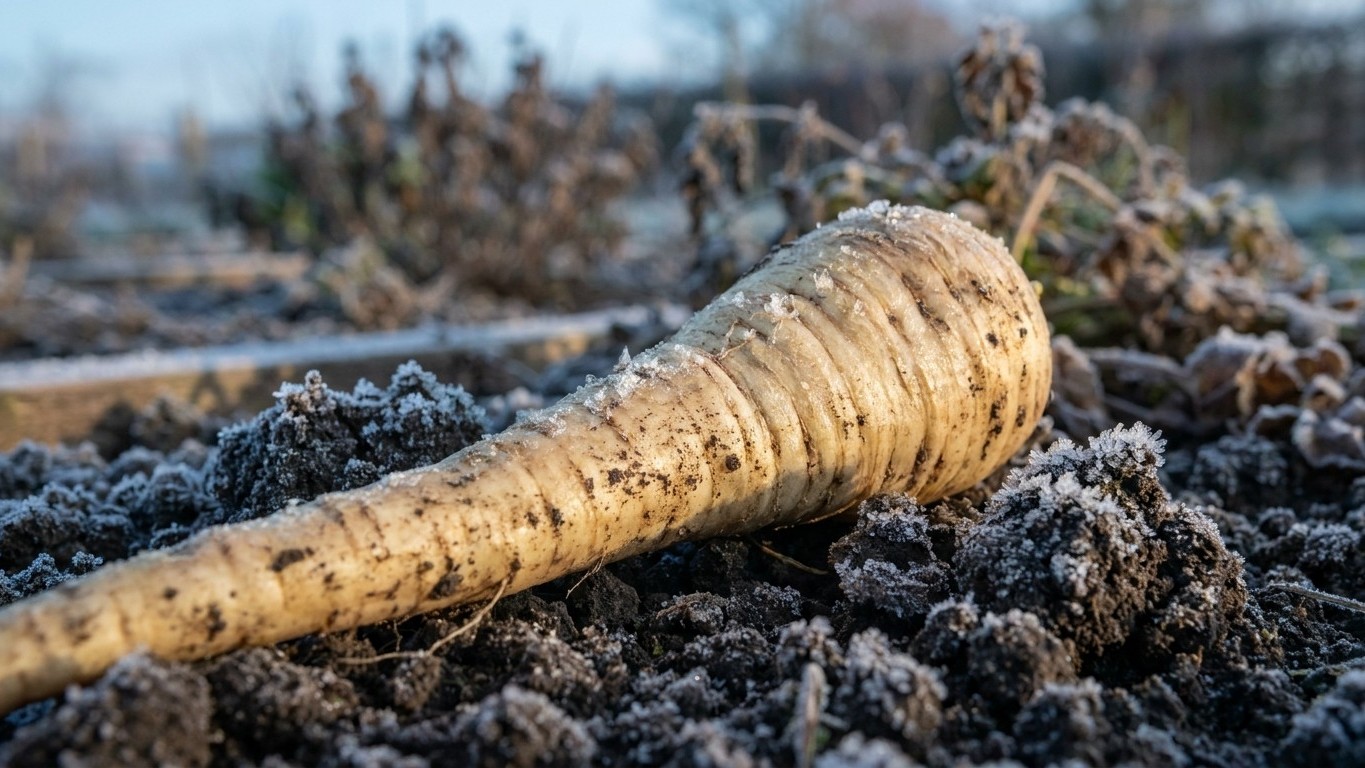

West Virginia gardeners growing parsnip mostly deal with four pest groups documented by WVU Extension: aphids and whiteflies, flea beetles, slugs, and Japanese beetles. Each shows up at a different point in the season, tied less to a calendar month than to the state’s frost-free window, which runs roughly from mid-to-late April to mid-October depending on elevation.
Which pests attack parsnip in West Virginia

WVU Extension documents eleven garden pests across the state’s vegetable crops: Aphids and whiteflies, Asparagus beetles, Cabbage worms, Colorado potato beetle, Corn earworm, Cucumber beetles, Flea beetles, Harlequin bug, Japanese beetle, Slugs, and Tobacco hornworm. That’s the full list for this territory, and it isn’t padded out here with anything the service hasn’t recorded.
Most of those names don’t belong on a parsnip page, and it’s worth saying why. Asparagus beetles feed on asparagus spears and ferns, not root vegetables. Cabbage worms and harlequin bug are brassica specialists, tied to cabbage, kale, and their relatives. Colorado potato beetle and tobacco hornworm are nightshade feeders, built for potato, tomato, and eggplant foliage. Cucumber beetles need a cucurbit, squash, melon, or cucumber, to complete their life cycle. Corn earworm favors corn ears and, secondarily, tomato fruit, neither of which describes a parsnip planting. None of these six have a documented reason to touch an umbellifer like parsnip, and putting them on this page would just confuse a reader staring at a chewed leaf.
That leaves four groups with a real claim on a parsnip bed. Aphids and whiteflies are generalist sap feeders that colonize the undersides of leaves on almost any tender vegetable, parsnip included. Flea beetles are notorious seedling pests across the carrot family, chewing tiny shot-holes in young leaves right when a stand is most vulnerable. Slugs move onto damp soil surfaces and feed on emerging seedlings and lower leaves, especially in wet stretches. Japanese beetle is a broad-host skeletonizer that will work through garden foliage, parsnip tops included, once adults emerge in numbers.
The single number that matters most for spotting early damage is 14 to 21 days, the germination window for parsnip seed. A bare-looking row during that stretch isn’t pest damage. It’s just parsnip being slow.
When each one shows up, and what it does first
Parsnip is sown in place, directly into the bed, two to three weeks before the last spring frost. In this part of West Virginia that frost window runs from April 9 to April 23, with higher elevations trending colder. From that sowing date, germination itself takes 14 to 21 days, and the crop needs 100 to 120 days total before it’s ready to dig. That long, slow timeline is exactly why pest pressure builds in stages rather than all at once.
Flea beetles arrive first, often within the first few weeks after true leaves appear. What you notice isn’t a beetle, usually, but the damage: small, rounded holes scattered across young leaves, sometimes described as looking like the leaf was hit with fine buckshot. Seedlings under stress from flea beetle feeding can stall out entirely, which matters more on parsnip than on a fast crop, since there’s no room to lose growing days on a 100-to-120-day timeline.
Slugs follow close behind, particularly in wet springs or gardens with heavy mulch. The first sign is usually ragged, irregular holes in leaf tissue rather than the neat perforations flea beetles leave, along with a telltale slime trail across the soil or nearby mulch, most visible early in the morning.
Aphids and whiteflies show up mid-season, once the parsnip canopy has filled in enough to offer shelter on the undersides of leaves. The first clue is rarely the insect itself. It’s a sticky residue on leaves (honeydew) or a dusty cloud of tiny white insects rising when foliage is disturbed.
Japanese beetle activity concentrates later, generally as the parsnip foliage matures through the middle of the frost-free season. Feeding shows up as skeletonized leaves, the green tissue eaten away between the veins so the leaf looks lacy and pale, sometimes with beetles visible in clusters on the foliage during the warmest part of the day.
Telling the damage apart from everything else
Parsnip has its own quirks that get blamed on insects when they aren’t. A forked or misshapen root is the classic example, and it has two separate causes worth keeping apart rather than lumping together: heavy, stony, or compacted ground that physically deflects the taproot as it grows, and overwatering, which encourages excess side-root branching. Neither one involves a pest, and neither shows up as chewed foliage.
The decisive check is where the damage sits. Insect feeding shows up as visible tissue loss on leaves or stems above ground. Root shape problems and slow, patchy germination point somewhere else, usually the soil itself or watering habits rather than anything crawling or flying in from outside.
| What you see | Likely cause | What tells it apart |
|---|---|---|
| Small round holes across young leaves | Flea beetles | Damage is on foliage only; no slime, and holes look punched rather than ragged |
| Ragged holes plus slime trails | Slugs | Most visible in early morning or after rain; concentrated near soil level |
| Sticky leaves, tiny white flying insects | Aphids and whiteflies | Clusters on leaf undersides; sticky residue rather than missing tissue |
| Lacy, skeletonized leaves | Japanese beetle | Green tissue eaten between veins; beetles often visible on the plant |
| Forked or split root | Heavy or stony soil, OR overwatering | No foliage damage at all; root shape is the only symptom |
| Bare row, no seedlings after two weeks | Normal germination lag, not a pest | Parsnip seed simply takes 14 to 21 days to emerge |
A reader who isn’t sure which column applies gains nothing by guessing at a pesticide. The safer move is a call to the local extension office, described below, before treating anything.
What actually works here, and what is a waste of time
Timing beats treatment on a crop with a season this long. A lightweight physical barrier, like row cover, laid over the bed at sowing and left in place through the first few weeks after germination, keeps flea beetles and slugs off the most vulnerable seedlings without touching a single chemical. Because parsnip doesn’t need pollinator access at the seedling stage, cover can stay on longer than it could on a flowering crop, which is exactly the window when young leaves are thinnest and most attractive to feeding insects.
Hand-picking Japanese beetles off foliage in the early morning, when they’re sluggish from cool overnight temperatures, thins numbers on a small planting without any product at all. Reducing slug habitat, clearing dense mulch or debris right against the row, does more for slug pressure than anything applied after the fact, since slugs need that damp cover to survive daytime heat.
What doesn’t work is treating on a fixed date rather than a symptom. Spraying preventively in a given week, regardless of what’s actually feeding, wastes effort on a short growing season where every week matters for root sizing. It also risks harming beneficial insects that would otherwise keep aphid numbers in check on their own. Working wet soil to try to “fix” a forked root mid-season doesn’t help either. That problem was set the day the bed was prepared, not the day the root was pulled.
For anything beyond covers and hand-picking, a product recommendation depends on what’s labeled for use in West Virginia specifically, and that’s a question for the local extension office, not a generic answer.
Where to check this for your own county
WVU Extension is the service that documents these pests for the state, and it’s the right first call for anything specific to a particular garden. Pest presence isn’t uniform across West Virginia. A river valley planting near Charleston runs on a longer frost-free stretch than a garden at higher elevation, and pest emergence timing shifts along with it.
The gesture that matters most: contact the county extension office before treating, not after. A statewide list tells you what’s possible. It doesn’t tell you what’s actually established in a specific county, at a specific elevation, in a specific soil type. That gap is exactly what a county office fills, often with someone who has looked at parsnip damage from gardens nearby and knows what’s currently active in the area.
Bring a photo or a sample if a county office visit is possible. Isolated leaf damage, root shape, and timing of first symptoms all help narrow down which of the four groups is involved, or rule out all of them in favor of a soil or watering issue instead.
Common questions
Do I need to worry about pests before parsnip seedlings even emerge?
No. Germination takes 14 to 21 days on its own, and a bare-looking row during that stretch is normal, not pest damage. Wait for true leaves before checking for feeding signs.
Why does my parsnip root fork even though I never saw an insect?
Forking comes from heavy or stony soil deflecting the taproot, or from overwatering encouraging side roots, not from any pest on this list. Foliage stays undamaged in both cases.
Will my parsnips taste sweet if West Virginia’s winters stay mild?
The sugar conversion depends on actual exposure to frosty weather after the roots size up, not on the general hardiness zone. A mild stretch produces a fine parsnip that simply never develops that characteristic sweetness.
Is there one spray that handles all four pest groups at once?
No single approach covers aphids, flea beetles, slugs, and Japanese beetles at once, since they feed differently and appear at different points in the season. Row covers early, hand-picking later, and a call to the county extension office for anything beyond that is the more reliable path.