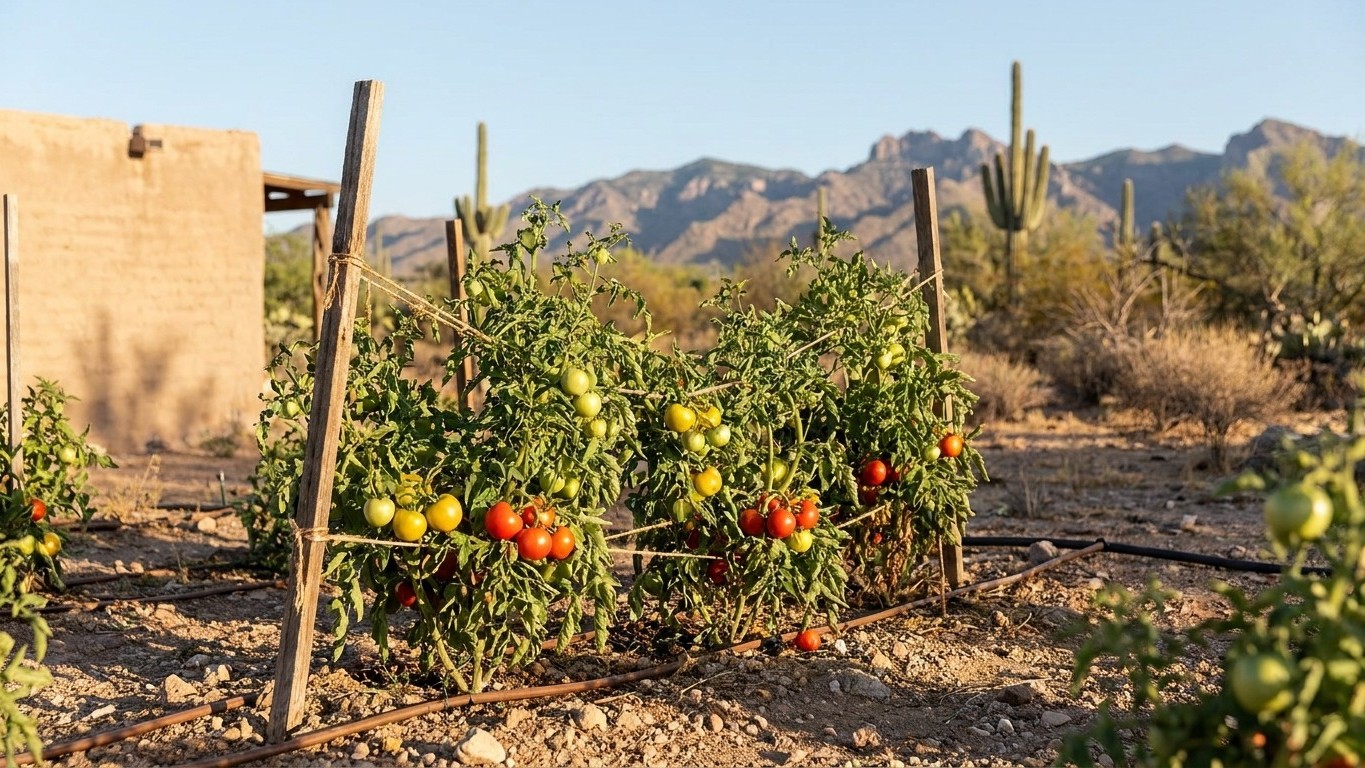

Pick tomatoes as they color up all season long, but the calendar that matters most is the one counting down to first frost. In the Charleston area, that arrives sometime between October 18 and November 1. Anything still green on the vine when that window closes needs to come inside, because frost turns a tomato from “not ready yet” to “compost” overnight.
When to pick tomatoes in West Virginia
Tomato ripening isn’t really a calendar event. It’s a temperature event. The fruit needs sustained warmth, generally in the 68 to 77 degree range, to convert chlorophyll into the reds, oranges, and yellows we associate with a ripe tomato. Once nights start dropping into the 50s, that process crawls to a stop even if the plant is still alive. That’s why a tomato can sit green on a healthy-looking vine for weeks once fall settles in.
What ends the guessing game is frost, not cold nights. Once temperatures hit 32 degrees, the water inside the plant cells freezes, ruptures the cell walls, and the fruit turns to mush within a day or two. According to NOAA’s 1991-2020 Climate Normals for station USW00013866 in Charleston, the first fall freeze in that 30 to 70 percent probability band lands between October 18 and November 1. That’s the trigger date range for a final, total harvest, not just the reds.
Elevation changes everything
West Virginia’s USDA Plant Hardiness Zones run from 5a up to 7a, based on the USDA Plant Hardiness Zone Map built on 1991-2020 averages. That’s a wide spread for one state, and it’s driven almost entirely by elevation. Charleston sits low in a river valley, which is why its frost dates run relatively late for the region. Ridge tops and higher valleys elsewhere in the state cool off faster once autumn arrives and typically see frost show up earlier than the Charleston window suggests. If you garden above the valley floor, treat the October 18 to November 1 range as a floor, not a fixed date, and start watching nighttime forecasts well before Halloween.
| Metric | Charleston window | What it means for picking |
|---|---|---|
| Last spring frost | April 9 to April 23 | Marks season start, not a harvest trigger |
| First fall frost | October 18 to November 1 | Deadline for pulling every remaining tomato |
| USDA hardiness zone | 5a-7a statewide, Charleston toward the warmer end | Higher elevations freeze earlier than this window |
The practical takeaway: keep picking ripe and near-ripe fruit right up until that frost window opens, then do one last full sweep of the plant before the first hard freeze hits, regardless of color.
What to Do With the green ones
Not every green tomato is the same tomato. Some will ripen into something worth eating once they’re off the vine. Others never will, no matter how long you wait. The difference comes down to maturity, and it’s worth sorting before you decide what to do with each one.
Sorting mature green from immature green
| Stage | How to spot it | Best use |
|---|---|---|
| Immature green | Dark green, hard, no shine, small | Fried green tomatoes, pickling, relish; won’t ripen well indoors |
| Mature green | Lighter green, glossy sheen, full size for the variety, slight give near the blossom end | Will ripen indoors over time |
| Breaker | First blush of pink or yellow at the blossom end | Ripens fastest and most reliably indoors |
Mature greens have already developed the internal gel around the seeds, which is the sign the fruit finished growing and just needs time and warmth to finish coloring. Immature greens haven’t reached that point, and pulling them off the vine locks them in that unripe state permanently. Trying to ripen a rock-hard, dark green tomato indoors usually ends in a shriveled fruit that never turns, so it’s better to cook those rather than wait on them.
Before frost hits, walk the whole planting and pick everything that’s showing any color at all, plus every mature green fruit you can find. Leave the truly immature ones on the vine to use fresh in a skillet, since indoor ripening won’t do much for them anyway. Handle every fruit by the stem end if possible, and set aside anything with a soft spot, a crack, or an insect hole. Damaged fruit rots fast once it’s off the plant, and it can take neighboring tomatoes down with it during storage. This is also the moment to skip the whole-plant-uprooted-and-hung-in-the-garage approach if you’re short on space; a simple sorted harvest into shallow boxes works just as well and takes up less room.
Ripening indoors, and how long they keep
Once the green tomatoes are inside, warmth and a little airflow do most of the work. A single layer of fruit in a cardboard box or on a tray, kept at room temperature, ripens more evenly than a pile stacked several deep, where the bottom layer bruises and the middle layer stays too humid. Tomatoes give off ethylene gas as they ripen, and that gas speeds up ripening in whatever else is nearby, which is why a paper bag with a banana or apple tucked in works so well for a small batch that’s ripening slowly.
Where not to put them
A sunny windowsill looks like the obvious spot, but direct sun through glass can overheat the fruit and cause it to soften unevenly or rot on the sun-facing side before the rest of the tomato catches up. A spare room, a pantry shelf, or the top of the refrigerator (away from direct light, at normal room temperature) works better than a window.
The refrigerator itself is the other trap. Temperatures below 50 degrees stop the ripening process outright and can damage the texture and flavor of a tomato that hasn’t finished coloring, leaving it mealy even after it eventually turns red. Hold off on the fridge until a tomato is fully ripe, and even then, most gardeners find flavor holds up better at room temperature for the few days it takes to use a ripe tomato up. Check the batch every couple of days, since one tomato going soft or moldy tends to speed up decay in whatever’s touching it. Pull any questionable fruit out of the group right away rather than letting it sit among the good ones.
What goes wrong here
The most common mistake is timing the refrigerator wrong. Gardeners eager to “save” a big green harvest often refrigerate everything right after picking, which locks unripe tomatoes into a state where they’ll never properly color or soften. Cold storage has a place, but only after the fruit is fully ripe and you’re just trying to stretch it a few extra days.
The second mistake is waiting too long in the field. Because Charleston’s frost window runs relatively late compared to higher parts of the state, gardeners at elevation sometimes use that valley-based date as their own deadline and lose a chunk of the crop to an earlier freeze. If your garden sits well above a river valley, don’t lean on the Charleston window as your personal cutoff; watch local forecasts as October opens rather than waiting for a calendar date.
Stacking is a quieter problem. A deep box of green tomatoes traps humidity and heat at the bottom, which speeds rot more than it speeds ripening. Spread fruit out in single layers whenever storage space allows, and rotate boxes so no fruit sits buried for weeks without a check.
Finally, sun exposure trips people up almost every season. A windowsill feels like the natural ripening spot, but the heat buildup behind glass causes soft spots and mold faster than it produces color. For questions specific to your county, elevation, or soil conditions, the WVU Extension Service is the right resource to check before the first frost catches you off guard.
Common questions
Will a tomato still ripen after frost touches the vine?
No. Frost ruptures the cell walls in the fruit, and a tomato that’s been frozen turns soft and watery within a day or two rather than continuing to color. Anything touched by frost should be tossed, not stored.
Can I pull the whole plant and hang it indoors instead of picking individual fruit?
Some gardeners do this successfully in a garage or basement, but it takes up significantly more room than sorting fruit into boxes, and it doesn’t ripen the tomatoes any faster. Picking individually also lets you sort out immature green fruit that won’t ripen anyway.
Does putting green tomatoes on a sunny windowsill speed things up?
It tends to backfire. Direct sun through glass heats the fruit unevenly, which can cause soft spots and rot on the sun-facing side before the tomato finishes ripening. Room temperature out of direct light works more evenly.
How much earlier does frost arrive at higher elevations in West Virginia?
That specific figure isn’t published here. What’s documented is that West Virginia’s USDA hardiness zones span 5a to 7a, a range driven largely by elevation, and that Charleston’s river-valley station sits toward the warmer end of that range. Higher ground elsewhere in the state should expect frost to arrive earlier than the October 18 to November 1 window recorded for Charleston, but check local forecasts rather than relying on a statewide estimate.