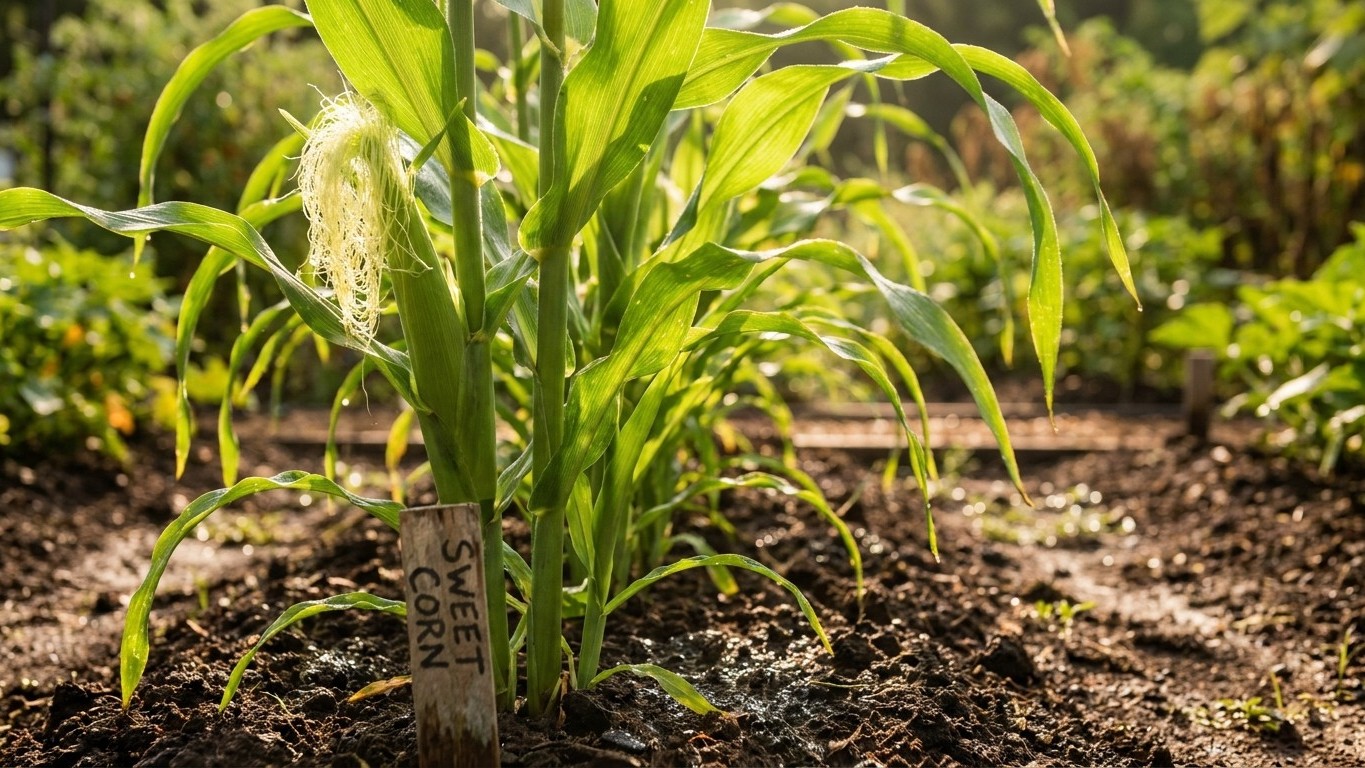

Yes, sweet corn ripens in Wisconsin, and most of the state gives it plenty of room to do so. The frost-free stretch runs from mid-to-late April through mid-to-late October, long enough for a 60-day variety with margin left over and workable for a 90-day type too, provided you don’t wait too long to get seed in the ground. The catch is that the soil, not the calendar, decides when planting can actually start.
The short answer
Air temperature and soil temperature don’t move together in spring. Wisconsin’s last spring frost, based on NOAA climate normals for the 1991-2020 period at station USW00014839, falls somewhere between April 16 and April 29 depending on the year. That date tells you when the air stops freezing. It does not tell you when the soil is warm enough to plant sweet corn. Soil above 60 F is what the crop actually requires, and soil lags behind air by design, since it takes sustained daytime warmth (not just a frost-free night) to push a few inches of ground past that mark. In practical terms, that means gardeners who plant on the last-frost date alone are usually planting into soil that’s still too cold, and the seed will simply sit there instead of germinating.
Once the soil clears 60 F, the clock that actually matters starts running: sweet corn needs 60 to 90 days from planting to harvest, depending on the variety. The question for Wisconsin isn’t whether that window exists, it’s how much of it is left after the soil catches up. First fall frost across the state, again from the same NOAA normals, arrives between October 17 and October 29. That gives a frost-free season of roughly five and a half to six and a half months from the earliest possible last-frost date to the latest possible first-fall-frost date. Even after subtracting the weeks it takes soil to warm past 60 F, there’s still comfortably more than 90 days on the table for most of the state.
Two things complicate that picture. First, Lake Michigan changes the math along the shoreline: the lake holds heat late into fall, so lakeshore counties often get an extra stretch of warmth that inland Wisconsin doesn’t share. Inland southern Wisconsin typically sees its first freeze in early October, and the north freezes considerably earlier than that, though no specific northern date is published in the source used here. Second, summer heat load matters for how the crop performs, not just whether it survives. At the Milwaukee reference station, an average of 7.0 days a year reach 90 F or higher. That’s a modest heat load. It means water demand and heat stress aren’t the main threats to sweet corn here, cold soil and a short residual season are.
Does a late variety fit here?
A 60-day variety
A 60-day type is the low-risk choice for Wisconsin. Once soil clears 60 F, and assuming that happens sometime in mid-spring, a 60-day harvest lands comfortably in mid-summer, well ahead of even the earliest fall frost date of October 17. That margin matters because it gives room for a cool stretch, a late soil warm-up, or a second planting a few weeks behind the first, which is how many gardeners stretch a single sweet corn patch into a longer harvest window instead of one big picking all at once. If the season runs colder than usual and soil takes longer to reach planting temperature, a 60-day variety absorbs that delay without threatening the harvest.
A 90-day variety
A 90-day type has less room to spare, but it still fits for most of Wisconsin. Ninety days from a mid-spring planting still lands in early-to-mid September, weeks ahead of the October frost window. The tighter case is a late, cold spring that pushes soil warm-up further into the calendar than usual: the later planting happens, the closer a 90-day harvest creeps toward the first-frost range, and in years when soil is slow to warm, that margin can shrink fast. The bigger caution applies to the northern part of the state. Because the fall frost dates cited here come from a single reference station and the north is documented to freeze far earlier, a 90-day variety in northern Wisconsin faces a genuinely tighter fit than the statewide range suggests, even though no specific northern frost date is available to quantify by how much. For northern growers, the practical move is to prioritize getting the soil test done early and plant the moment it clears 60 F, rather than waiting for a calendar date.
What goes wrong here
- Soil sown too cold. Planting on the last-frost date instead of waiting for soil above 60 F is the most common mistake. Seed sitting in cold, wet soil doesn’t germinate evenly, and some of it rots before it ever sprouts. The fix is simple: check soil temperature directly rather than counting days from the frost date, and hold off until it’s reliably above 60 F, not just brushing past it on a warm afternoon.
- A variety too late for the season. This mostly shows up in northern counties or in years with a cold, slow spring, where a 90-day type planted late runs out of season before it finishes filling out. The remedy is matching variety choice to how much margin actually exists once soil warm-up is accounted for, leaning toward a 60-day type if planting gets pushed later than planned.
- Sweetness lost to cross-pollination, and this one has nothing to do with climate. Sweet corn types differ in how much sugar they hold (su, se, and sh2 varieties), and that sweetness is compromised if two different types tassel at the same time nearby. Wind carries pollen between plantings, and the result is corn that tastes starchy instead of sweet, no matter how well the season treated it. The fix is timing, not distance: stagger plantings or choose varieties so that tasseling doesn’t overlap, and grow each type in blocks of three or more rows rather than a single thin row, since block planting improves pollination within a variety and helps keep types from mixing during their fertile window.
Common questions
Can I plant sweet corn right after the last frost in Wisconsin?
Not reliably. The last frost date only tells you when the air stops freezing. Sweet corn needs soil above 60 F, which typically takes longer to arrive than the frost-free date alone suggests. Testing soil temperature directly is a better guide than counting from the frost date.
Does Wisconsin’s growing season favor early or late varieties?
The frost-free window (roughly mid-to-late April through mid-to-late October) gives comfortable room for both 60-day and 90-day varieties across most of the state. Northern Wisconsin, where fall frost arrives considerably earlier, favors the shorter varieties as a safer bet.
Why did my sweet corn turn out starchy instead of sweet?
This is almost always a pollination issue, not a growing-season problem. If two different sweet corn types (say a standard variety and a sugar-enhanced one) tasseled at the same time nearby, cross-pollination likely diluted the sweetness. Staggering planting dates or choosing varieties with matching maturity windows prevents this.
Does the Lake Michigan shoreline change anything for sweet corn timing?
Yes. The lake holds warmth into fall, delaying the first freeze along the shoreline compared to inland areas. Inland southern Wisconsin typically freezes in early October, while the shoreline often gets extra weeks, which can matter for a later-planted or slower-maturing crop.