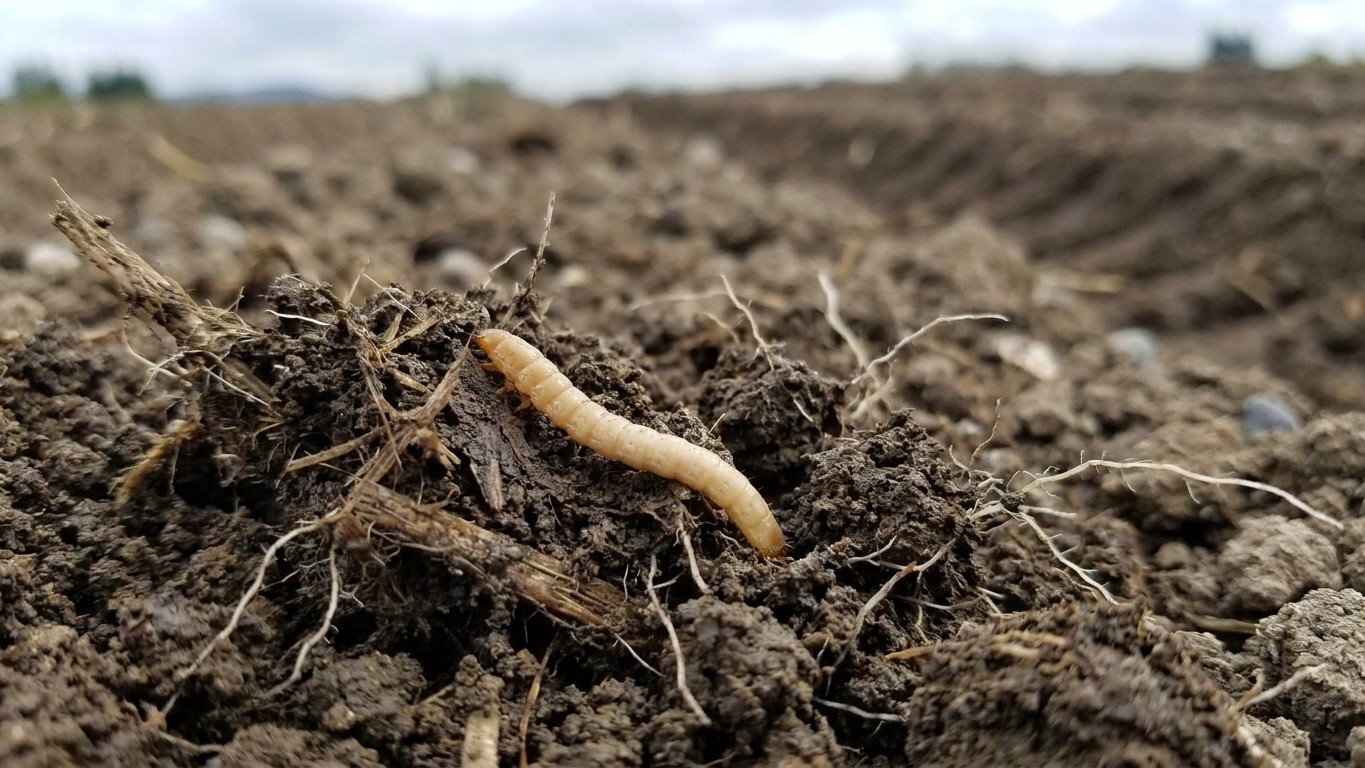

Wireworms show up in Wisconsin soil starting in early spring, right as the ground warms past the mid-40s, and they stay active through the cool months of April, May and again in September and October. Nothing kills them once they’re established in a bed. The real fix is timing: planting so seeds sprout fast, and rotating away from grass or sod for a few years.
The weeks to watch

Wisconsin’s wireworm activity tracks soil temperature, not a fixed date, and it splits into two separate windows rather than one long season.
Spring feeding
The first and heaviest damage window runs from the moment soil hits roughly 50°F, typically mid-April into late May in most of the state. This is when wireworms move up into the top few inches of soil to feed on germinating seeds and young roots, right as home gardeners are getting corn, beans and potatoes into the ground.
Fall feeding
A second, lighter feeding period happens in September and into October, as soil cools back down from summer highs and wireworms move upward again before winter. Damage during this stretch is usually minor compared to spring, since most crops are already established or near harvest.
The University of Wisconsin-Madison Division of Extension’s guide on garden insects covers the April-through-September season broadly, noting that most corn pests don’t build up until mid-August and that squash vine borer damage shows in late July. That publication doesn’t name a specific window for wireworms, so the timing above comes from the general pattern documented for this insect group rather than a Wisconsin-specific date. Treat the spring window as the one that matters most for planning.
Reading the calendar from your last frost

Wireworms don’t check a calendar. They respond to soil warming up, and how fast that happens depends entirely on how early or late spring arrives in a given year. That’s why the safest anchor for a Wisconsin gardener isn’t a wireworm date at all, it’s the last spring frost, which NOAA’s 1991-2020 climate normals put at April 16 to April 29 for this region (station USW00014839).
Here’s the arithmetic a gardener can redo with their own local frost date:
- Start from the last spring frost window (April 16-29 for this station). Soil typically warms enough for wireworm feeding within one to two weeks after that stretch begins, sometimes sooner in a dry spring, later after a wet, cold one.
- Add two to three weeks after transplanting or direct-seeding. That’s the usual span before wireworm damage on stand establishment becomes visible, since the larvae need time to find and feed on the newly softened seed or root tissue.
That math means row covers or floating fabric should go down at planting and can typically come off once seedlings have a few true leaves and roots have toughened past the tender stage, usually four to five weeks after transplant. An early spring shifts everything earlier; a cold, wet April pushes the whole window back. NOAA’s own normals are exactly that, a normal, not a promise for any single year.
What it attacks, and what the damage looks like

The first sign is rarely the insect itself. Gardeners usually notice a corn stand with gaps where seeds never came up, or a potato hill that looks fine above ground until harvest reveals narrow, dark tunnels bored straight through the tubers. Carrots and beets show similar pinhole tunneling. In seedling beds, plants wilt and die without an obvious cause, because the damage is happening below the soil line where nobody’s looking.
The larval stage is the one doing all of this. Wireworms spend two to six years underground as larvae before they ever become the adult click beetles that lay the next generation’s eggs, and it’s that long larval window when they’re chewing seeds, roots and tubers. That timeline matters for treatment: anything aimed at adult beetles does nothing for larvae already established in the soil, and there’s no way to reach larvae once they’re tunneled inside a root or tuber.
Crops most commonly hit in Wisconsin gardens include:
- Corn (seeds and germinating kernels)
- Potatoes (tubers, with visible tunneling)
- Carrots and beets (root tunneling)
- Beans and other direct-seeded vegetables
- Lettuce and other tender transplants, at the root and stem base
How Wisconsin sits in this pest’s range

Wireworms are found across essentially the entire continental United States, and Wisconsin is squarely inside that range rather than at an edge of it. That widespread distribution means the real difference between one region and another isn’t whether wireworms are present, it’s when the soil warms enough to trigger feeding and how long that spring window stays cool and damp, which is exactly the condition wireworms favor.
Within Wisconsin itself, the far north can see a shorter, later spring feeding window simply because soil there warms later in the year, while southern counties following the frost pattern described above tend to see wireworm activity start earlier. The University of Wisconsin-Madison Division of Extension guidance cited here comes from within the state (Barron County), not from a neighboring state’s data, so the seasonal pattern described applies directly to Wisconsin conditions rather than being borrowed from elsewhere.
What this means practically: a gardener moving from, say, central Illinois to northern Wisconsin should expect the same insect, the same basic biology, but a feeding window that arrives later and possibly runs shorter given the shorter growing season overall.
What actually works against it

There’s no product or trick that kills wireworms already living in a garden bed. Every effective measure works by either shortening the plant’s exposure window or by making the bed less attractive to the insect in the first place. Cheapest and most effective options first:
- Delay planting slightly and choose warm soil conditions. Faster germination means less time seeds and young roots sit exposed to feeding wireworms. This costs nothing beyond patience.
- Rotate away from grass or sod. Wireworms build up in soil that’s been under turf or pasture for years, since that’s where the adult click beetles prefer to lay eggs. Breaking a new bed out of lawn is the single highest-risk move a gardener can make; letting that ground sit in vegetables or tilled fallow for a couple seasons first reduces the population before planting.
- Use bait stations to monitor before planting. Burying pieces of raw potato or carrot a few inches deep in spring, then checking them after a few days, shows whether wireworms are present in numbers worth worrying about. This doesn’t reduce the population, but it tells a gardener whether extra precautions are worth the effort.
- Till and expose soil in fall or early spring. Disturbing the top few inches of soil brings larvae to the surface where birds and drying air can reduce numbers somewhat, though this has a modest effect at best.
- Clear plant debris after harvest. Removing old root crops and stalks reduces food sources that let a resident wireworm population carry over winter in good shape.
Once larvae have tunneled into a root or tuber, nothing changes the outcome for that plant. Home remedies involving copper barriers or ultrasonic repellents are sometimes marketed for soil insects generally, but there’s no established mechanism for how either would affect a larva feeding underground, and no Wisconsin extension trial has shown either one to work against wireworms specifically.
Common questions
Do wireworms go away on their own after a bad year?
Not quickly. Because larvae live in soil for two to six years before becoming adults, a bad infestation can produce damage across several growing seasons even if no new adults lay eggs in the meantime.
Can I tell wireworm damage from cutworm damage?
Cutworms sever stems at the soil line and work at night, leaving cut seedlings lying on the surface. Wireworms tunnel into roots and seeds underground and rarely sever a stem cleanly, so the plant is more likely to wilt slowly than fall over cut.
Is it worth testing soil for wireworms before planting a new bed?
Yes, particularly if the bed was recently converted from lawn or pasture. A simple potato bait test in early spring gives a rough read on whether the population is high enough to justify delayed planting or extra monitoring that season.