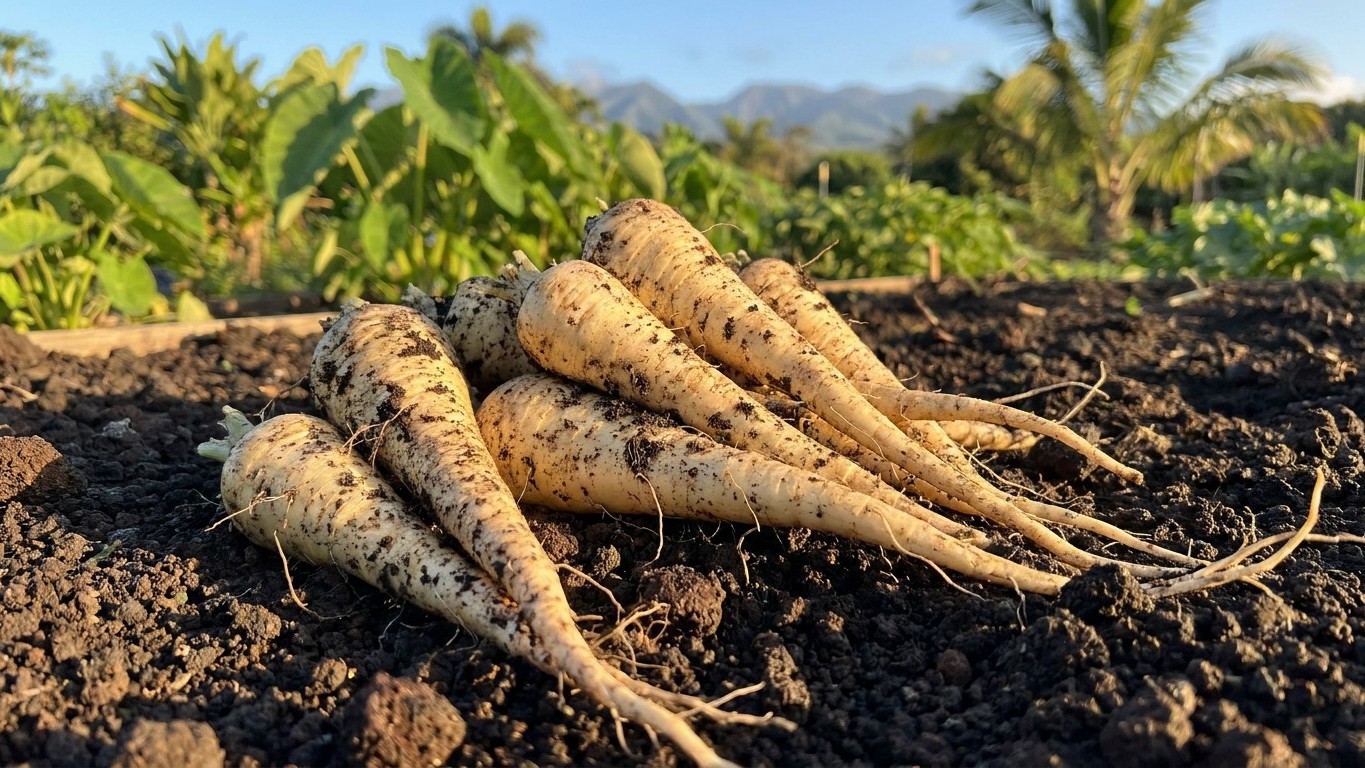

In Wyoming, parsnip tops draw grasshoppers, aphids, cutworms, flea beetles, blister beetles, and garden slugs, while root maggots tunnel into the taproot itself. University of Wyoming Extension documents these species on garden crops statewide, though which ones actually show up in a given bed, and how bad the damage gets, depends on elevation, the length of the frost-free window, and how close that garden sits to wild host plants along a fence line or irrigation ditch.
Which pests attack parsnip in Wyoming

University of Wyoming Extension documents the following species and groups on Wyoming garden crops: Aphids, Blister beetles, Cabbage worms, Colorado potato beetle, Cutworms, Flea beetles, Garden slug, Grasshoppers, Mexican bean beetle, Potato psyllid, Root maggots, Sugarbeet root aphid on table beets, and Tomato hornworm.
Not every name on that list belongs anywhere near a parsnip bed. Cabbage worms feed on cole crops (cabbage, broccoli, kale) and have no reason to touch a carrot-family root vegetable. Colorado potato beetle and potato psyllid are tied to potatoes and other nightshades, not umbellifers like parsnip. Mexican bean beetle needs beans. Tomato hornworm needs tomatoes or other solanaceous foliage. Sugarbeet root aphid is called out by the extension service specifically as a pest of table beets, which rules it out here too.
What’s left is a shorter, more relevant list: aphids, blister beetles, cutworms, flea beetles, garden slugs, grasshoppers, and root maggots. Grasshoppers and aphids are the two that Wyoming gardeners report most often on umbellifer foliage, largely because both are generalist feeders that move onto whatever green tissue is available once their preferred wild hosts thin out. Root maggots matter differently, and matter more, because parsnip is grown for its root. A fly larva tunneling into a carrot-family taproot can ruin the harvest even when the foliage above ground looks fine, which is exactly why root maggots deserve more attention here than a leaf-chewing beetle does. The decision that actually protects the crop is timing a physical barrier before the pest arrives, not identifying every species that could theoretically show up. Blister beetles, cutworms, flea beetles, and slugs round out the list as occasional rather than constant problems, showing up in some seasons and skipping others depending on moisture and what’s growing nearby.
When each one shows up, and what it does first
Wyoming’s short growing season sets the clock for all of this. With a last spring frost falling between May 7 and May 18 and the first fall frost arriving September 24 to October 5, most gardens are working with roughly 130 frost-free days at elevation, and frost can still turn up in any month at the higher benches. Parsnip seed goes into the ground directly, since the crop is not transplanted, and germination alone takes 14 to 21 days. That’s a long, vulnerable window before a single true leaf even appears, and it’s the stretch when cutworms do the most damage, clipping seedlings at the soil line before the plant has a chance to establish.
Aphids are documented as appearing on wild hosts about mid-May, which puts them active on roadside and ditch-bank plants before a Wyoming parsnip bed even has leaves large enough to feed a colony. Once parsnip foliage fills in, aphids move onto it and show up first as clusters on the undersides of new leaves, followed by curling and a sticky residue on the tops below. Flea beetles, when present, leave a scatter of small round holes across young leaves, feeding heaviest in the first few weeks after emergence while foliage is tender. Grasshoppers arrive later in the season, typically as populations build through the warmer weeks, and their damage looks like ragged, chewed edges rather than the neat holes flea beetles leave. Garden slugs favor damp, shaded soil and show up as irregular holes in leaves low to the ground, worse after a wet spell. Root maggots work unseen below the soil line for most of the season, and the first visible sign is often not on the leaves at all, it’s a wilting or stunted plant that, once pulled, shows tunneling in the root itself. Blister beetles tend to appear in clusters later in summer, stripping foliage quickly but moving on within days.
Telling the damage apart from everything else
A parsnip bed can look damaged without a single insect involved. Heavy or stony soil forces the taproot to split around an obstruction, and so does overwatering, which encourages secondary roots to branch off the main one; these are two separate causes of a forked root, not one, and neither has anything to do with a pest. Yellowing leaves can mean aphid feeding, but they can just as easily mean a nitrogen shortfall or simple drought stress, especially in the sandy soil this crop prefers. Utah State University Extension notes that parsnip does best in deep sandy soil and that heavy ground needs to be double dug before planting, which means a lot of the root distortion gardeners blame on pests is really a soil-preparation problem from the start.
| Symptom | Possible pest cause | Possible non-pest cause | What tells them apart |
|---|---|---|---|
| Forked or branched root | Root maggot tunneling (rare cause of forking) | Heavy/stony soil, or overwatering | Tunnels look bored and dark; forking from soil or water is smooth-edged |
| Yellowing foliage | Aphid colonies on leaf undersides | Nitrogen deficiency, drought stress | Check leaf undersides for clustered insects before assuming nutrients |
| Chewed leaf edges | Grasshoppers, blister beetles | Hail or wind damage | Insect chewing follows leaf veins; weather damage tends to shred randomly |
| Seedling clipped at soil line | Cutworms | Damping-off disease, frost injury | Cutworm damage is a clean cut; disease-killed seedlings collapse and rot |
None of this replaces a look at the actual plant. A local extension office can confirm what a table can only narrow down.
What actually works here, and what is a waste of time
Given how short Wyoming’s season already is, the single most effective move is a floating row cover laid down at seeding, before cutworm moths or flea beetles have any reason to visit the bed. Because germination takes 14 to 21 days before a seedling even breaks the surface, that cover needs to stay in place well past the point where the ground looks empty, or the barrier gets removed right before it matters most. Handpicking works reasonably well against blister beetles and larger caterpillars precisely because Wyoming gardens tend to be small enough for it to be practical, and slugs respond to simply keeping mulch and debris away from the base of plants so the soil surface dries between waterings.
Crop rotation matters more for root maggots than almost anything else available to a home gardener, since the flies that lay eggs near root crops will return to the same bed year after year if a carrot-family crop keeps showing up in the same spot. Rotating parsnip, carrots, and related roots to a different section of the garden breaks that cycle without requiring any treatment at all.
What tends not to pay off here is chasing pests with sprays timed by calendar rather than by what’s actually happening in the bed. A short season means there’s little margin for a misapplied treatment to be corrected later, and blanket applications often catch pollinators and predatory insects along with the target pest. This site doesn’t recommend specific products or active ingredients, since what’s labeled and legal changes and only a state’s own extension service and the label itself can confirm what’s approved for use in Wyoming.
Where to check this for your own county
University of Wyoming Extension is the authority for this state, and it maintains county offices that see far more local detail than any statewide list can capture. A pest documented for Wyoming as a whole may be common in a Laramie County garden and essentially absent two counties over, depending on elevation, nearby wild hosts, and what’s been planted in rotation. The mid-May aphid activity on wild hosts, for instance, will arrive earlier at lower elevations and later at the higher benches where the frost-free window itself starts later.
The most useful next step for anyone seeing damage they can’t place is to bring a sample, ideally the whole plant with roots intact, to the local University of Wyoming Extension county office rather than guessing from a photo or a symptom list. Statewide documentation says what’s possible; it doesn’t say what’s in one particular garden bed this season.
Common questions
Does Wyoming’s cold winter kill off parsnip pests before spring?
Cold winters reduce some overwintering populations, but it doesn’t eliminate root maggots or aphids, both of which have life stages built to survive freezing soil or move in from nearby wild hosts once the ground warms.
Do parsnips need frost to taste good, or just a cold climate?
They need actual exposure to several weeks of frosty weather, which converts stored starch to sugar in the root. A cold-tolerant zone alone doesn’t do this; the sweetening comes from the frost itself, not from the hardiness rating of the area.
How long after sowing should a gardener expect parsnip to be ready?
Parsnip needs 100 to 120 days from seeding, and since the crop is sown directly rather than transplanted, that clock starts the day the seed goes into the ground, not later.
Is a forked parsnip root always a sign of pest damage?
No. Forking is more often caused by heavy or stony soil forcing the root to split around an obstruction, or by overwatering encouraging side roots, and both of those are far more common causes than any insect.