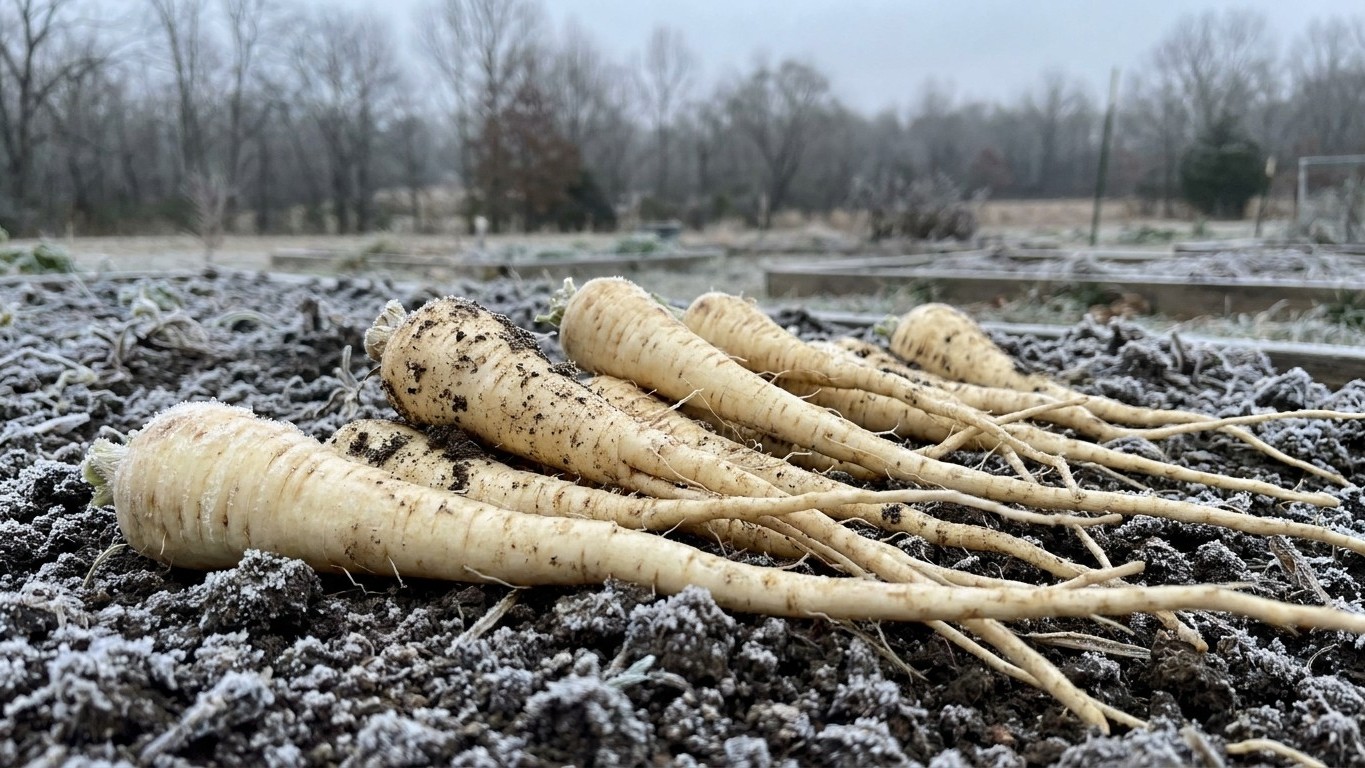

Yes, Wyoming’s climate gives parsnips exactly what they need to turn sweet, but the timing is unforgiving. With a frost-free window that opens somewhere between May 7 and May 18 and closes between September 24 and October 5, growers get roughly 130 days to seed, grow a 100 to 120 day root, and still leave it in the ground through several hard frosts before digging. Get the calendar right and the reward is a genuinely sweet root. Get it wrong and you either run out of season or pull the crop before the cold has done its work.
The short answer
The question that actually decides this isn’t which hardiness zone you’re in. It’s whether the territory delivers several weeks of sustained cold once the roots have sized up. At the Cheyenne reference station, the mean daily minimum for the coldest month sits at 18.1°F (NOAA NCEI Climate Normals, 1991-2020). That’s not a single overnight dip. It’s a monthly average of lows well below freezing, which means Wyoming winters routinely stack cold night after cold night rather than offering a brief cold snap that thaws out within a week.
That distinction matters because parsnip sweetening isn’t triggered by a zone rating on a seed packet map. It’s triggered by physical exposure: the root sits in cold soil, the plant’s stored starch converts to sugar as a survival response, and the flavor changes accordingly. A state can carry a mild hardiness zone and still fail to sweeten parsnips if its winters never deliver sustained frost. Wyoming has the opposite problem. Its zone numbers run cold, and its coldest-month lows back that up with real, repeated freezing weather across weeks, not days.
So the short answer is that a parsnip grown in Wyoming soil, sown at the right time and left in the ground long enough, will sweeten. The mean minimum of 18.1°F in the coldest month gives the crop far more frost exposure than the “several weeks” Utah State University Extension describes as the threshold for starch-to-sugar conversion. The open question isn’t whether the cold arrives. It’s whether the gardener’s timing gets a mature root into that cold window before harvest, rather than pulling it too early out of habit or impatience.
Where this can still go sideways is at higher elevations, where frost is possible in any month and the growing season narrows even further than the valley averages suggest. A garden at 6,000 feet doesn’t get more cold for sweetening purposes. It gets less reliable warmth for growing the root to size in the first place, which shifts the real risk from “will it sweeten” to “will it mature before the ground shuts down for the year.”
Does the season fit?
Utah State University Extension puts parsnips at 100 to 120 days from seeding, with sowing done 2 to 3 weeks before the last frost. Here’s how that lines up against Wyoming’s frost dates, worked out step by step.
- Wyoming’s last spring frost falls between May 7 and May 18 (NOAA NCEI 1991-2020 Climate Normals). Sowing 2 to 3 weeks ahead of that puts seed in the ground somewhere between mid and late April, or as late as the first days of May if you’re working from the later end of the frost window.
- Germination takes 14 to 21 days on its own. That’s a slow, easy-to-doubt stretch. Digging up the bed at day ten because nothing seems to be happening is the single most common way gardeners sabotage a parsnip crop before it’s even started, since the seed is simply still working underground.
- From seeding, the plant then needs 100 to 120 days total, germination included, to reach a mature root. Counting from an April sowing, that lands maturity somewhere between late July and mid September.
- Wyoming’s first fall frost arrives between September 24 and October 5. A root that matured in late July or August still has weeks of growing season left before that first frost, and those weeks are exactly the ones a gardener should use to let the root size up fully rather than rushing to harvest.
- Once frost does arrive, the root needs to stay in the ground, not come out of it. The frost-free window (roughly 130 days total) gives Wyoming gardeners enough runway to hit both targets: full maturity before the ground freezes hard, and several weeks of frost exposure afterward for sweetening.
The fit is comfortable if sowing happens at the early end of the window, in mid to late April. It gets tight if a gardener waits until early May, since that pushes maturity closer to the first frost date and leaves less margin before winter locks up the soil for digging. Either way, the arithmetic works in Wyoming’s favor more than it would in a state with a shorter or later-starting season.
What Goes Wrong here
- Forked roots from heavy or stony ground. Parsnips push a single taproot straight down, and anything that blocks that path, compacted clay, rocks, old root debris, splits the root into two or three forked legs. Utah State University Extension recommends deep, sandy soil, and where the native ground is heavy, double digging the bed before sowing gives the taproot a clear column to grow through.
- Forked roots from overwatering. This is a separate cause from soil texture, not a variation on it. Excess water encourages the root to branch in search of drier pockets rather than driving straight down. The fix is even, moderate moisture rather than heavy, irregular soaking, particularly in the first several weeks after the slow 14 to 21 day germination period.
- Sowing too late and running out of season. Waiting past early May to seed, especially at higher elevations where the frost-free window shrinks further, can push maturity past the first fall frost before the root has sized up. Sowing at the early end of the 2 to 3 week pre-frost window, in mid to late April in most of the state, builds in the margin this crop needs.
- Harvesting before the frost has done its job. A root pulled the moment it looks mature skips the sweetening step entirely. Since Wyoming’s frost-free window closes between late September and early October, leaving mature roots in the ground through the first few frosts (mulching to keep the soil workable for a later dig) is what actually produces the sweet flavor the crop is grown for.
Before any of that harvest planning matters, there’s a hazard on this crop that most garden guides skip entirely. North Carolina State Extension’s plant toolbox is direct about it: “All parts of this plant contain furocoumarins which can make skin sensitive to light causing burns so be sure to wear gloves, long sleeves and long pants when dealing with it.” That covers the whole plant, not just the leafy tops, so roots, foliage, and sap from any part of the parsnip carry the same risk.
What makes this catch people off guard is the mechanism. The burn doesn’t come from the sap by itself. It comes from sap on the skin combined with sunlight. That’s why it shows up on a bright, sunny afternoon spent pulling tops or digging roots, and why the reaction often doesn’t appear until hours after the exposure, once the skin has been out in the light. It also explains why the protection that matters is what you put on before you touch the plant, gloves, long sleeves, long pants, rather than anything done afterward. Washing up once the sap has already been sitting on sunlit skin doesn’t undo the exposure that already happened.
This is worth building into harvest habits specifically, since digging parsnips in Wyoming tends to happen on clear, cold-but-sunny fall days, exactly the lighting conditions that trigger the reaction.
Checking this against your own county
The frost dates and coldest-month figures here come from a single reference station, and Wyoming’s terrain runs from river valleys to mountain benches at very different elevations. A garden at 6,000 feet can see a shorter frost-free season and colder nights than the state-level numbers suggest, which shifts both the safe sowing date and the margin before first frost.
The University of Wyoming Extension is the resource built for that local detail, covering county-by-county frost patterns, soil conditions, and planting calendars specific to a given elevation and region. Before finalizing a sowing date based on the ranges above, checking with the University of Wyoming Extension gives a gardener numbers tied to their actual county rather than a statewide average.
Common questions
Do parsnips need to be transplanted, or sown directly?
Parsnips are sown in place. The 100 to 120 day maturity window runs from the seeding date itself, and the taproot doesn’t tolerate the disturbance of transplanting well.
How long should I wait before assuming the seed failed?
Germination takes 14 to 21 days, which is slower than most root vegetables. Digging up the bed before three weeks have passed usually disturbs seed that simply hasn’t sprouted yet.
Can I leave parsnips in the ground over winter?
Utah State University Extension notes the crop tastes best after several weeks of cool, frosty weather, since that cold converts stored starch to sugar. In Wyoming’s climate, leaving mature roots in the ground through the early frosts, with mulch to keep the bed workable, is part of getting a sweet harvest rather than a bland one.
Is the skin irritation from parsnips serious?
The sap contains furocoumarins that make skin sensitive to sunlight, causing burns, according to North Carolina State Extension. The reaction involves the whole plant, not just the leaves, and the practical prevention is wearing gloves, long sleeves, and long pants whenever handling the plant in daylight.