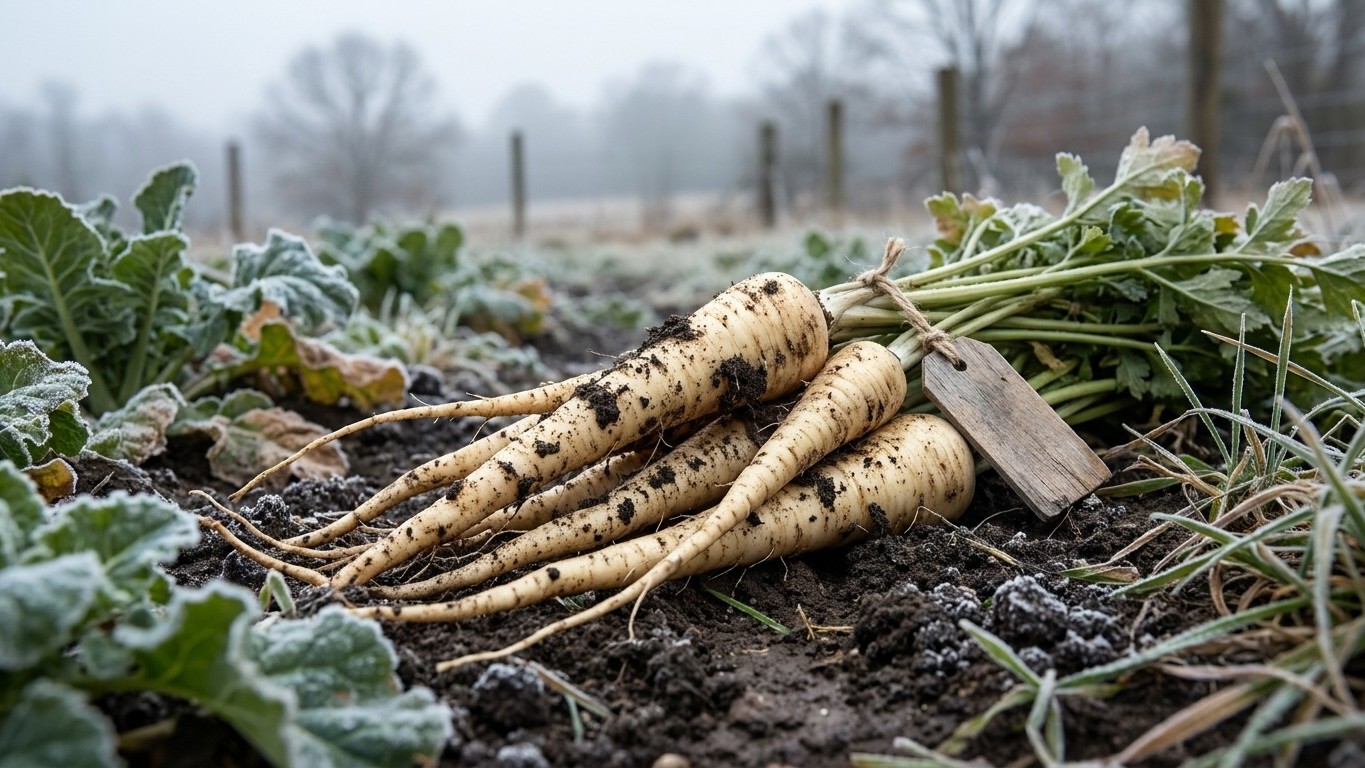

Yes, Wyoming parsnips sweeten. The reference station in Cheyenne shows a coldest-month mean minimum of 18.1°F, which means frost isn’t a rare visitor here but a recurring guest for weeks at a stretch. That kind of sustained cold is exactly what converts a parsnip’s stored starch into sugar. The harder question isn’t whether the cold arrives. It’s whether the growing season leaves enough time to get a root into the ground before that cold shows up.
The short answer
Start with the number that matters most for sweetness: 18.1°F. That’s the mean daily minimum for the coldest month at the Cheyenne reference station, drawn from NOAA NCEI’s 1991-2020 Climate Normals. Not the record low for the coldest night anyone remembers, and not the average temperature across the whole month. It’s the typical low, the one that repeats itself night after night through the coldest stretch of winter. At 18.1°F, that’s 14 degrees below freezing on an average night, which tells you this isn’t a climate that dips below 32°F once and bounces back. It sits there.
That distinction matters because sweetening in a parsnip has nothing to do with a hardiness zone rating and everything to do with actual exposure to cold. A plant can survive in a zone rated for far colder winters than it ever experiences, and a root sitting in soil that never truly freezes hard will grow just fine without ever turning sweet. The starch-to-sugar conversion is triggered by repeated frost, not by a number on a zone map. Wyoming’s coldest-month minimum of 18.1°F is the kind of figure that answers the sweetness question directly: this is a territory where frost isn’t marginal. It’s dependable.
So the short answer holds up. A parsnip left in Wyoming ground through several weeks of the kind of cold that produces an 18.1°F average minimum is going to sweeten, not just size up. Compare that to a milder climate where the coldest month barely dips below freezing on average. There, a gardener can grow a technically mature parsnip, pull it at the 100-to-120-day mark, and end up with a root that’s starchy and flat instead of sweet, because the plant never got the sustained cold signal that does the conversion work.
Wyoming’s elevation plays into this too. Much of the state sits above 6,000 feet, and at that altitude the frost-free window is already narrow and can close early or open late without much warning. That’s a double-edged fact for parsnip growers. The same elevation that makes the season tight is the reason the coldest month runs as cold as it does. The tradeoff is real: less margin for error in timing, but no shortage of the cold exposure that makes the crop worth the wait.
None of this means every Wyoming garden behaves identically. Microclimates in a sheltered yard, a south-facing slope, or a spot near a heat-retaining wall can shift local conditions somewhat. But at the scale of the reference station data, the pattern is consistent enough to trust: this state delivers the frost. What’s left to manage is the calendar.
Does the season fit?
Parsnips are sown directly in place, not started indoors and transplanted, and the 100 to 120 days needed to reach maturity are counted from that seeding date, not from germination. Here’s how the arithmetic works out against Wyoming’s frost windows.
- Find the sowing window. The recommended timing is 2 to 3 weeks before the last spring frost. With the last spring frost falling between May 7 and May 18, that puts the sowing window somewhere between mid-April and the first days of May.
- Account for slow germination. Parsnip seed is notoriously slow to sprout, taking 14 to 21 days to emerge. A gardener who sows in mid-April won’t see seedlings until early to mid-May. This isn’t a sign of a failed sowing; it’s normal for this crop, and pulling it up to check or re-sowing too early wastes a planting.
- Count forward 100 to 120 days from the seeding date. Sowing in the mid-April to early-May window and adding 100 to 120 days lands maturity somewhere between late July and the first days of September.
- Compare that to the first fall frost. The first fall frost arrives between September 24 and October 5. Maturity finishing between late July and early September leaves roughly three to nine weeks of margin before that first frost shows up.
- Use that margin for sweetening, not just harvesting. Because the crop is mature well before the first frost, there’s room to leave roots in the ground through several frosty nights afterward, which is exactly what triggers the sugar conversion, rather than pulling them the moment they’re technically ready.
Put together, the season fits comfortably rather than tightly. There’s slack on both ends: enough lead time before the last spring frost to get seed in the ground, and enough distance before the first fall frost to let the crop finish and then sit through the cold snaps that make it worth growing in the first place. Growers at higher elevations within the state, where the frost-free window narrows toward that roughly 130-day figure, have less room to work with and should lean toward the earlier end of the sowing window rather than the later one.
What goes wrong here
- Forked roots from heavy or stony ground. Parsnips push a long taproot straight down, and anything that blocks that path, compacted clay, buried rock, an old tilled layer, sends the root splitting around the obstruction instead of through it. The remedy is to double dig the bed before sowing, working the soil loose to at least the depth of a mature root, and to clear out stones as you go. Deep, sandy soil is the ideal texture for this crop, and Wyoming’s clay-heavy stretches need the extra prep work to get there.
- Forked roots from overwatering. This is a separate cause from soil texture, and it’s worth keeping the two apart. Waterlogged soil encourages the root to branch as it searches for oxygen and avoids saturated pockets, even in ground that’s otherwise loose and workable. The fix is consistent, moderate watering rather than heavy, irregular soaking, especially once the taproot is established and reaching depth.
- A season that runs out before maturity. Sowing later than the recommended 2-to-3-weeks-before-last-frost window eats into the margin calculated above, and combined with the crop’s slow 14-to-21-day germination, a late start can push maturity dangerously close to the first fall frost. The remedy is straightforward: sow within that window, not after it, and don’t wait on soil that seems marginally cool if the calendar date has already arrived.
- Harvesting before the frost has done its job. With a coldest-month mean minimum of 18.1°F, Wyoming isn’t short on frost exposure, but a gardener who pulls the crop the moment it hits the 100-to-120-day mark, without waiting through several hard freezes afterward, ends up with a root that’s fully grown but under-sweetened. The remedy is patience: leave mature roots in the ground through at least a few weeks of freezing nights, and mulch heavily if you want to keep pulling parsnips further into the cold season.
Common questions
What’s the best sowing date for Parsnips in Wyoming?
Aim for 2 to 3 weeks before the local last spring frost, which falls between May 7 and May 18 at the reference station. That puts sowing somewhere in the mid-April to early-May range, adjusted earlier at lower elevations and later at higher, colder sites within the state.
Why hasn’t my parsnip seed sprouted yet?
Germination normally takes 14 to 21 days, slower than most root vegetables. Seedlings sown in mid-April may not show above ground until early or mid-May. Resist the urge to dig up the row or re-sow before that window closes.
How long can parsnips stay in the ground once they’re mature?
As long as the ground isn’t frozen solid, mature roots can stay in place through repeated frosty nights, which is what develops the sweetness. Heavy mulch helps extend that window further into the cold season by keeping the soil workable.
Does soil type or climate matter more for a sweet parsnip?
Both play distinct roles. Deep, sandy soil (loosened by double digging where the ground is heavy) gives the root room to grow straight and undamaged. But the sweetness itself comes from frost exposure, not soil texture, so a well-prepared bed in a climate without sustained cold still won’t produce a sweet root.