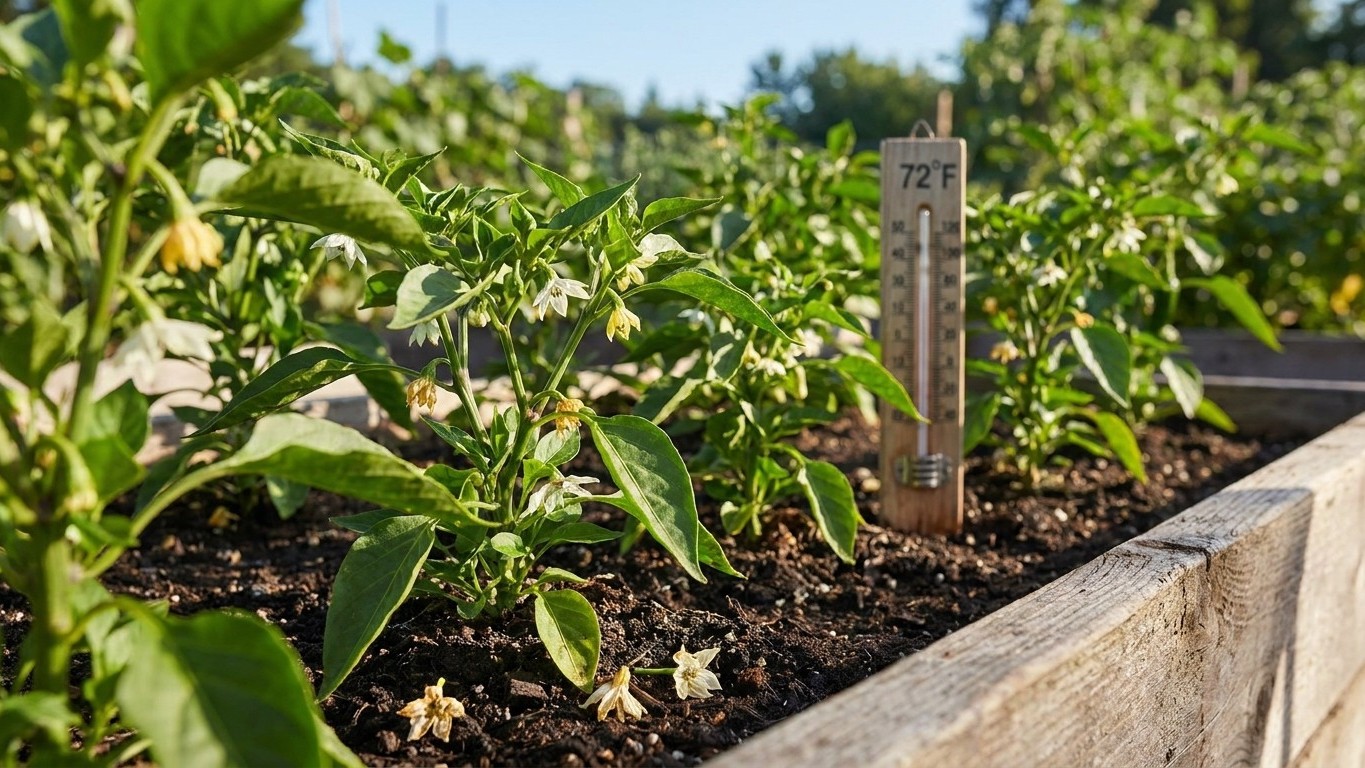

Wyoming gardeners get one shot: seed peppers indoors 8 to 10 weeks before transplant, then move plants out only after the last frost, roughly May 7 to May 18 depending on county, and only once soil hits 60 F. That math usually lands seed-starting somewhere between mid-February and mid-March. Push it later at higher elevation, where frost lingers and the window narrows fast.
The short answer
Cheyenne’s climate record shows an average of 10.4 days a year at or above 90 F, based on the NOAA NCEI Climate Normals for 1991-2020. That’s not a heat wave. That’s the ordinary count for one reference station in a state where most gardeners farm at higher, colder, windier ground. The number matters because pepper flowers stop setting fruit once heat crosses that same 90 F line, according to Utah State University Extension. A single hot afternoon won’t wreck a plant, but a run of them during flowering will. Blossoms drop, or they open and never set fruit at all.
That 10.4-day average isn’t spread evenly across the state. Lower-elevation basins can string together more 90 F afternoons than the Cheyenne station records, while gardens tucked into the mountains may barely touch that mark all season. Wherever you farm, the timing that matters is the flowering stage, not the sowing date. Fruit set trouble shows up 35 to 45 days after a plant starts flowering, per USU Extension, so a hot spell in July can undo a plant that looked strong back in June.
The other end of the equation gets less attention but does just as much damage. Nights below 55 F stall pollen the same way heat does, and Wyoming’s summer nights can dip that low even in July, especially above 6,000 feet where the air thins and heat radiates off fast after sundown. This site doesn’t track summer night minimums for Wyoming, so there’s no station number to hand you here. That means the only dependable read comes from your own thermometer, placed outside near the plants and checked before dawn when temperatures usually bottom out. Don’t guess based on how far north you sit or how cold January gets. Elevation, drainage, and local wind patterns can swing summer lows by 10 degrees or more between two gardens just a few miles apart.
When to start seed here
Work backward from two dates, then subtract the weeks a pepper seedling needs before it can handle outdoor life.
- Find your local frost window. NOAA NCEI’s 1991-2020 Normals put the last spring freeze probability for station USW00024018 somewhere between May 7 and May 18. That’s a 30 to 70 percent freeze-risk band, not a guarantee, and it can shift by a couple of weeks in either direction depending on your county and elevation. Gardens near 6,000 feet get roughly 130 frost-free days, and at higher elevation frost can show up in any month, so treat this date as a starting estimate, not a fixed line on the calendar.
- Wait for 60 F soil. Air temperature crossing above freezing doesn’t mean the ground is ready. Peppers need soil at 60 F before transplant, per USU Extension, and cold spring soil in Wyoming often lags the frost date by a week or two, sometimes more at elevation. A simple soil thermometer pushed 2 to 4 inches down tells you more than any calendar guess.
- Count back 8 to 10 weeks. Once you’ve got a realistic transplant date, whether that’s May 18 at lower elevation or into June higher up, subtract 8 to 10 weeks to land on your seed-starting date. For a mid-May transplant target, that puts seed-starting in mid-to-late February. For a June target, push it into March.
- Adjust for your elevation. The higher your garden sits, the later you should push both the transplant date and the seed-start date behind it. A garden at 7,000 feet may need another two to three weeks of buffer beyond what a valley garden at 5,000 feet requires, since frost risk and cold soil both linger longer up high.
Redo this math every spring rather than trusting last year’s date. A late, wet spring can shove the 60 F soil mark back by two or three weeks even when the frost date itself barely moves.
What goes wrong here
- Blossom drop during a hot spell. Flowers open, then fall without setting fruit, usually when daytime temperatures push past 90 F during the flowering window, or when a cold snap drops nights below 55 F at the same time. Since this site doesn’t track Wyoming’s summer night lows, keep a thermometer outside near the plants and watch it yourself during flowering. If a heat spell is forecast, shade cloth over the row for a few afternoons can hold enough blossoms to make a difference.
- Sunscald on exposed fruit. Wyoming’s thin air and high elevation mean strong, direct sun, and peppers that lose leaf cover to wind damage, pruning, or disease end up with pale, papery patches on the fruit where the sun hits directly. Keep the plant’s own foliage intact as much as possible, and avoid heavy pruning once fruit starts forming. A loose shade cloth over the hottest part of the day helps on especially exposed sites.
- Blossom-end rot on the fruit’s bottom. This shows up as a sunken, leathery patch on the fruit’s blossom end and usually traces back to uneven watering rather than a soil nutrient problem outright. Wyoming’s dry air and wind pull moisture out of garden soil fast, so a plant that gets soaked one day and bone-dry the next is a likely candidate. Even, consistent watering, ideally with mulch to slow evaporation, keeps the calcium uptake steady enough to prevent it.
Common questions
Can I start pepper seed too early in Wyoming? Yes. Seedlings started more than 10 weeks before your realistic transplant date often get leggy and stressed sitting in pots too long, which can set back fruiting once they finally go in the ground.
What if my soil hits 60 F before the frost date passes? Wait for both conditions. Transplant only after frost risk has passed and soil has warmed to 60 F, per USU Extension guidance. Warm soil with a lingering frost risk still means a dead plant on a cold night.
Does a warm spring mean I can start seed earlier? Not reliably. The frost date range of May 7 to May 18 comes from a 30 to 70 percent probability band, not a hard cutoff, so an early warm stretch doesn’t rule out a late freeze at higher elevation.
How do I know if my nights are staying above 55 F? Check a thermometer placed outside near your plants, read before dawn when temperatures bottom out. This site doesn’t publish summer night minimums for Wyoming, so there’s no shortcut around checking your own site directly.