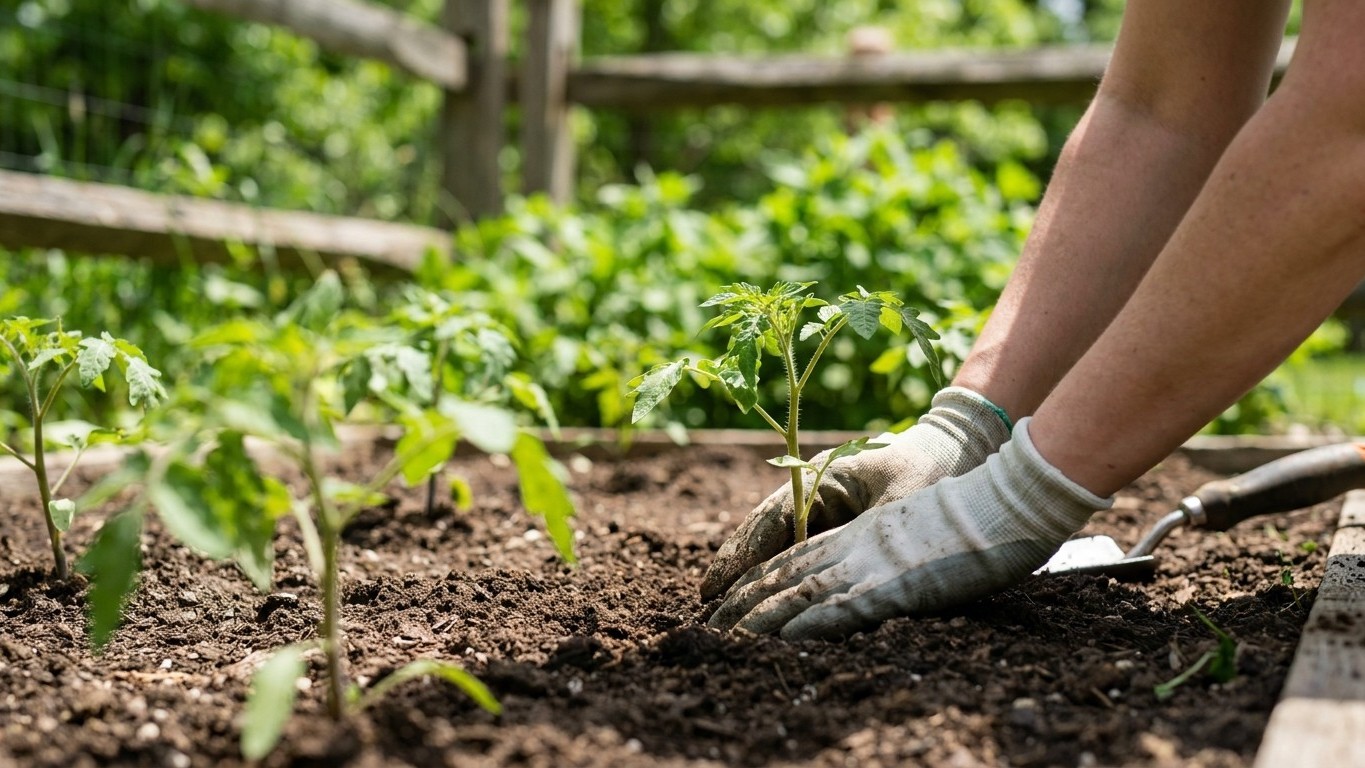

Once the calendar turns to June, most of Wyoming has already cleared its frost window: the last spring freeze typically falls between May 7 and May 18, depending on where you sit in the state. That means June is the month when warm-season crops finally go into open ground for real, though elevation still calls the shots on timing more than the date on the wall.
What goes in the ground in June

Soil temperature, not the thermometer reading on your porch, decides what survives in a Wyoming garden this month. Air can feel warm at 65°F while the soil six inches down is still cold and slow to release nutrients. By June, though, most valley and plains gardens across the state have soil warm enough to support the crops that sulk or rot in cold ground: tomatoes, peppers, and eggplant as transplants, plus direct-sown beans, squash, cucumbers, melons, and sweet corn.
Onion and shallot sets, if you didn’t get them in earlier, can still go in during the first half of the month in most areas and still size up before fall. Potatoes planted now will lag behind an earlier crop but still produce a harvest before the first fall frost arrives, which lands somewhere between September 24 and October 5.
Succession sowing keeps the cool-season crops going even as the warm-season ones take over the bed space. Lettuce, spinach, radishes, and peas can still be direct-sown early in June in most of the state, especially in partial shade, before summer heat makes them bolt. Brassica transplants, cabbage, broccoli, cauliflower, can still go out for a summer-to-fall harvest.
The elevation caveat
Wyoming runs roughly 130 frost-free days at 6,000 feet, and frost is possible in any month at higher elevations. If your garden sits in the mountains or a high valley, a June cold snap is not a fluke, it’s a known risk. Keep row cover or old sheets on hand through the month for anything tender, and don’t assume a warm week means the danger has passed.
What to start under cover
By June, the spring rush of starting tomatoes and peppers indoors is behind most gardeners, since those typically need six to eight weeks under cover before the last frost date. But June under cover still has real work to do, counted backward from the first fall frost of September 24 to October 5 instead of forward from spring.
Fall brassicas, cabbage, broccoli, kale, started indoors or in a shaded cold frame now, give you transplants ready to go out in July once the summer heat breaks a little, and still leave enough of the roughly 90-to-120 frost-free-day season for them to mature before autumn cold arrives. The same backward math applies to fall lettuce and spinach starts meant for a September harvest.
At higher elevations, where the frost-free window is shorter, gardeners sometimes still start second-round squash or melon transplants under cover in early June rather than direct-sowing, buying a few extra weeks of growth before the ground and air are reliably warm enough outdoors.
The two ways this goes wrong are familiar to anyone who’s gardened a season or two. Start too early under cover with no clear destination bed ready, and the seedlings go rootbound and leggy on a windowsill, stretching for light and stalling once transplanted. Start too late, and there isn’t enough of the season left to reach maturity before the first fall frost closes things out, particularly at elevation where that window is already tight.
What is ready to pick
Rhubarb and asparagus, if established in prior seasons, are usually in full production by June across most of the state, and both should be harvested regularly rather than left to go to seed or get woody. Established asparagus beds can be cut through early-to-mid June before letting the ferns grow to feed next season’s crop.
Cool-season crops sown in early spring start coming in through the month: spinach and lettuce planted as soon as the ground was workable, radishes that only need three to four weeks, and the first flush of peas by late June in warmer parts of the state. Strawberries from established beds often begin ripening late in the month as well, depending on variety and local microclimate.
Knowing when a crop is actually ready matters more than guessing by the calendar. Radishes should feel firm and about an inch across at the shoulder, pushed slightly above soil level. Peas are ready when pods look full and glossy but before they turn dull or start to yellow. Spinach and lettuce are best picked before hot weather triggers bolting, a bitter, stretched-out stalk with a flower spike is the sign you waited too long.
The jobs that matter this month

Mulching moves to the top of the list once warm-season transplants are in the ground. A two-to-three-inch layer around tomatoes, peppers, and squash holds moisture in Wyoming’s dry air and buffers soil temperature swings that are sharper here than in more humid states. Skip it now, and you’re hand-watering more often through July with worse results.
Staking and caging tomatoes, peas, and pole beans needs to happen before the plants sprawl, not after. Wyoming’s wind is a real factor most states don’t deal with the same way, and an unstaked tomato plant can be flattened or snapped in a single afternoon gust. Cage it now while the root system is small enough that driving stakes doesn’t damage it.
Watering rhythm matters more in June than almost any other month, since this is when transplants are establishing roots while days are getting longer and hotter. Deep, less-frequent watering trains roots to grow down rather than staying shallow, which pays off once July heat arrives in earnest.
Pest scouting should start now rather than after damage shows up. Aphids, flea beetles, and cutworms are active as soon as warm-season transplants go in, and catching them early, checking leaf undersides every few days, means hand-picking or a targeted response instead of a full infestation. Succession sowing of lettuce, radishes, and beans every couple of weeks through June also keeps harvests coming instead of one big glut followed by a gap.
What not to do in June
The classic June mistake in Wyoming is trusting a warm afternoon over the actual frost record. A string of 70°F days in early June can feel like summer, but at higher elevations frost is possible in any month, and a single cold night can take out a bed of unprotected tomatoes or squash overnight. Keep row cover accessible through the month rather than packing it away after the last frost date passes.
Uncovering plants too early after a mild spell is a related error. If you hardened off transplants under row cover or cloches, pull that protection off gradually over several days rather than all at once, especially if the forecast shows any dip toward freezing.
Feeding nitrogen at the wrong point in the season causes its own problems. Heavy nitrogen applications on tomatoes and peppers once they’ve started flowering push leafy growth at the expense of fruit set. Save the nitrogen-heavy feeding for the vegetative stage earlier in the season, and switch to a lower-nitrogen, higher-phosphorus feed once flowering begins.
Skipping wind protection is a mistake specific to this state. Young transplants without a windbreak, whether that’s a fence, a row of taller companion plants, or simple temporary screens, can be desiccated or physically damaged by Wyoming’s persistent spring and early-summer wind well before any frost is a factor.
Checking this against your own county
A statewide frost window is a starting point, not an instruction specific to your yard. Wyoming’s elevation swings from around 3,100 feet in the east to over 13,000 feet in the mountains, and that difference moves planting windows by weeks, not days. A garden in Cheyenne and a garden in a high mountain valley are working with genuinely different seasons even though both are technically “Wyoming in June.”
The USDA hardiness zone map places the state across zones 3a to 6a, another sign of how much local conditions vary. For a planting window tied to your actual county, the University of Wyoming Extension is the reliable next stop, with local frost data and planting guidance built for specific regions rather than the state as a whole.
Common questions
Is it too late to plant tomatoes in Wyoming in June?
No. In most of the state, the last spring frost has already passed by early June, making it a normal, even ideal, window for setting out tomato transplants. At higher elevations, where frost risk extends later, June is often the safest month rather than a late one.
Can I still direct-sow beans and squash in June?
Yes, in most of the state. Both are warm-season crops that need soil that has already warmed past the cold, wet conditions of early spring, which June generally provides at lower and mid elevations.
What frost risk remains in June at high elevation?
Frost is possible in any month at elevations around 6,000 feet and above, so gardeners there should keep row cover on hand through June rather than assuming the season’s frost danger has ended once lower-elevation areas have cleared it.
When does the fall frost typically end the Wyoming growing season?
The first fall frost generally arrives between September 24 and October 5, according to NOAA climate normals for the reference station used for the state. That gives a rough backward planning point for anything started or transplanted in June.
Gardeners who plant by the Moon can check the June 2027 moon planting calendar, a tradition rather than a proven method.