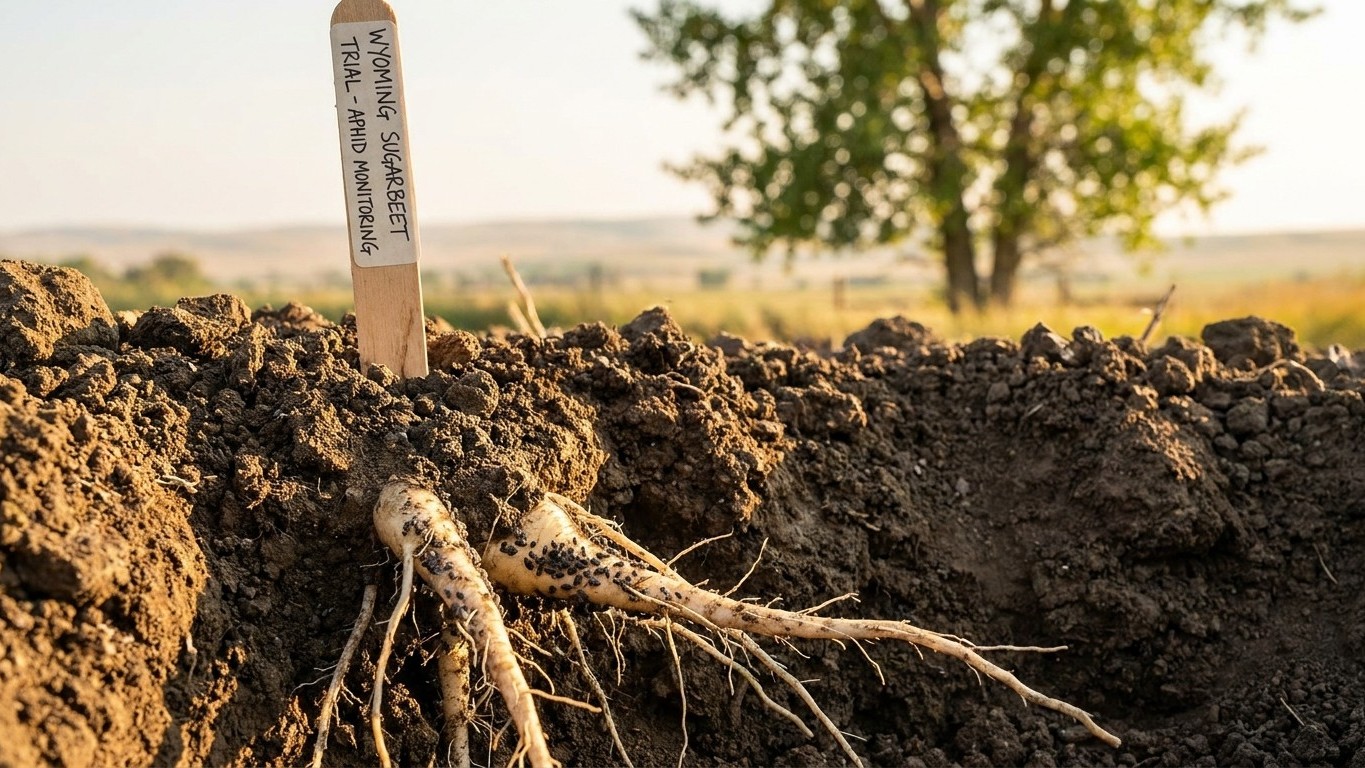

Sugarbeet root aphid becomes a problem in Wyoming’s beet fields once soil temperatures climb through late spring into summer, when winged migrants leave nearby cottonwood trees and settle into root systems. There’s no fixed calendar date for this, and Wyoming’s extension service doesn’t publish a species-specific window. What stops it combines timing, moisture management, and rotation, since once the aphids are feeding underground, sprays and traps do almost nothing.
The weeks to watch

This aphid doesn’t follow a fixed date. It follows soil warmth and the biology of a nearby tree, and that’s the detail most gardeners miss. The University of Wyoming Extension does not publish a calendar window specific to sugarbeet root aphid, so the timing below reflects the general life-cycle pattern documented for the species across the sugarbeet-growing West rather than a Wyoming-specific date.
The spring migration
Winged adults, called alates, emerge from galls on narrowleaf cottonwood trees and take flight once temperatures warm enough for sustained activity, typically as the growing season moves from late spring into early summer. These winged aphids are the ones that find beet fields and start new colonies on roots. Cool, slow springs push this migration later; a fast warm-up pulls it earlier.
The root-feeding stretch
Once wingless nymphs establish on roots, they reproduce through the warmest months, building colonies that peak in mid to late summer, especially where soil stays dry and stressed. Populations decline as the season cools, and the cycle resets the following spring when new alates leave the trees again. A gardener checking roots in July and August is looking during the highest-risk stretch.
Reading the calendar from your last frost

Wyoming’s last spring frost falls somewhere between May 7 and May 18, based on 1991-2020 NOAA climate normals for a station representative of the region. That’s a range, not a guaranteed date, and at elevations near 6,000 feet, frost can occur in any month of the year. Season extension here isn’t a luxury; it’s standard practice for anyone growing tender crops at all.
Since the aphid answers to soil temperature rather than a fixed date, its arrival shifts with however that frost-free window shifts each year. A late frost delays root warming and pushes the migration back; an early, warm spring can pull it forward by a week or two.
- Start from your local last-frost range (May 7 to May 18 for this station).
- Add roughly four to six weeks of soil warming before the migration typically begins, giving a working window rather than a single day.
That math gives an estimate, not a fixed date. Use it to decide when root covers or monitoring should start, not as a promise of exactly when the aphids will show up.
What it attacks, and what the damage looks like

Most gardeners notice the plant before they ever see the insect. Above ground, affected beets wilt during the heat of the day even when soil moisture seems adequate, and leaves may yellow and stunt compared to healthy rows nearby. Pull a struggling plant and the giveaway is underground: roots covered in a white, waxy, cottony coating clinging to a mass of small aphids feeding on the surface. That waxy coating is the clearest field sign, more reliable at a glance than the aphids themselves, which are small and easy to miss without pulling a plant.
The wingless nymphs feeding directly on root tissue cause the damage, not the winged migrants that arrive earlier in the season. That distinction matters for treatment, because once nymphs are established and feeding below the soil line, almost nothing applied to foliage reaches them.
Crops at risk include:
- Sugar beets, the primary host and the crop this pest is named for
- Table beets grown in home gardens
- Swiss chard, a close relative sharing the same root vulnerability
- Spinach, in some documented cases, though less commonly affected
Anyone growing beets or chard near mature cottonwood trees, particularly narrowleaf cottonwood, should treat root checks as routine once midsummer heat sets in.
How Wyoming sits in this pest’s range

Sugarbeet root aphid follows sugar beet production and narrowleaf cottonwood distribution across the irrigated valleys of the Mountain West, and Wyoming’s beet-growing regions fall within that broader range. Where cottonwoods and beet fields sit close together, mainly along river bottoms and irrigated basins, the biology plays out the same way it does in neighboring beet-growing states: winged migrants leave the trees, and root colonies build through summer.
Widespread presence across this region means the meaningful difference between locations is timing, not whether the pest shows up at all. A grower in a lower, warmer valley may see migration and root colonization a week or two earlier than a grower at higher elevation, but both are dealing with the same insect and the same basic risk. Wyoming’s extension resources don’t rank the state’s severity against neighboring states, so no claim about relative risk level is available beyond that the pattern is regional, not unique to any single county or valley.
What actually works against it

Once nymphs are feeding on roots, options narrow fast. The measures below are ordered from cheapest and easiest to most involved, and the order matters because early prevention is the only stage where a home gardener has real leverage.
- Delay planting slightly where migration timing is a known issue. Since alates need warm soil to move from cottonwoods to beet roots, planting slightly later can let seedlings establish before the highest-risk window, though it trades against a shorter growing season at higher elevations.
- Rotate beets and chard out of the same bed each year. This aphid overwinters in cottonwood galls and re-infests nearby soil each season; moving root crops to a different bed breaks the easy path between last year’s colony site and this year’s roots.
- Clear old beet and chard debris after harvest. Residual root material left in soil can harbor aphids into the following season, and removing it reduces the local population carried forward.
- Keep soil moisture even during the hottest weeks. Root aphid damage is worse under drought stress, so consistent watering doesn’t eliminate the pest but reduces how much visible damage the plant shows while colonies are active.
- Plant beets and chard away from mature narrowleaf cottonwood trees where practical. Since the primary host is the source of winged migrants each spring, distance reduces (though doesn’t eliminate) the odds of early colonization.
None of these measures work once nymphs are established and feeding on root tissue below the soil line; at that point the practical options are pulling and discarding badly infested plants and adjusting practices for next season. Some gardeners report success with soil drenches or beneficial insect encouragement, but field trials on home-garden-scale interventions for this species remain limited, and no product names or dosages are appropriate here since results vary by soil type, moisture, and how early the colony was caught.
Common questions
Does sugarbeet root aphid affect crops other than beets?
Yes, Swiss chard shares enough root similarity to be a regular host, and spinach has been documented as an occasional host in some field observations, though beets remain the primary target.
Can row covers stop this aphid?
Row covers can slow winged migrants from reaching young plants during the highest-risk weeks, but they lose effectiveness once soil-based colonies establish, since the damage comes from nymphs already in the root zone rather than from adults still arriving by air.
Is the white waxy coating on roots always this aphid?
It’s the most reliable single field sign for this species, but any unusual root coating in beets or chard is worth a closer look, since confirming which pest is present matters for deciding whether rotation or debris removal will actually help next season.