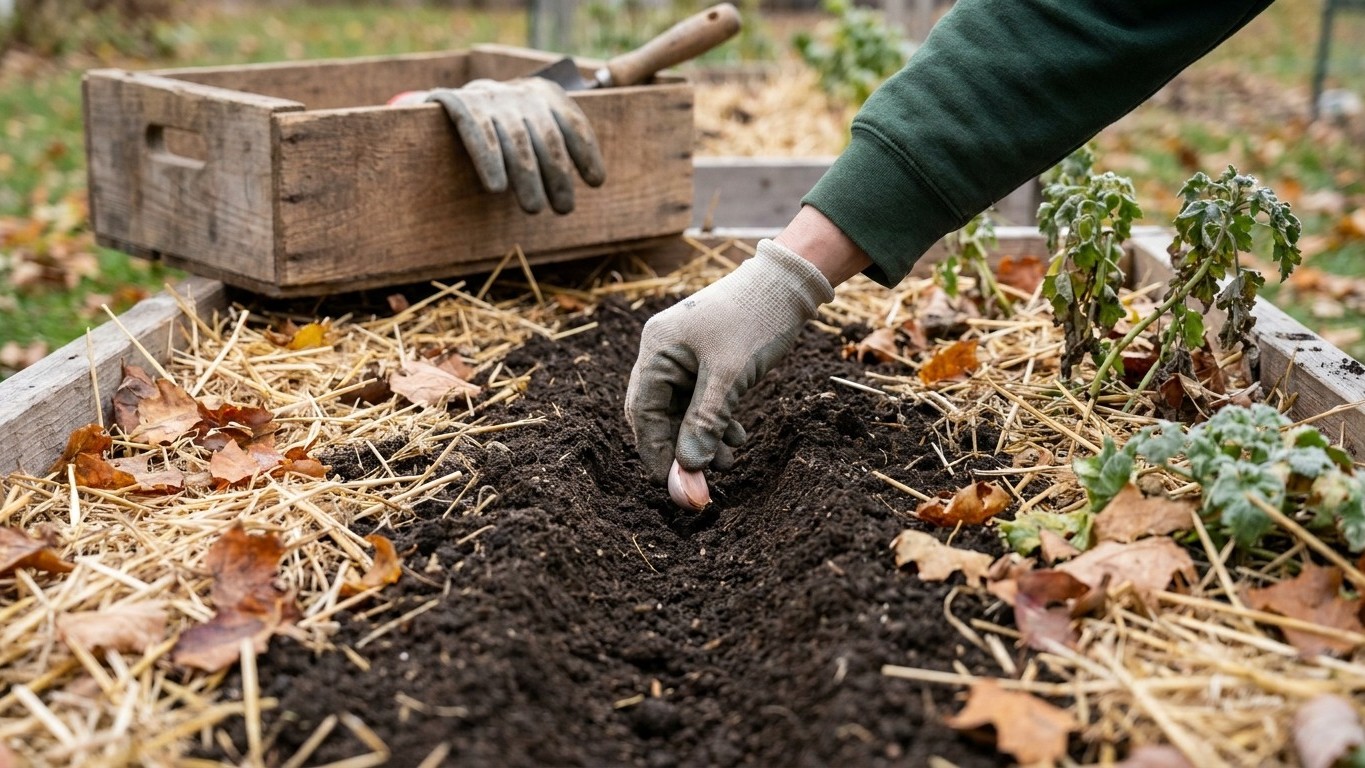

Outdoor planting in Yukon is over for the month. With a mean first fall frost around August 25 and a Canadian hardiness zone of 1b, the ground has been frozen or freezing for weeks before November even starts. The honest job list this month is garlic already tucked in earlier in fall, dormant pruning, seed ordering, tool care, and indoor starts under lights. Nothing tender goes outside, and nothing outside is coming back until spring pushes past the mean frost-free window.
What goes in the ground in November
Nothing goes into open Yukon soil this month, and there is no gentle way to soften that. Soil temperature, not the calendar, decides what a plant can survive, and by November the ground around Whitehorse and most of the territory has already dropped well below anything a root system can tolerate. The mean first fall frost sits around August 25, meaning the outdoor growing window has typically been closed for something like nine to ten weeks by the time November arrives. Anyone still holding seed packets meant for direct sowing is holding them for spring, not now.
That does not mean the garden is finished business. Garlic and shallots, if not already planted in early fall, occasionally still go in where soil remains workable and can be mulched heavily before hard freeze locks it up, though in most Yukon locations that window has already closed by November and gardeners are better served waiting for spring planting instead of forcing a fall crop into frozen ground.
Cold frames and low tunnels built earlier in fall can still shelter a few hardy greens that were already established, stretching their life a little longer, but they are not a planting method this month so much as a holding method. Bare-root fruit trees and shrubs, if a supplier is shipping them dormant, can sometimes still be heeled into a sheltered spot or potted and kept in an unheated garage until spring transplanting. Forcing rhubarb or chicory indoors, using dormant roots dug and stored earlier, is one of the few genuinely productive “planting” acts available this month, and it rewards a gardener with fresh stalks or tender chicons in the dead of winter.
What to start under cover
Working backward from a mean last spring frost around June 5 is the only reliable way to plan indoor starts in Yukon, and November is early for almost everything meant for that window. Slow growers with long timelines, onions and leeks from seed, or perennial herbs that need months to build a root system before they ever see outdoor soil, are about the only candidates worth starting indoors this far out. Count roughly eight to ten weeks back from early June for onions, and even that puts their sowing date closer to midwinter than to now.
The two failure modes are worth naming plainly. Start too early, under weak light and short days, and a gardener ends up with leggy, rootbound seedlings stretching toward a window that cannot give them enough hours of real sun, a plant that limps along for months before it ever gets planted out. Start too late, and there is not enough runway left before the mean frost-free date to get a full harvest from a long-season crop. November leans toward the first mistake more than the second: patience, not urgency, is the discipline this month asks for.
What genuinely belongs under cover now is winter sowing prep rather than active seeding for most crops: organizing seed by sow date, checking that grow lights and heat mats still work before they are needed in earnest, and starting only the true long-lead items, leeks and onions chief among them, on a schedule tied to that June frost-free average rather than to the date on the wall.
What is ready to pick
Outdoors, there is little to nothing left to harvest in Yukon by November. Whatever wasn’t pulled, dug, or covered before the mean fall frost date in late August has almost certainly been through repeated hard freezes by now, and any greens left exposed in open ground are not worth trusting. That is simply the arithmetic of a zone 1b growing season: it is short, and by this point it has closed.
The household still eats from the garden, just not from open ground. Kale and leeks tucked under heavy mulch or snow cover earlier in fall can sometimes still be dug out sweet and usable, snow acting as its own kind of insulation once it accumulates. Cold frames holding hardy greens that were established before freeze-up may still yield a few pickings on a mild day, though growth has essentially stopped and what is there is what is there. Sprouts and microgreens grown indoors under lights are the most reliable fresh green available this month, ready in one to two weeks from seed and immune to anything happening outside.
Stored crops need checking now more than picking. Squash, potatoes, and onions put up earlier in the season should be gone through by hand: a soft spot on a squash, a sprouting potato, or an onion gone papery and hollow at the neck means pulling it before it spreads rot to its neighbors. A root cellar or cold room checked weekly through the deep winter months saves far more food than it costs in time.
The jobs that matter this month
November in Yukon is a working month even though the ground is shut. Dormant pruning is the headline task: apple, crabapple, and hardy fruiting shrubs can be shaped now while they are fully dormant and the structure of the plant is easy to see without leaves in the way, cutting out crossing branches and damaged wood before spring growth resumes. Wait too long into a warm spell and pruning wounds heal more slowly; do it while the plant is truly asleep and it heals clean.
Seed ordering belongs on this month’s list, not next month’s. Northern-adapted varieties, the short-season tomatoes, fast peas, and cold-hardy brassicas that actually finish inside a Yukon summer, sell out from northern and prairie seed suppliers well before spring, and a gardener who orders in November has first pick rather than leftovers.
Soil, tools, and structure
Soil testing and amending can still happen if the ground isn’t fully locked, and compost turned now keeps breaking down slowly even in cold temperatures rather than sitting inert until spring. Tools deserve real attention this month: cleaning sap and dirt off pruners and shovels, sharpening blades, and oiling wood handles before months of disuse let rust take hold. Raised beds, cold frames, and fencing damaged over the growing season are far easier to repair now, in the calm of the off-season, than in the rush of a short spring.
Planning next season’s crop rotation is a job for a notebook and a cup of coffee rather than a shovel, but skipping it costs real yield later: tracking where nightshades, brassicas, and alliums grew keeps soil-borne problems from building up in the same bed year after year.
What not to do in November
The classic November mistake in Yukon is trusting a mild afternoon over the thermometer in the ground. A stretch of unusually warm daytime air can fool a gardener into thinking there’s still time for a quick planting or that mulch can be pulled back to “let things breathe.” Soil temperature lags well behind air temperature, especially this late in the year, and pulling protective mulch or row cover off overwintering garlic or perennial beds during a warm spell exposes roots to the hard freeze that follows days later. Leave winter protection in place until spring is genuinely underway.
Feeding nitrogen this late is another common error. Any fertilizer applied now pushes soft new growth right before the coldest stretch of the year, growth that has no chance to harden off and simply dies back, wasting the plant’s stored energy on tissue it cannot keep. If soil needs amending, compost and slow-release organic matter are the safer choice this month; save active nitrogen feeding for spring, when growth can actually use it.
Starting warm-season seedlings indoors too early is the third trap. Tomatoes, peppers, and squash started in November, months ahead of any realistic transplant date tied to the June frost-free average, turn leggy and stressed long before the ground or the season is ready for them. Better to hold that seed and start the clock later, counting backward from the actual frost window rather than from impatience.
Checking this against your own county
A territory-wide November guide is a starting point, not an instruction sheet. Yukon’s elevation changes, its river valleys, and the real distance between southern communities and the far north can shift frost timing by weeks in either direction from the Whitehorse-based averages cited here. A garden in a sheltered valley bottom may hold warmth longer than one on an exposed ridge just a few miles away.
For local frost data, soil conditions, and planting calendars tuned to a specific district, Agriculture and Agri-Food Canada is the place to check: https://agriculture.canada.ca/en. Use it to test every date on this page against actual conditions in your own yard before committing seed or soil to the ground.
Common questions
Can anything be planted outdoors in Yukon in November?
No. By this point the mean first fall frost in late August has already passed by roughly two months, and open soil is frozen or freezing in most locations. Any planting this month happens under cover or indoors, not in open ground.
Is it too early to start seeds for spring?
For most crops, yes. Working backward from the mean last spring frost around June 5, only the longest-lead crops like onions and leeks have a sowing date that falls anywhere close to now, and even those are typically better started in midwinter rather than in November.
What can still be harvested this month?
Little from open ground. Kale or leeks under heavy mulch or snow cover, greens held in a cold frame, and indoor sprouts or microgreens are the realistic sources of fresh food, along with stored squash, potatoes, and onions that need regular checking for rot.
What is the single most useful task this month?
Dormant pruning of fruit trees and shrubs, paired with ordering seed for the coming season. Both have real deadlines: pruning is easiest while plants are fully dormant, and northern seed varieties sell out well before spring sowing begins.