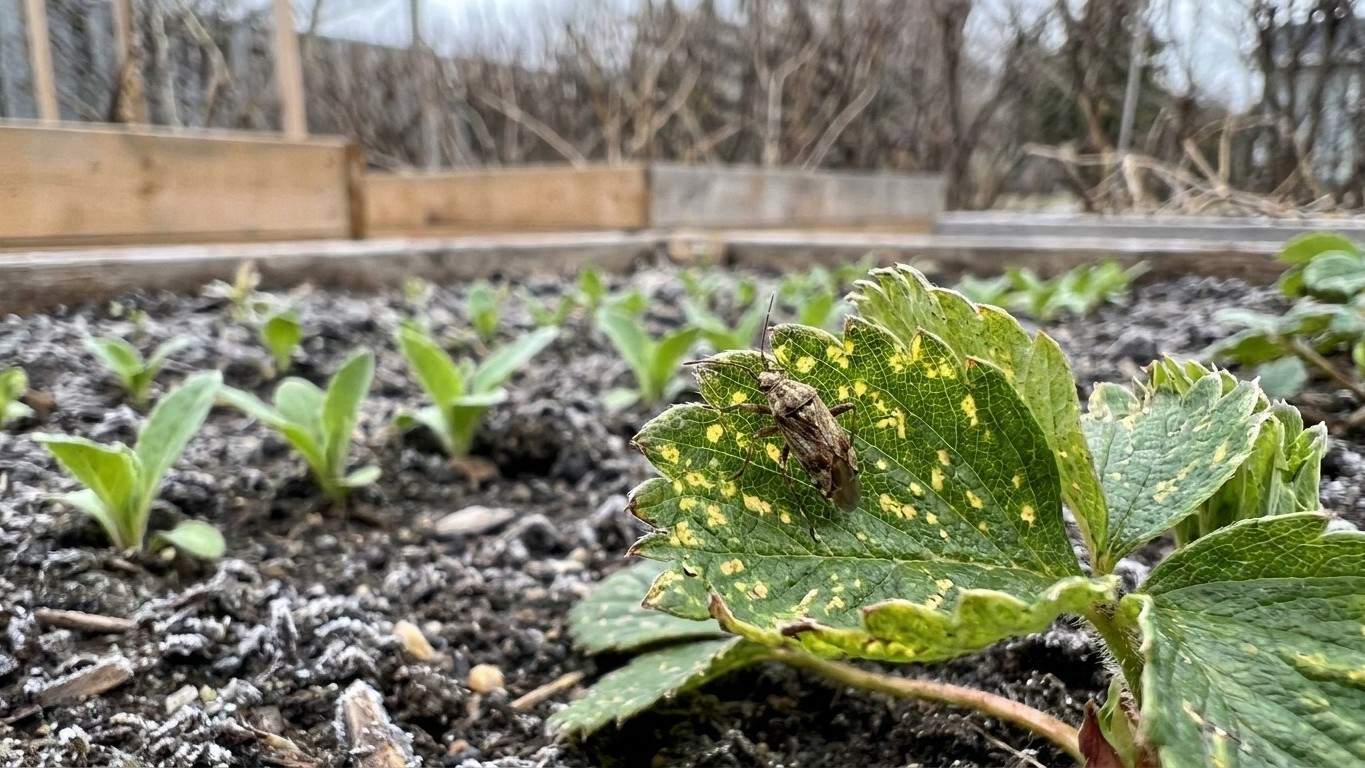

The tarnished plant bug shows up in Quebec gardens as soon as soil warms in spring, and it stays active through the growing season, moving from weeds into strawberries, beans, and dozens of other crops. Stopping it means acting before the nymphs settle in, not after the damage appears.
Reading the calendar from your last frost

Quebec gardeners plan around one date more than any other: the average last spring frost, set at May 6 by Environment and Climate Change Canada’s 1981-2010 Climate Normals for the MONTREAL/ST-HUBERT A station. That number is a mean, not a promise. In one year out of two, frost actually arrives later than May 6, so treat it as the midpoint of a window rather than a safe line to plant by. A province this size doesn’t share one climate either: gardens north of Montreal or at higher elevation can run weeks behind that station’s normal.
The tarnished plant bug doesn’t consult a calendar at all. It answers to soil and air warmth, so a cold, dragging spring pushes its emergence back while an early thaw pulls it forward, sometimes by two or three weeks relative to the frost-date average. Adults overwinter in plant debris and weedy field edges, then move into gardens as temperatures climb, well before most transplants have hardened off.
Once seedlings go in the ground, growers often notice the first stippling or distorted growth within a couple of weeks, sometimes sooner if a warm spell follows transplanting. That timing matters for covers: a floating row cover installed at transplant and left in place through the vulnerable seedling stage blocks the earliest wave of adults, but it has to come off before flowering on crops that need pollinators, which is exactly when a second wave of insects often arrives.
What it attacks, and what the damage looks like
Most gardeners meet this insect through its damage long before they spot the bug itself. On strawberries, the giveaway is catfacing, fruit that develops lumpy, sunken, deformed patches instead of filling out evenly because feeding early in fruit development kills tissue that would otherwise expand. On celery, the same feeding produces blackheart, a blackened, collapsed growing point at the center of the stalk. Beans show pitted, dimpled pods. Potatoes and a wide range of vegetables and cut flowers, including dahlias and asters, show wilting shoot tips, ragged small holes in young leaves, or terminal buds that die back and stop growing altogether.
The insect responsible is a piercing-sucking feeder. It doesn’t chew visible holes the way caterpillars do; instead it punctures plant tissue and injects saliva that breaks down cells, then withdraws the liquefied contents. That saliva is what causes the necrotic spotting and distortion, not just the loss of plant fluid.
Which life stage matters most
Both nymphs and adults feed this way, but nymphs tend to cause the heaviest damage because they’re wingless and stay put on one plant or even one shoot for days at a stretch, feeding continuously as they move through five growth stages before reaching adulthood. Adults, which are mobile and can fly between plants and fields, spread damage more widely but often more briefly on any single plant. That distinction matters for timing a response: nymphs clustered on new growth are exposed and can still be knocked back, while damage already visible as blackheart or catfacing reflects feeding that happened days or weeks earlier and can’t be undone.
How Quebec sits in this pest’s range

This site currently documents the tarnished plant bug in two territories, and that count says something specific: this is not a pest confined to one edge of its range, showing up occasionally as an oddity. Where a species is documented across a wide swath of territories, the meaningful difference between them is almost always timing of emergence and feeding pressure through the season, not whether the insect is present at all. Quebec fits that pattern rather than sitting at some unusual frontier.
What Quebec doesn’t have, at least not yet on this site, is its own published local guidance built from provincial extension data. The nearest published guidance comes from New Hampshire, across the border, through the UNH Cooperative Extension. That’s worth saying plainly rather than glossing over: New Hampshire’s figures describe New Hampshire conditions, and a border doesn’t erase the difference between a coastal-influenced climate and Quebec’s colder, more continental spring. Growers here can use that guidance as a starting reference point for biology and identification, while adjusting timing to the frost normals and season length actually recorded for their own region.
What actually works against it
The cheapest defense costs nothing but planning.
- Staggering transplant dates so tender seedlings aren’t sitting exposed during the peak spring emergence window reduces the odds of the worst early feeding, since the insect targets the softest, most actively growing tissue first.
- Floating row covers, installed at transplant and sealed at the edges with soil or pins, work by physically blocking adults from reaching the plant to lay eggs, but that mechanism only holds while the cover stays sealed and while the crop doesn’t need pollinator access, since covers usually have to come off once flowering starts on crops like strawberries or beans, reopening the door.
- Hand-picking works, but only on a small scale and only early, because nymphs move quickly when disturbed, so checking plants in early morning when temperatures are cooler and the insects are more sluggish gives a real chance of knocking them into a container of soapy water before they scatter.
- Clearing garden debris, spent plant material, and weedy borders in fall and again in early spring removes the sheltered spots where adults overwinter, cutting down the local population that would otherwise emerge right into the new season’s crop.
- Crop rotation, moving susceptible crops away from beds that hosted heavy infestations the previous year, makes it harder for emerging adults to find a host close to where they overwintered.
None of these measures do anything once damage is already visible as blackheart, catfacing, or a dead terminal bud. By that point the feeding happened days or weeks earlier, the toxic saliva has already done its work, and no amount of debris clearing or hand-picking reverses tissue that’s already necrotic. The response has to happen before that point, aimed at the insects themselves rather than the damage they leave behind.
Common questions
Does the tarnished plant bug bite people or pets?
No. Its piercing-sucking mouthparts are built for plant tissue, and it has no interest in animals or humans. Any bite-like irritation in the garden usually traces to a different insect.
Can one row cover stay on all season to avoid the problem entirely?
Not on crops that need insect pollination. Covers have to come off once flowers open on strawberries, beans, and similar crops, which is often exactly when a second wave of adults moves in from surrounding vegetation.
If I see catfacing on strawberries, is the current year’s crop a total loss?
Not necessarily. Damage usually affects individual berries rather than the whole plant, and later-forming fruit can still develop normally if feeding pressure drops. But the deformed fruit already affected won’t recover.