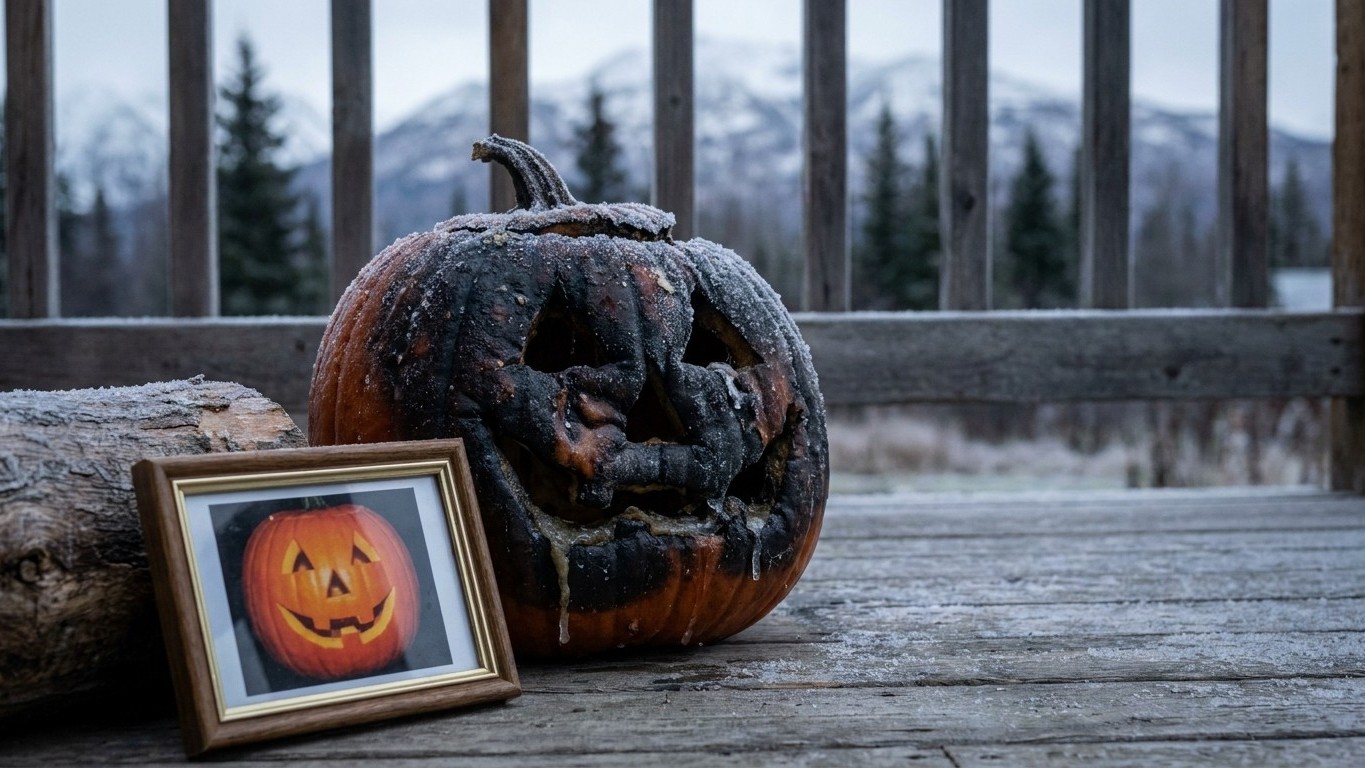

Anchorage’s mean first fall frost lands around September 22 to October 1, roughly three to five weeks ahead of Halloween. That gap matters more here than in almost any other state, because it means the safe window for an exposed pumpkin closes well before trick-or-treaters ever ring a doorbell. Carve too soon in Alaska and you’re nursing a collapsed jack-o’-lantern by the 31st.
The short answer

Around September 22 to October 1 is when the average first fall frost shows up in the Anchorage area, based on NOAA’s 1991-2020 Climate Normals. That’s an average, not a promise, but it puts frost roughly three to five weeks before Halloween rather than right on top of it. For a pumpkin sitting untouched on a porch from the patch to October 31, that’s the single fact that changes everything about timing here.
In most of the Lower 48, the question is whether frost arrives before or after Halloween. In Alaska, frost has usually already come and gone weeks earlier. The growing season around Anchorage runs about 143 frost-free days, and that’s the mild end of the state. Interior communities and anything north of the Alaska Range see a season far shorter, sometimes closing out before Labor Day. The long daylight of an Alaska summer helps a pumpkin size up fast, but it doesn’t buy back the calendar once fall sets in.
So the practical window isn’t “carve whenever, worry about frost later.” It’s the reverse: assume frost has already happened by the time you’re shopping for a pumpkin, and plan the display end of things around Halloween itself rather than the growing end. Buy or harvest a sound, heavy pumpkin with its stem intact, keep it whole and protected through most of October, and save the actual carving for the final handful of days before the 31st. That’s the window that matters in this climate: not the number of days until frost, but the number of days you’re willing to leave a cut pumpkin exposed to Alaska’s late-October temperatures.
Push the carving date earlier than that and you’re fighting two things at once: whatever cold snap follows the first frost, and the natural softening that starts the moment a knife opens the shell. Neither works in your favor over a three-to-five-week stretch. The safer play is to let the whole, uncarved pumpkin do the waiting, and let the carved pumpkin do as little waiting as possible.
Frost or heat: which one gets it here
The cold end
A whole pumpkin stores best between 45 and 50 degrees Fahrenheit. Anchorage’s coldest month averages a daily minimum of 11.0 degrees Fahrenheit, and while that figure describes the depths of winter rather than late October, it signals the direction the season is heading fast. By the time Halloween arrives, nighttime lows in south central Alaska are typically running well under that 45-50 degree band, and often below freezing outright.
That’s the risk that applies here: freezing, not heat. But it’s worth separating a light frost from a hard freeze. The first fall frost around September 22 to October 1 is a 32-degree event, the kind that can nip exposed vines without necessarily wrecking a picked, cured pumpkin. What does real damage is the harder, sustained freeze that follows as October progresses, the kind that turns pumpkin flesh soft and weepy once it thaws. That’s the cold end of the storage band failing, and in Alaska, it’s the end you’ll actually run into.
The warm end
In warmer states, the opposite problem shows up: temperatures sitting above 50 degrees for weeks, which speeds up softening and rot from the inside. That’s simply not the Alaska problem in late October. If anything, the risk runs in the other direction entirely, too cold rather than too warm. That’s useful to know because it means the fix here isn’t finding somewhere cooler. It’s finding somewhere that doesn’t dip below that 45-degree floor once the nights turn hard.
Where to keep it until you carve
- Start with a mudroom, enclosed entryway, or unheated three-season porch. These spaces often sit closer to the 45-50 degree band than the rest of the house, especially before the coldest air of the season fully settles in.
- An attached, unheated garage can work in early-to-mid fall, but check it against the season: once nightly lows start tracking toward Anchorage’s 11-degree coldest-month average, an unheated garage will drop well below the storage band and needs to be ruled out.
- A basement or root cellar, cool and dark year-round, is one of the more reliable options if it doesn’t run warm from a nearby furnace or water heater.
- Keep the pumpkin away from heat vents, wood stoves, or a south-facing window that traps sun. Anything pushing the spot above 50 degrees speeds up softening.
- Store it apart from ripening fruit and vegetables like apples, potatoes, or tomatoes. They give off a gas that ages a pumpkin faster, which is exactly why a porch shelf next to the apple crate is one of the worst spots for it.
- When you move it, lift from underneath rather than by the stem. The stem isn’t a handle, it’s the seal over that section of the pumpkin, and once it breaks off, that spot is exposed and prone to spoiling early.
Checking this against your own county
Anchorage’s numbers are a reasonable stand-in for south central Alaska, but they don’t hold for the Interior, the Kenai Peninsula’s colder pockets, or anywhere north of the Alaska Range, where the frost-free season runs shorter and colder weather sets in earlier in the fall. Before locking in a carving date, check conditions specific to where you live.
The University of Alaska Fairbanks Cooperative Extension Service is the right place to start. Its offices cover local growing seasons and frost patterns county by county, which matters in a state where a few hundred miles, or a few hundred feet of elevation, can shift the calendar by weeks.
Common questions
Does carving early hurt a pumpkin in Alaska’s short season?
Yes, more than in milder states. With frost typically arriving three to five weeks before Halloween, a carved pumpkin has to survive a longer stretch of falling temperatures than it would farther south. Carving closer to the 31st gives it less time exposed to that cold.
How long does a whole, uncarved pumpkin actually keep?
A whole pumpkin stored between 45 and 50 degrees, in a cool, dark spot away from ripening produce, can keep for three to six months, according to University of Illinois Extension. That’s the figure to plan around, not a carved one.
How long does a carved pumpkin last?
No university extension publishes a specific timeframe for a carved pumpkin, and there’s no research-backed preservation method, no bleach dip, no petroleum jelly trick, that changes that. What extension sources do confirm is that choosing a sound pumpkin with an intact stem and keeping it whole as long as possible are the two things you actually control. Once it’s cut, treat the display window as short.
Can I just carve before the first frost hits, to be safe?
Carving early doesn’t protect a pumpkin from frost, it just starts the clock on softening sooner. A better approach is keeping the pumpkin whole and protected through the cold snap, then carving close to Halloween itself.