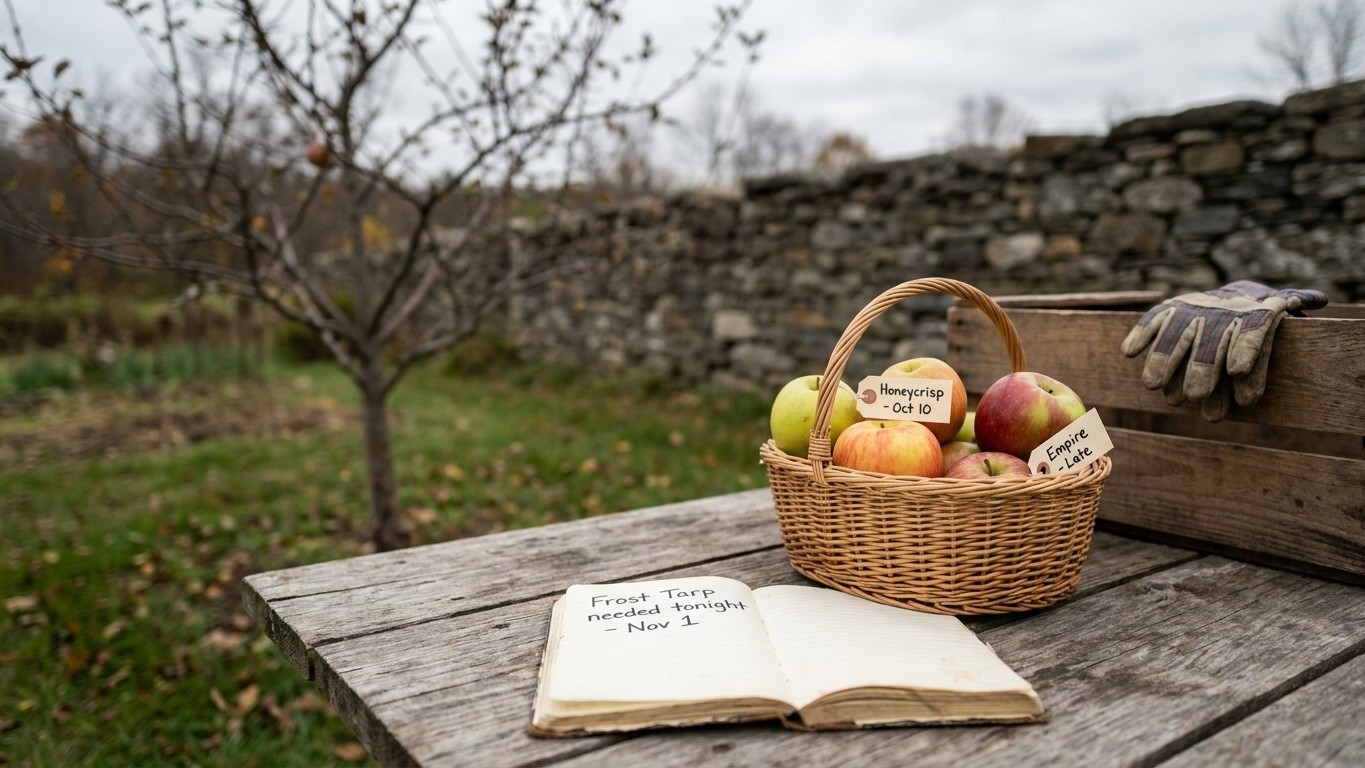

New York apples work almost anywhere in the state, but only if the tree you pick can survive the winter that actually shows up on your property. This is a state with a five-zone spread packed inside one border — 3b in the Adirondack high country, 7b out on the Long Island coast — so a variety that thrives near the city can die two hours north, and one bred for the Tug Hill Plateau can sit sluggish and unproductive in a mild Hudson Valley yard. Before you plant, look up your own zone rating and check every cultivar against it, not against what your neighbor two counties over is growing — the New York apple Calendar is a useful starting reference for timing and zone matching.
Can you grow apples in New York
Yes, and apples are one of the most reliable fruit crops for the state, provided the tree matches the zone. The USDA Plant Hardiness Zone Map (2023 edition) spans New York from 3b in the high country around Lake Placid and the western Adirondacks to 7b along the immediate coast of Long Island and parts of New York City. That is a five-zone spread inside one state, wider than almost anywhere else in the Northeast.
New York City’s own numbers, from NOAA’s 1991-2020 climate normals, put the coldest month’s average daily minimum at 26.9°F. That is a moderate winter by upstate standards. Travel two hours north into the Catskills or the Mohawk Valley and the same measurement runs colder, sometimes dropping the local zone rating by two full steps. A grower near Central Park is not gardening in the same climate as a grower near Saranac Lake, even though both hold a New York mailing address.
Where winter tests the range hardest
The hardest ground for apples in this state is the true high country: the interior Adirondacks and the higher elevations of the Tug Hill Plateau, where winter lows and a short growing season push against the cold tolerance of even the toughest cultivars. Growers there do best sticking to zone-3-rated cultivars on hardy rootstock and accepting a shorter list of choices. Everywhere else in the state, from the Hudson Valley’s orchard country to the Finger Lakes shoreline and the Champlain Valley, apples are a proven commercial and backyard crop. The Finger Lakes region in particular has grown apples commercially for well over a century, thanks to a lake-moderated microclimate that softens the worst of the winter swings.
The number that matters more than the zone label is your own site’s minimum winter temperature and the length of its frost-free season, since a sheltered valley two miles from an exposed ridge can differ by a full zone. Match rootstock and cultivar to your actual site rather than to the county average, and treat the statewide 3b-7b range as a starting filter, not a final answer. For a closer look at which cultivars hold up best across these zones, see The Best Apple Varieties for New York.
Which varieties suit this climate

New York’s growing zones run cold enough that winter chill is rarely the limiting factor here, unlike the Deep South, where growers hunt for low-chill selections that will break bud in a short winter. This state sits at the high-chill end of that spectrum: nearly every commercially sold apple cultivar was bred for a long, cold dormancy, so the practical filter for a New York planting is cold hardiness first, then disease resistance and bloom timing. Growers in Virginia’s warmer Piedmont face the opposite concern, weighing chill requirement much more heavily, a issue covered in Growing Apples in Virginia: Varieties, Timing and Frost Risk.
Cultivars that hold up across the state’s zones
‘Honeycrisp’ is hardy to USDA zone 3 and performs from the Hudson Valley through the Adirondack foothills, though it is prone to bitter pit without careful calcium management and fruit thinning. ‘Liberty’, bred at Cornell’s Geneva research station, carries strong resistance to apple scab and is rated for zones 4 through 7, a useful trait anywhere humid summers keep foliage wet into June. ‘Cortland’ and ‘Empire’ both hold to zone 4 and are standard choices from the Finger Lakes to Long Island. ‘Northern Spy’ and ‘Macoun’ are late-season varieties rated to zone 4 that need a longer frost-free stretch to finish ripening, better suited to the milder Hudson Valley and coastal counties than the shortest-season interior sites. For the coldest ground, zone-3-rated selections like ‘William’s Pride’ that ripen early are a safer bet than a late, long-season cultivar that may not finish before the first fall freeze.
| Cultivar | Published hardiness zone | Harvest season | Notable trait |
|---|---|---|---|
| Honeycrisp | 3-8 | Early to mid fall | Prone to bitter pit |
| Liberty | 4-7 | Mid fall | Strong scab resistance |
| Cortland | 4-8 | Early to mid fall | Reliable, widely grown |
| Empire | 4-8 | Mid fall | Compact tree habit |
| Northern Spy | 4-7 | Late fall | Needs a long season to ripen |
| William’s Pride | 3-8 | Late summer | Early ripening, disease-resistant |
No New York-specific variety trial list is cited here. Check Cornell Cooperative Extension’s own county recommendations before committing to a short list, since disease pressure and soil vary enough across the state that a cultivar performing well in the Finger Lakes will not always suit Long Island’s sandier ground.
Planting a pair that works here
Apples do not reliably self-pollinate, so one tree in a New York yard produces a thin crop at best, regardless of how carefully it’s sited. A planting needs a second tree, of a different cultivar, blooming in the same window, with pollen the first tree can actually use.
Among the varieties suited to this state’s zones, ‘Liberty’ and ‘Empire’ bloom close enough together to cover for each other most seasons, and both accept pollen readily. ‘Cortland’ pairs well with either, since its bloom overlaps the same window. Where the goal is an early-ripening backyard pair for the coldest sites, ‘William’s Pride’ blooms early enough that it needs a similarly early partner rather than a late one. The safest move is to pick two cultivars with an overlapping bloom period, not to assume any two apple trees will manage on their own.
Watch for sterile-pollen varieties
The trap most beginners fall into is planting a triploid variety as one half of the pair. ‘Northern Spy’ is a classic triploid: it flowers well and produces good fruit, but its own pollen is sterile, so it cannot fertilize a neighboring tree. A ‘Northern Spy’ planted with only one companion needs that companion to be a normal diploid variety, and if the goal is a self-sufficient two-tree planting, ‘Spy’ itself still needs a third, fertile tree nearby to set its own crop. Check a cultivar’s ploidy before pairing it, since a heavily blooming triploid can still leave a planting short of fruit if it is the only pollen source on the property.
A wild crabapple or an ornamental flowering crab nearby often solves the problem for free, since most bloom on a compatible schedule and supply plenty of fertile pollen for bees to carry over. Where a property has no other apple within roughly a hundred feet and no crabapple either, plan on two productive cultivars minimum at planting time, rather than one tree and a hope of borrowed pollen from a neighbor’s yard.
The frost that costs a crop here

The single frost that costs a New York apple grower the most is not a hard winter freeze. It’s a late spring frost that arrives after the buds have opened into pink or white bloom. NOAA’s NCEI 1991-2020 climate normals put New York City’s own last spring freeze in the window of March 23 to April 3, based on 32°F freeze-probability data for Central Park. That is a city figure only. Sites upstate, at higher elevation, or farther from the coast’s moderating effect routinely see their last frost weeks later, and the Adirondacks and the interior Finger Lakes are typically among the last places in the state to clear frost risk in spring.
Why a frost after pink bud costs the crop
The mechanism matters more than the calendar date. Apple buds move through a sequence from dormant, to green tip, to pink, to open bloom, and each stage is progressively less cold-hardy than the last. A freeze that a dormant bud shrugs off can kill an open flower outright. When that happens, the tree itself is rarely damaged. It leafs out and looks perfectly healthy through the summer, but the flowers that froze cannot set fruit, and that year’s crop is reduced or gone before most gardeners even notice anything happened.
What actually protects the bloom
There is no way to fully frost-proof a planting, but a few practical moves help. Avoid siting trees in a low frost pocket where cold air pools overnight, since a slope with air drainage runs several degrees warmer at bud level on a clear, calm night. Covering small trees with frost cloth ahead of a forecast freeze during bloom buys a few degrees of protection. Orchards close to a lake or a large body of water benefit from the water’s slower temperature swing, part of why the Finger Lakes and the Lake Champlain shoreline hold a reputation as dependable orchard ground.
The most reliable long-term protection is choosing a late-blooming cultivar where local frost risk runs late, since a tree that flowers a week or two after the earliest bloomers simply misses more of the frost window by the time its buds turn vulnerable. Growers just south in Pennsylvania face a similar spring frost pattern, covered in Growing Apples in Pennsylvania: Varieties, Timing and Frost Risk, though that state’s own frost dates differ from New York’s.
The apple year in New York
New York’s apple season runs on the tree’s own developmental stage far more than on the calendar. Stage, not date, should decide when to spray, prune, or watch the forecast.
Stage by stage
- Dormancy, winter through the last hard freeze: dormant pruning and a dormant oil spray if scale or mite pressure was heavy the year before.
- Green tip, as buds swell and show green, usually as the last frost window closes: first fungicide pass on scab-prone cultivars if wet weather is forecast.
- Pink, bud shows color before opening: the most frost-sensitive stage until full bloom; watch the forecast closely, since New York City’s own last spring frost, per NOAA’s 1991-2020 normals, falls between March 23 and April 3, and upstate sites clear frost risk well after that.
- Bloom, flowers open: pollination happens now, so hold off on anything toxic to bees during open bloom.
- Petal fall, petals drop and tiny fruit shows: apply a thinning spray if you use one, and resume disease sprays.
- Fruit set, early summer: thin fruit by hand to one apple per cluster for size and to reduce limb breakage later.
- Harvest, from late summer for early selections to well into fall for late types like ‘Northern Spy’: pick before the first fall frost, which NOAA’s 1991-2020 normals put at November 14 to November 27 for New York City, though upstate orchards finish well before that window even opens.
Adjusting for your own site
Treat every date in that list as a starting estimate for the New York City area specifically. A grower in the Champlain Valley or the Tug Hill snowbelt should expect green tip, bloom, and harvest to all run later, and should watch bud stage in the field rather than trust a date carried over from a downstate calendar.
Local help
Cornell Cooperative Extension publishes county-level variety recommendations, spray timing bulletins, and pest alerts tailored to each region of the state, from Long Island to the North Country. Since local disease pressure, soil, and microclimate vary this much across New York, checking with the Cornell Cooperative Extension office for your county is the single best step before finalizing a variety list or a spray schedule. Start with the extension’s own recommendations rather than a generic national list, since theirs are built from trials run under New York conditions.
Common questions
Can I grow apple trees in a small yard in NYC or on Long Island?
Yes, with dwarf or semi-dwarf rootstock kept to a manageable size by annual pruning. A dwarf tree still needs a second, compatible variety nearby for pollination, so a small yard really needs room for two trees or a neighbor’s tree within reach of bees.
How long before a new apple tree bears fruit in New York?
It depends mainly on rootstock size, not on the state you’re in. Dwarf trees on rootstock like M9 typically start bearing a light crop within a few years of planting, while a standard-size tree on seedling rootstock takes considerably longer to reach the same point.
Do I have to spray apple trees every year in New York?
Most cultivars grown here benefit from at least a basic disease-prevention schedule, since the state’s humid summers favor apple scab and other fungal problems. Scab-resistant cultivars like ‘Liberty’ need far less spraying than a scab-susceptible variety planted in the same spot.
My apple tree bloomed heavily but most of the fruit dropped in June. Is that frost damage?
Probably not, if the drop happened weeks after bloom rather than right after a cold night. Apple trees naturally shed a portion of their young fruit in early summer, sometimes called June drop, to match the crop to what the tree can actually size and support.
Will apples grow in sandy soil on Long Island?
Apples tolerate a range of soils but need good drainage and enough organic matter to hold moisture between rains. Sandy ground drains fast, so plan on mulching, watering during dry spells, and building organic matter into the planting hole rather than assuming the tree will manage on its own.