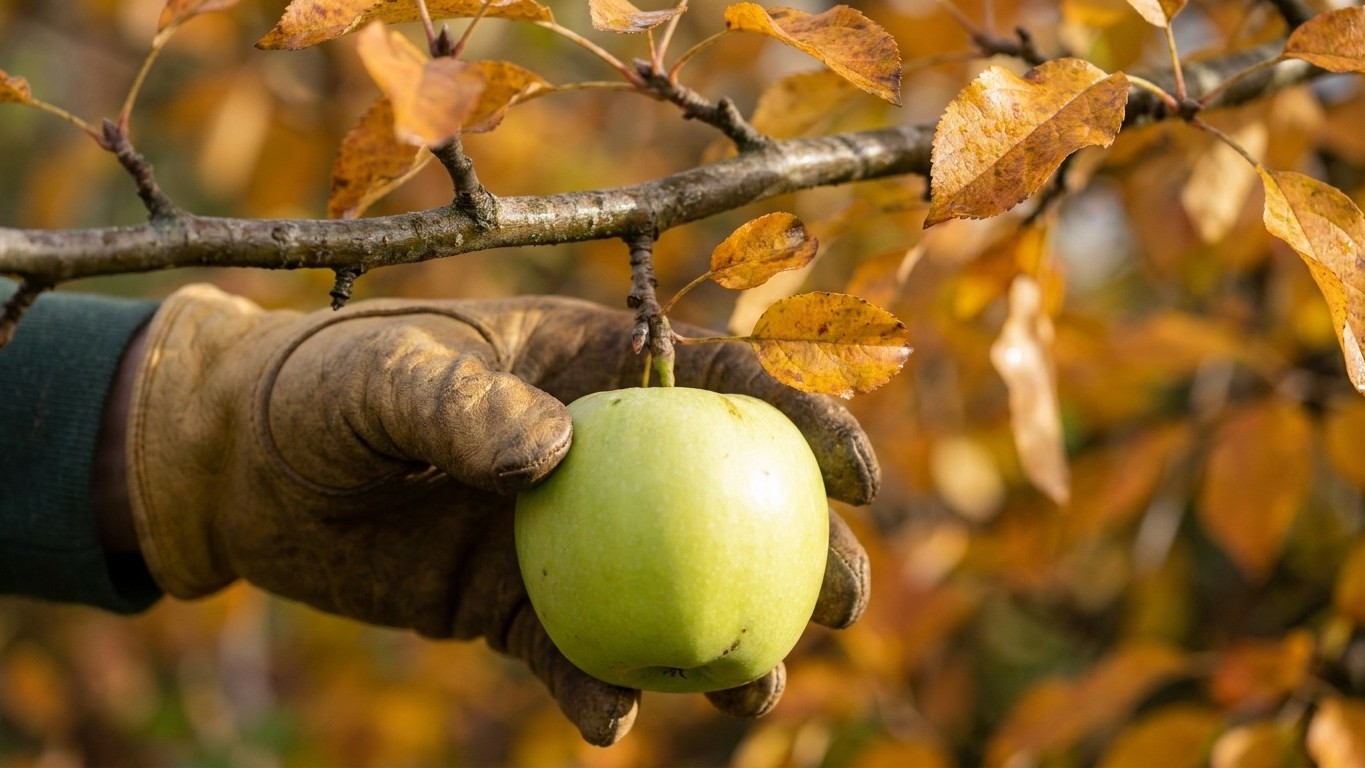

Granny Smith earns its shelf space for one reason: it holds its tartness and its shape better than almost any apple you can grow at home. But it also carries a fire blight rating that will test a grower in a wet spring. Whether that trade is worth making depends on your climate, your patience with sprays, and what you actually want from the fruit.
What Granny Smith actually is

A grower picking this variety is signing up for four specific things:
- When it ripens: late October to November
- What it tastes like: sharply tart and grassy, with very hard, dense flesh
- What it is good for: all-purpose use in the kitchen
- How long it keeps: good keeping in a home cellar, with much longer storage under commercial conditions
Those numbers come from Utah State University Extension’s guide to apple production for the home garden, along with Clemson Cooperative Extension’s HGIC 1350 variety table, and they’re worth taking at face value rather than rounding. A late-October to November harvest means this is not a summer apple. It hangs on the tree through most of fall, which is part of why the flesh gets so dense and the acid so pronounced by the time it’s ready.
The “all-purpose” label from Clemson is the fact that actually matters at the counter. A dessert apple like Fuji softens and sweetens fast once cooked, which is fine for eating out of hand but disappointing in a pie, where the slices collapse into mush. Granny Smith does the opposite: the flesh is dense enough to hold its shape through baking, and the acidity that makes it sharp raw is exactly what keeps a cooked filling from tasting flat. That’s the physical reason bakers reach for it, not tradition.
On storage, the distinction matters more than most growers realize. What you’ll get from a cool basement or root cellar is a good, solid keeping period, nothing exotic. The “very good” longevity you may have read about elsewhere assumes controlled atmosphere storage, a commercial packhouse setup with regulated oxygen and temperature that no home grower has access to. Don’t expect that figure in your own shed.
Will it grow where you are
Hardiness
USU Extension lists Granny Smith as suited to hardiness zones 5 through 8. That’s a wide band, and it means most of the continental United States has a shot at growing this tree, from the upper Midwest and New England down through the mid-South. Zone 4 winters and colder will likely damage or kill it; zone 9 and warmer starts pushing into territory where a second filter, separate from cold hardiness, becomes the deciding factor.
Winter chill
That second filter is winter chill, the number of cold hours below about 45°F a tree needs over the dormant season before it will break bud and flower normally the following spring. This is the detail most home growers never check, and it trips up gardeners in the Deep South and parts of California who assume that if a zone map says “yes,” the tree will perform. A published chill requirement for Granny Smith isn’t available in the sourced material here, so rather than inventing a number, the honest answer is that it isn’t published in the sources used for this guide. What’s known instead is where the variety tends to land in the broader picture: cultivars bred and popularized in cooler growing regions, as Granny Smith was, generally sit toward the higher end of chill need compared with low-chill varieties bred specifically for the Deep South or coastal California. If you garden in a mild-winter zone, that’s worth confirming with your local extension office before you commit a spot in the yard to this tree.
What to plant beside it
Granny Smith falls into bloom group B, a mid-season bloomer, according to Clemson HGIC 1350 and the University of Georgia’s C740 guide. Bloom group is a relative order, not a calendar date: exactly when group B trees flower shifts with your local spring, but their position relative to earlier and later groups stays consistent. For fruit to set, you need a partner blooming in that same window.
Varieties documented as able to pollinate Granny Smith include:
- Fuji
- Gala
- Ginger Gold
- Jerseymac
- Mollie’s Delicious
- Red Delicious
- Yates
Any one of those, planted within pollinating distance and flowering at a compatible time, should let bees do the rest of the work. Nearly all apple varieties crop better with a compatible partner nearby, so don’t count on a lone Granny Smith tree to fill a bushel basket even if it produces a handful of apples on its own.
There’s a trap worth naming directly. Mutsu flowers at the same time as Granny Smith, matching it in bloom group, but Mutsu has sterile pollen. It can accept pollen from other varieties and set its own fruit, but it cannot supply usable pollen to anything else. Plant only a Granny Smith and a Mutsu together and you’ll get flowers on both trees and fruit on neither, despite the timing looking perfect on paper. If Mutsu is a tree you already want in the yard, add a third variety from the list above to actually pollinate the Granny Smith.
For a fuller rundown of how bloom groups interact and which combinations fail for reasons that aren’t obvious at a glance, the site’s apple pollination guide walks through the mechanics in more detail.
Growing it well
Fire blight
USU Extension rates Granny Smith as very susceptible to fire blight, and that rating deserves more than a passing mention. Fire blight is a bacterial disease that spreads fastest during warm, wet bloom periods, entering through open blossoms and succulent new shoot growth. On a very susceptible variety, you’ll see blackened, scorched-looking shoot tips that curl over into a shape often described as a shepherd’s crook, and the infection can run down into branch wood and, in bad cases, the trunk. Growers in regions with warm, humid springs (much of the Southeast and mid-Atlantic) should expect to prune out strikes promptly, well below any visible discoloration, and to avoid heavy nitrogen fertilization that pushes the soft, vulnerable new growth this bacterium favors.
Growth habit
Granny Smith tends toward vigorous, spreading growth, which means it benefits from structural pruning in the early years to establish strong scaffold branches rather than a tangle of competing shoots. Left unmanaged, a vigorous habit also means more of the tender new growth that fire blight targets, so the two issues reinforce each other in practice.
Biennial bearing
Like many productive varieties, Granny Smith can slip into biennial bearing, a heavy crop one year followed by a light one the next, if a heavy set isn’t thinned back. Thinning fruit down to one apple per cluster, spaced several inches apart, in the weeks after natural fruit drop helps even out the cycle and also produces larger, better-quality apples in the harvest you do get.
Picking it and keeping it
The harvest window for Granny Smith runs late October into November, but a calendar date is a starting point, not a verdict. The tree itself will tell you when it’s ready if you check it the right way:
- Lift and twist a fruit gently in your palm. A ripe apple separates from the spur easily; one that resists and has to be yanked or cut free isn’t there yet.
- Cut one open and check the seeds. Pale or greenish seeds mean more time is needed; seeds that have turned brown or dark are a sign of maturity.
- Look at the ground color, the background shade beneath any blush or bronzing. On Granny Smith that base stays green even ripe, but it should look full and slightly waxy rather than hard and flat.
Storage
Once picked, Granny Smith is a good keeper in a cool basement, root cellar, or unheated garage that stays consistently cold without freezing, giving you weeks of usable fruit well past harvest. The much longer figures sometimes quoted for this variety, stretching storage out to many months, belong to controlled atmosphere warehouses that regulate oxygen and temperature far than any home setup can. Store what you pick in a cold, dark spot, check periodically for soft or bruised fruit that can spread rot to its neighbors, and expect solid results, not commercial-scale ones.
Common questions
Is Granny Smith self-pollinating?
Nearly all apple varieties, Granny Smith included, set a fuller crop with a compatible partner nearby rather than relying on their own pollen. Plant a second variety from its pollination list for a reliable harvest.
Why is Granny Smith so tart?
Its acidity is a genetic trait tied to the same dense, hard flesh that makes it hold up in cooking. Clemson’s variety data describes the eating quality as sharply tart and grassy, which is also why it works so well baked.
Can Mutsu pollinate Granny Smith?
No. Mutsu blooms at the same time as Granny Smith but has sterile pollen, meaning it can’t fertilize any other apple tree’s flowers. A third variety is needed if both are in the same yard.
Does Granny Smith need a lot of spraying?
It’s rated very susceptible to fire blight by USU Extension, which means growers in warm, humid climates should plan on active management, pruning out infected wood and avoiding excess nitrogen, rather than a hands-off approach.
How long does a home-picked Granny Smith actually keep?
Expect good keeping quality in a cold cellar or basement, measured in weeks rather than the many months sometimes advertised, since those longer figures depend on commercial controlled atmosphere storage unavailable to most home growers.