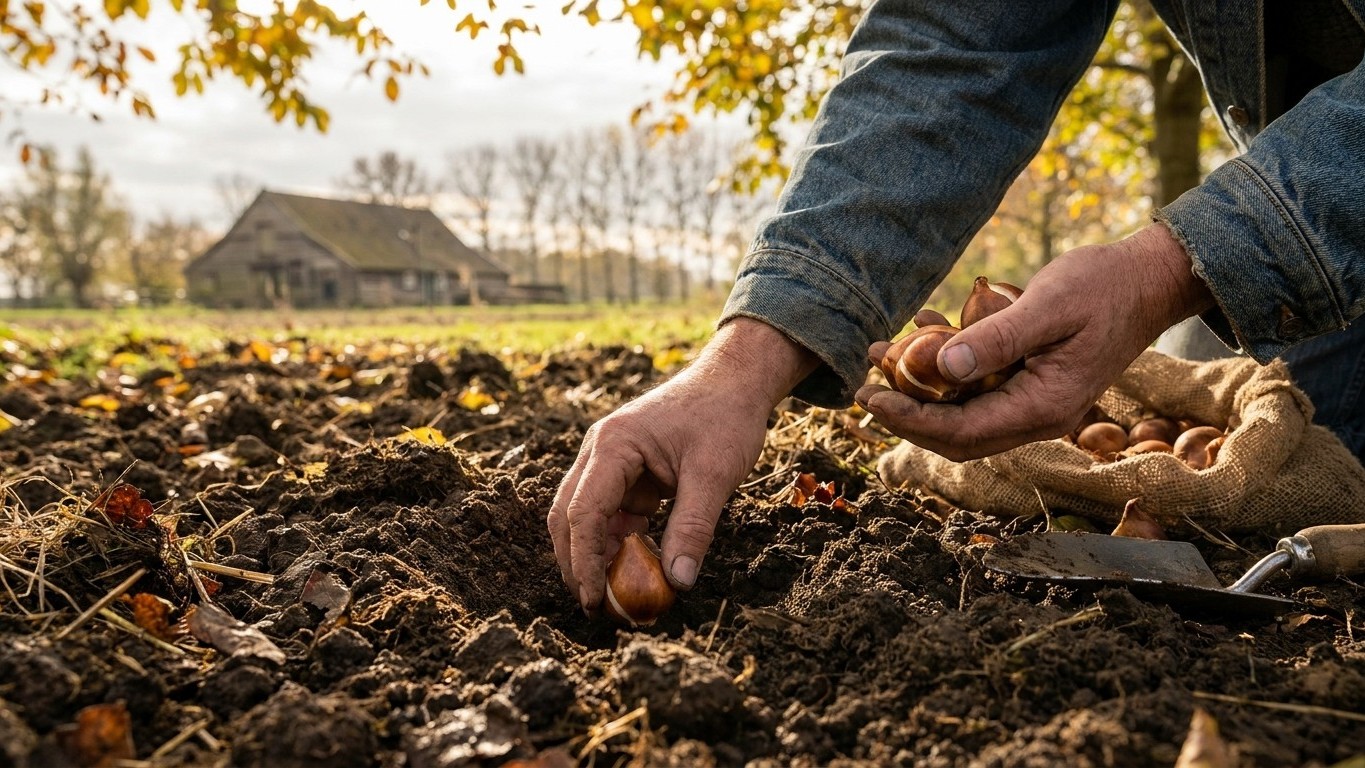

Arkansas gardeners can grow spring bulbs successfully, but not all of them, and the reason isn’t the calendar. It’s cold. Some bulbs need a winter chill this state barely delivers in its warmer corners, while others thrive here without a second thought. Knowing which is which, before you buy, saves money and a spring full of leaves with no flowers.
When to plant bulbs in Arkansas

Spring bulbs go in the ground in fall, and the target is soil that has cooled from summer heat but hasn’t frozen solid. The rule extension services use is straightforward: plant roughly six weeks before the ground freezes hard. In Arkansas, that anchors on the average first fall frost, which NOAA’s 1991-2020 Climate Normals put between November 7 and November 20 for the reference station near Little Rock. Working backward from that, the practical planting window for most of the state runs from early October through mid-November, with the earlier end better suited to the cooler northwest and the later end fine for the warmer Delta and southern counties.
Plant too early and the bulb sits in soil still holding summer warmth. Daffodils and tulips will sometimes push top growth before winter arrives, and that growth gets burned back by the first hard freeze, weakening the bulb before it’s even had a chance to root properly. Plant too late and the opposite problem shows up: the bulb goes into frozen or near-frozen ground without enough time to grow the root system it needs before the cold locks everything down. Bulbs planted in late December in Arkansas often come up thin and short the following spring, if they come up at all. For gardeners without in-ground beds or dealing with heavy clay soil, Growing Spring Bulbs in Containers in Arkansas offers a way to sidestep timing and soil issues altogether, while Forcing Spring Bulbs Indoors in Arkansas is another option for gardeners who’d rather skip the fall planting window entirely.
The frost date is an average, not a guarantee
Worth saying plainly: that November 7 to November 20 window is an average drawn from three decades of data. Half of all years land earlier than that range, and half land later. A gardener who waits until the average date arrives may already be planting into ground that froze two weeks ago, in a colder-than-usual year. The safer habit is to treat the early end of the range as the deadline to aim for, not the late end, and to get bulbs in the ground once soil temperatures at a four-inch depth drop into the 50s Fahrenheit, well before any hard freeze shows up on the forecast.
One more note on frost dates that trips people up: the 32°F freeze date isn’t the same as the 36°F light-frost date. NWS Little Rock puts the light-frost date at October 31, nearly a week earlier than the hard-freeze average. That distinction matters for tender plants, but for spring bulbs, which tolerate cold soil just fine, the November hard-freeze window is the one that matters.
Whether your winter is cold enough
This is the question that decides whether a bulb is worth planting at all, and it gets skipped more often than it should. A spring bulb doesn’t just tolerate cold, it needs it. Most spring-flowering bulbs require somewhere between twelve and fourteen weeks with soil temperatures below about 45°F to complete the internal process that builds a flower bud inside the bulb. Skip that chill, or cut it short, and the bulb usually still grows leaves the following spring, because leaf growth doesn’t require the same trigger. What it won’t do is flower, or it’ll send up a bloom on a stem too stunted to notice.
Arkansas’s coldest-month mean minimum, measured at the Little Rock reference station, is 30.9°F. That’s a mean daily minimum for the coldest month of the year, not a record low and not a seasonal average, and it’s the figure that determines whether a bulb’s chill requirement gets met at all. A month that averages a nightly low in the low 30s spends plenty of time with soil well under 45°F. Stacking December through February together, soil in most of Arkansas likely holds below that 45°F chill threshold for somewhere in the range of ten to twelve weeks, based on how long that cold stretch typically runs statewide.
That’s close to the twelve-week floor most bulbs need, but it’s short of the fourteen-to-sixteen weeks that hybrid tulips and hyacinths often demand, especially in the warmer southern and eastern parts of the state where zone 8a conditions push the margin even tighter.
Bulb chill needs against what Arkansas delivers
| Bulb | Weeks of chill needed | Arkansas typically delivers | Verdict |
|---|---|---|---|
| Daffodils (Narcissus) | 12-14 weeks | ~10-12 weeks | Works reliably, no pre-chill |
| Crocus | 8-15 weeks | ~10-12 weeks | Works reliably, no pre-chill |
| Allium | 8-10 weeks | ~10-12 weeks | Works easily, margin to spare |
| Grape hyacinth (Muscari) | 13-15 weeks | ~10-12 weeks | Marginal, best in cooler NW counties |
| Hyacinths | 12-15 weeks | ~10-12 weeks | Marginal, weaker each year without chilling |
| Tulips (hybrid) | 14-16 weeks | ~10-12 weeks | Falls short; pre-chill or treat as annual |
Where the chill comes up short, the fix is pre-chilling: store bulbs in a refrigerator (not a freezer) for a full twelve weeks before planting, ideally arriving right at the fall planting window. Keep them away from ripening fruit in the same fridge. Apples, bananas, and other fruit give off ethylene gas as they ripen, and ethylene kills the flower bud inside a chilling bulb without leaving any outward sign until spring, when the bulb produces leaves and nothing else. A gardener who plants hybrid tulips in southern Arkansas without pre-chilling them has, in most years, spent money on a bulb that won’t repeat what it does the first year, if it flowers at all that first year.
Which bulbs suit Arkansas
The bulbs that do well here are the ones whose hardiness range comfortably covers zones 6b through 8a and whose chill needs sit at or below what the state’s winters provide. That’s a solid list, and none of them require a refrigerator:
- Daffodils (Narcissus): hardy zones 3-8, naturalizes and returns for years
- Crocus: hardy zones 3-8, reliable early bloomer statewide
- Allium: hardy zones 3-9, thrives with room to spare on chill
- Snowdrops (Galanthus): hardy zones 3-7, best suited to the cooler northern counties
- Species tulips (smaller, wild-type varieties): hardy zones 3-8, more heat-tolerant than hybrids
The bulbs that disappoint are the ones near the edge of their comfort zone in both directions: too little chill to flower well, and too much summer heat to survive as a perennial. Hybrid tulips are the clearest example. Zone 8a summers in southern and eastern Arkansas run hot enough that even a tulip that does flower its first spring often fails to build up enough energy in the bulb to repeat the following year. Gardeners in this situation typically see a strong first-year show, then a steady decline: shorter stems, fewer flowers, and within two or three years, leaves with no bloom at all. Hyacinths follow a similar pattern, just a bit more slowly.
Ranges aren’t hard lines. A tulip bed tucked against a north-facing wall in the Ozark highlands, shaded from afternoon sun and cooled by elevation, will often outlast the same bulbs planted in an open, south-facing bed in the Delta. Microclimate shifts the verdict more than most gardeners expect, which is exactly why a bulb “on the edge” of its range is worth a cautious try in a sheltered spot rather than a flat no.
What digs them up here
Squirrels and voles don’t raid every bulb bed equally, and the pattern isn’t random. It comes down to chemistry. Daffodils and members of the onion family carry compounds that make them bitter or mildly toxic to rodents, so they get left alone almost without exception. Tulips and crocus have no such defense. Both are essentially food to a hungry squirrel, and a freshly planted bed of either is often dug up within days if it’s left unprotected.
- Bulbs squirrels and voles take: tulips, crocus
- Bulbs squirrels and voles leave alone: daffodils, alliums, snowdrops, hyacinths, muscari
For the bulbs worth protecting, one method actually holds up: lay galvanized wire mesh flat over the planting bed, pinned down at the edges, and leave it in place until the ground freezes. Bulbs still root and sprout through the openings in spring, but the mesh blocks the digging that happens in the weeks right after planting, when the disturbed soil is easiest to smell and easiest to dig. Repellent sprays, whether pepper-based or predator-scent products, wash off with the first rain and need reapplying constantly to do anything at all, which makes them a poor match for a bulb bed that sits untouched from October to March.
Where to check for your own county
Every figure in this article, the frost dates, the coldest-month minimum, the hardiness zone, comes from a reference station near Little Rock. Arkansas stretches across roughly two degrees of USDA hardiness zone, from 6b in the northwest highlands to 8a in the southern and eastern lowlands, and a planting window built around the state capital can run two to three weeks off at either edge of that range. A bulb bed in Fayetteville faces a meaningfully colder, earlier winter than one in Pine Bluff, even though both fall under the umbrella of “Arkansas” in a general guide like this one.
The most reliable local numbers come from the University of Arkansas Division of Agriculture Cooperative Extension Service, which maintains county-level offices with frost date records and planting calendars specific to local elevation and soil conditions. A county office can also confirm whether a particular winter has been running colder or milder than the 30-year normal, which matters for anyone deciding, in a given year, whether marginal bulbs like hyacinths need that extra pre-chill or can go straight into the ground.