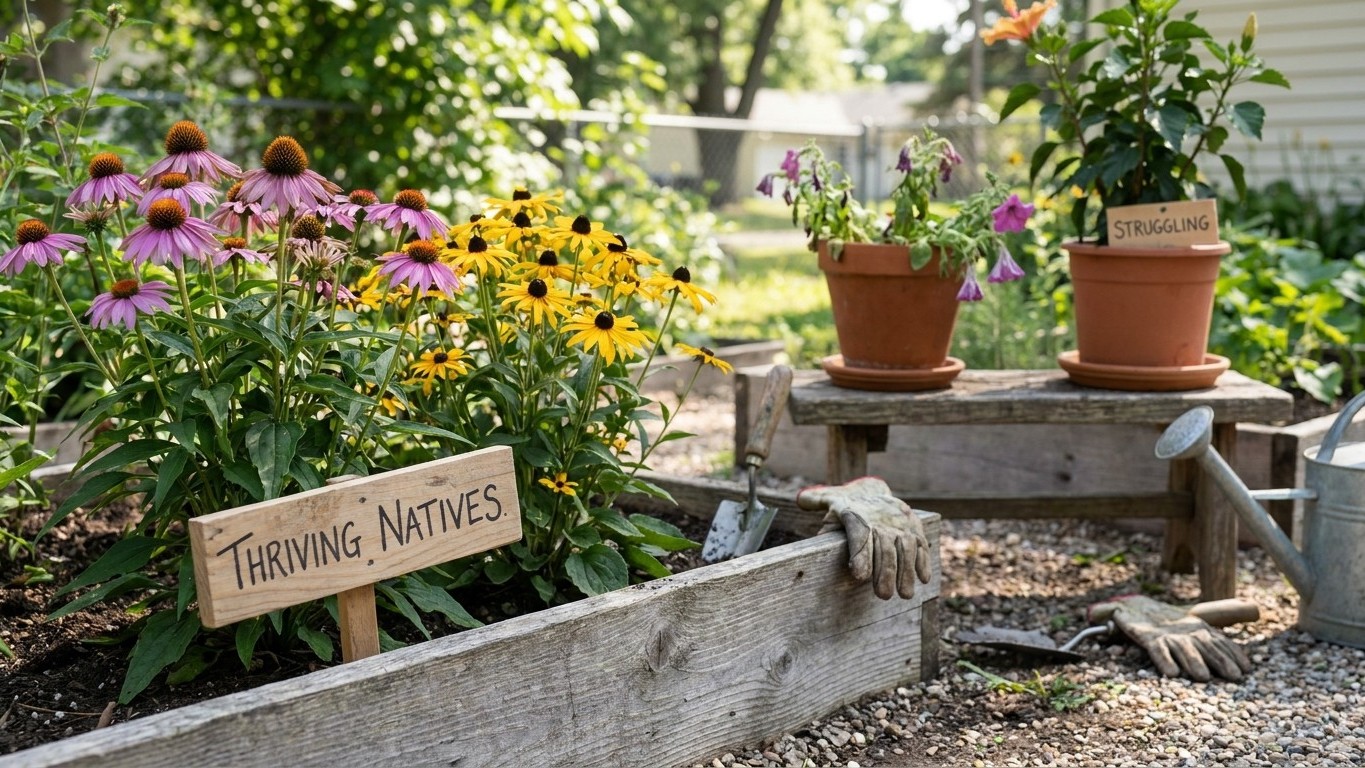

Iowa’s growing conditions are set by two extremes that arrive within the same year. NOAA’s 1991-2020 climate normals put the state at USDA hardiness zones 4b to 6a, and at the Des Moines reference station the coldest month averages a nightly minimum of 13.8°F. Add NOAA’s count of 18.4 days a year that reach 90°F or higher, and the flowers that actually do well here are the ones built to take both ends. Check the zone printed on a plant tag against 4b to 6a for your part of the state before you buy, since a plant rated for milder winters elsewhere may not make it through a Des Moines-area January.
What thrives in Iowa

Cold hardiness first
A flower’s winter survival in Iowa comes down to one number on the tag: its hardiness zone rating. With NOAA’s 1991-2020 normals putting the coldest month’s average low at 13.8°F in Des Moines, anything rated hardy only to zone 6 or higher is gambling on a mild winter, and anything rated to zone 4 or lower is playing it safe. Because the state’s zone range runs from 4b in the coldest pockets to 6a in the mildest, the same catalogue plant can be a sure thing in one county and a coin flip forty miles away. Treat the zone number as the first filter, before color or bloom time even enters the decision.
Heat and humidity load
Winter is only half the equation. Des Moines averages 18.4 days a year at 90°F or above, according to NOAA, and that heat arrives alongside the humidity typical of the eastern Corn Belt. Flowers bred for cool, dry summers, many alpine and Pacific Northwest natives among them, tend to sulk or rot at the crown once July settles in. The families that handle both extremes well include the aster family (coneflowers, black-eyed Susans, asters) and the mint family (salvias, catmint, agastache), plus most ornamental grasses. Gardeners in Kansas deal with an even heavier heat load, and the flowers that thrive there lean further into drought-tolerant, sun-loving stock than an Iowa border needs to. Drought tolerance matters here too, since Iowa summers can turn dry for weeks even in a humid climate, and a plant that needs constant moisture will show stress fast once a hot spell sets in.
Native plants worth the space
Plants native to the tallgrass prairie region that once covered much of the Midwest, Iowa included, arrive already matched to the state’s freeze-thaw winters and humid, occasionally droughty summers. That match is why they need less coddling once their roots are established, typically after the first full year in the ground. A newly planted native still needs regular watering through its first season, but by year two the root systems many of these species build, some running several feet deep, carry them through dry stretches that would stress a shallow-rooted annual.
They also do more work for pollinators than most nursery hybrids, particularly the ones bred for double flowers that hide or eliminate the pollen and nectar a bee or butterfly is after. Straight species and simple, single-flowered cultivars keep that resource intact. Worth planting for this reason:
- Purple coneflower (Echinacea purpurea), single daisy-form flower, feeds bees through midsummer
- Black-eyed Susan (Rudbeckia hirta), self-seeds readily, blooms into fall
- Wild bergamot (Monarda fistulosa), draws hummingbirds and bumblebees
- Butterfly milkweed (Asclepias tuberosa), the only larval host plant for monarch caterpillars
- New England aster (Symphyotrichum novae-angliae), late-season nectar source before frost
Butterfly milkweed earns its space even in a small border because it is doing a job no ornamental hybrid does: feeding monarch larvae, not just adult pollinators passing through. None of these need staking, spraying, or winter protection at any zone within the state’s 4b to 6a range, which is most of what “less work once established” actually means in practice.
Perennials that come back

Reading the tag against your zone
A perennial only comes back reliably if its hardiness rating covers the coldest winter your part of Iowa actually sees. With the state spanning USDA zones 4b to 6a, that means checking the tag’s low end against your county, not against the state average. A plant rated hardy to zone 5 will winter over fine in a 6a pocket and probably survive most 5b ground, but is a real risk in a 4b location without extra mulch. Anything rated zone 6 or warmer as its coldest limit should be treated as a gamble everywhere in the state, and anything rated zone 7 or up is functionally an annual here, whatever the tag calls it further south.
What actually returns
Peonies (Paeonia cultivars, generally hardy to zone 3), daylilies (Hemerocallis, zone 3), hostas (most cultivars zone 3), Baptisia, and sedum cultivars such as ‘Autumn Joy’ (zone 3-4) all sit comfortably inside the state’s cold range and return without special handling almost anywhere in Iowa. Garden lavender (Lavandula angustifolia, generally rated zone 5) is more of a coin flip: fine in a Des Moines-area 6a winter, marginal in a 4b one without a dry, sheltered spot and winter mulch. Anise hyssop and many salvias marketed for hummingbird gardens, such as Salvia guaranitica (rated to roughly zone 7), simply will not survive an Iowa winter and get grown here as annuals, replanted each spring, the same way a Iowa gardener treats a tender tropical.
| Perennial | Catalogue zone rating | Status in Iowa (4b-6a) |
|---|---|---|
| Peony | Zone 3 | Reliable statewide |
| Daylily | Zone 3 | Reliable statewide |
| Sedum ‘Autumn Joy’ | Zone 3-4 | Reliable statewide |
| Lavender | Zone 5 | Marginal in colder counties |
| Salvia guaranitica | Zone 7 | Grown as an annual |
Gardeners further north in Quebec deal with a colder floor still, and the perennials that make the cut there skew even harder toward zone 2 and 3 ratings than an Iowa border requires. That comparison is a useful gut check: if a plant survives a Quebec winter, an Iowa one is rarely in question.
Putting a border together
Layering and bloom succession
Set height at the back of a border first: Joe Pye weed, tall ornamental grasses like switchgrass, or a mature Baptisia clump can run four feet or more and should never sit in front of anything shorter. Mid-height fillers, coneflower, black-eyed Susan, garden phlox, carry the middle of the bed. Low, spreading plants, catmint, sedum, creeping thyme, edge the front and hide the bare stems of the plants behind them as the season wears on.
Bloom succession matters as much as height. Spring bulbs and early perennials like peony open the season, catmint and early coneflower carry June and July, black-eyed Susan and garden phlox hold midsummer, and asters and sedum close things out into fall. A border planted only for one peak month looks bare the other five. Walk the bed in your head, or on paper, across April through October and check that something is scheduled to open in each stretch.
Repetition and spacing
Repeating the same color or plant in odd-numbered groupings (three, five, seven) three or four times down a border reads as intentional. A single specimen of everything reads as a collection, not a garden. Leave the mature spacing a tag calls for at planting time, even though the bed looks sparse the first year. A coneflower planted at its mature 18-inch spread looks lonely in May and crowded by its third summer if you split the difference and plant it tighter.
Local help
Iowa State University Extension runs the state’s Master Gardener program, which trains volunteers county by county and is the best place to get a plant list matched to your specific location rather than the state’s full 4b to 6a range. Find your county office and current plant recommendations through the Iowa State Extension website, and for planning across the rest of the state’s growing conditions, the Iowa guides section covers vegetables and timing alongside flowers.
Common questions
What zone is Iowa for planting flowers?
Iowa spans USDA zones 4b through 6a, according to the USDA’s 2023 hardiness map, with the coldest pockets in the north and the mildest along the southern border. Check your specific county rather than assuming a single zone for the whole state, since a plant that survives near the Missouri border can fail two hundred miles north.
Can I plant flowers before the last frost?
Tender annuals and most tropical-rated perennials should wait until after your area’s last spring freeze risk has passed. NOAA’s 1991-2020 climate normals put that window at April 12 to April 24 for the Des Moines area, though Iowa State Extension’s longer county-level records run a few days later than that airport figure, so treat the NOAA range as the earliest realistic date, not a target.
Why did my perennial not come back this year?
The most common reason is a hardiness rating that did not actually cover your winter low. A plant tagged for zone 6 or warmer is a real risk anywhere in Iowa’s colder counties, and even a zone 5 plant can fail in an exposed, unmulched spot during a harsh 4b winter. Poor drainage is the other frequent cause: many perennials that tolerate cold well still rot if the crown sits in soggy soil through a freeze-thaw cycle.
How late can I plant flowers in the fall?
Get perennials in the ground with enough time to root in before the ground freezes hard, generally at least a few weeks before your area’s first fall freeze. NOAA’s 1991-2020 normals put that first freeze window at October 14 to October 25 for the Des Moines area, and Iowa State Extension’s county data trends about ten days earlier than that airport figure, so gardeners outside the immediate metro should plan on the earlier end.
Related guides
- Flowers That Actually Thrive in Minnesota, and the Ones That Struggle
- Flowers That Actually Thrive in Wisconsin, and the Ones That Struggle
- Flowers That Actually Thrive in Kansas, and the Ones That Struggle