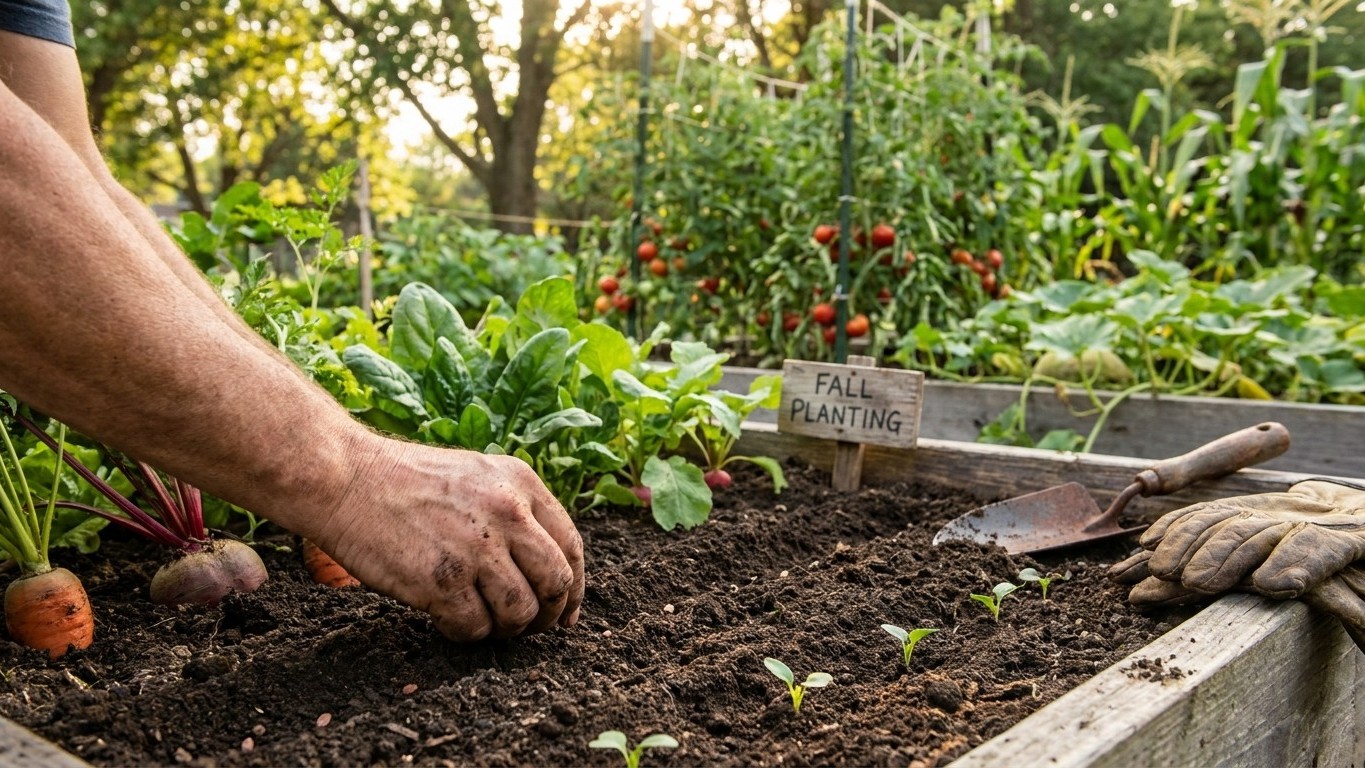

Iowa’s August garden runs on two clocks at once: fast-maturing crops still going into open ground before the first week or two closes out, and cool-season transplants started under cover for a September move outside. Sweet corn, tomatoes and melons are hitting their peak on the vine. What you shouldn’t do is start anything warm-season from seed outdoors this month. There isn’t enough season left, and the smart move is squeezing in one more fast round before the window shuts.
What goes in the ground in August

The calendar says August, but the soil and the clock running toward the first fall frost decide what actually works. Statewide, that first frost lands somewhere between October 14 and October 25, depending on location, according to NOAA’s 1991-2020 climate normals. Early in the month that gives a direct-sown crop roughly ten to twelve weeks to mature. By the last week of August, that window has shrunk to six to eight weeks. Everything you plant now has to fit inside whichever number applies to your spot.
That math rules some things out fast. Carrots need 70 to 75 days, so seed has to go in at the very start of the month or not at all. Beets and fall peas run 55 to 70 days, which means the first week or two of August is the real deadline, not the whole month. Bush beans, at 50 to 55 days, still work through roughly the second week. Turnips and kohlrabi, in the 40 to 55 day range, have a bit more room, into the middle of the month.
Radishes, spinach, and the frost-hardy leaves (kale, collards, Swiss chard) are the forgiving group. Radishes mature in 25 to 30 days, so they can go in through September. Spinach, at 40 to 45 days, does fine sown anytime in August, and actually prefers the cooling soil later in the month. Kale and collards keep growing past a light frost, so a slightly late start still pays off.
| Crop | Days to maturity | Latest safe sow window |
|---|---|---|
| Carrots | 70-75 | Very first days of August only |
| Fall peas | 60-70 | First 1-2 weeks of August |
| Beets | 55-60 | First 1-2 weeks of August |
| Bush beans | 50-55 | Through mid-August |
| Turnips, kohlrabi | 40-55 | Through mid-to-late August |
| Spinach | 40-45 | Anytime this month |
| Radishes | 25-30 | Through September |
| Kale, collards | 50-60 (frost-tolerant) | Anytime this month |
What to start under cover
Lettuce seed mostly stops germinating once soil temperature climbs past 80°F, which is common in Iowa in August. Rather than fighting that in open beds, start it in trays in a shaded spot or a cool basement corner, then move seedlings out once they’ve got three or four true leaves and the soil has eased off its peak heat. The same trick works for fast Asian brassicas like pak choi and tatsoi, which run 30 to 45 days once transplanted and tolerate the shift from tray to garden well.
Count backward from the frost window to know if there’s still time. Take pak choi: figure a three-week nursery period plus 35 days in the ground, roughly eight weeks total. Started in the first half of August, it clears comfortably before an October 14 frost. Started after the middle of the month, it’s tight against an October 14 date and a gamble against anything earlier.
Two ways this goes wrong. Start too early, say in early July for an August transplant slot that isn’t ready, and the seedlings sit too long in a cell tray, get rootbound, and stall once they finally go in the ground. Start too late, past the third week of August for a crop needing 60-plus combined days, and the plant is still small and unproductive when frost arrives. August is also a reasonable month to start spinach and mâche under cover for a cold-frame planting meant to carry through winter and give an early spring harvest, a different goal than the fall crops above.
What is ready to pick
Sweet corn tells you it’s ready through the silk: once it’s turned brown and dry and the husk feels full when squeezed, it’s time. Tomatoes should be picked as they color up fully and give slightly under gentle pressure, not rock hard and not soft. Peppers can be harvested green or left to size up and change color, depending on the variety, but they stop growing once picked so there’s no rush penalty for waiting a few extra days.
Summer squash and zucchini are best pulled young, while the skin is still glossy and a thumbnail sinks in easily. Left too long, they turn tough and seedy and the plant slows production trying to finish those oversized fruits. Cucumbers should come off firm and still green, before any yellowing starts at the blossom end. For melons, cantaloupe gives the clearest signal: the stem separates from the fruit with a gentle tug, the so-called slip test. Watermelon is trickier, judged by a dull thump and a pale, dry spot where it’s been resting on the ground.
Green beans should snap cleanly before the seeds inside bulge visibly through the pod. Basil is at its best pinched back before it flowers, which also keeps the plant bushy longer. Onions and garlic pulled earlier in the season should be curing now in a dry, shaded, well-ventilated spot, necks and tops fully dried before storage.
The jobs that matter this month
Succession sowing pays off most in August because the window for a second or third round of quick greens closes fast. Putting in a small batch of radishes, spinach, or turnips every ten to fourteen days keeps something coming rather than one big harvest followed by an empty bed.
Mulch matters more now than earlier in summer, because it’s doing two jobs at once: holding soil moisture through August heat and buffering the swings between hot afternoons and cooler nights that stress shallow-rooted plants. Water deeply once or twice a week, aiming for roughly 1 to 1.5 inches total, rather than a light daily sprinkle that trains roots to stay near the surface right when the soil is driest.
Stake or cage indeterminate tomatoes and heavy vining crops now, before the weight of a full fruit load topples them. Scout for squash vine borer entry holes at the base of the stem, Japanese beetles skeletonizing leaves, and corn earworm working into ear tips; catching any of these early saves a plant that waiting a week won’t.
August is also the classic window for dividing bearded iris, since the plants are dormant right after bloom and handle disturbance well now. Clear out spent bean and pea vines to the compost pile and get that bed ready for a fall planting, and give trees and shrubs a deep watering if the month has run dry, since drought stress now shows up as damage next season.
What not to do in August
Warm air in August tricks people into starting tomatoes, peppers, melons, or sweet corn from seed outdoors, expecting a normal harvest. The problem isn’t the temperature, it’s the calendar: none of these crops can finish before frost if started this late. Treat any warm-season seed packet as closed for the year by early August.
High-nitrogen fertilizer is another late-season trap. Feeding tomatoes, peppers, or winter squash a nitrogen boost now pushes leafy growth at exactly the point when the plant should be finishing fruit, not building more foliage. Skip it and save nitrogen applications for spring planting instead.
If you pulled shade cloth or row cover off cool-season transplants during a stretch of mild weather, don’t assume the heat is done. A late-summer hot spell can scorch tender greens that just got used to open air; keep protection handy rather than storing it away.
Letting squash, cucumbers, or beans sit on the plant a few extra days feels harmless but isn’t. An overripe zucchini turning into a baseball bat, or a bean pod bulging with hardened seeds, signals the plant to slow down future production. Picking on time, even when you don’t need more in the kitchen, keeps yield up through the rest of the month.
Checking this against your own county
A statewide frost window is a starting point, not an instruction for your yard. Iowa spans USDA hardiness zones 4b to 6a, and elevation, local terrain, and simple north-south position shift both spring and fall frost dates by real weeks, not days. A county in northern Iowa near the Minnesota line typically sees frost arrive earlier than one near the Missouri border. Iowa State University Extension publishes county-level guidance and planting calendars that narrow these ranges down to something closer to your actual backyard.
Common questions
Is it too late to plant tomatoes in Iowa in August?
Yes, for outdoor seed-starting. Tomatoes need too many days to mature and ripen before frost arrives between October 14 and October 25. Established plants already growing can keep producing into September, but starting new ones from seed this month won’t work.
What vegetables can I still direct-sow in Iowa in August?
Radishes, spinach, kale, collards, turnips, and bush beans all fit within August’s remaining frost-free stretch, with earlier in the month giving the most flexibility. Carrots and fall peas need to go in during roughly the first two weeks to have enough time.
When should I start fall broccoli and cabbage in Iowa?
These slower brassicas typically need to be started earlier in summer, not in August, since they require a longer combined nursery and field period than the remaining frost-free days allow this late. Faster relatives like pak choi and tatsoi are the better August option.
How do I know when Iowa’s first frost is coming?
NOAA’s climate normals put the statewide range at October 14 to October 25, but that’s built from one weather station and Iowa State Extension’s county-level records tend to run about 10 days earlier in fall for many locations. Checking your specific county through Iowa State University Extension gives a more reliable local estimate.