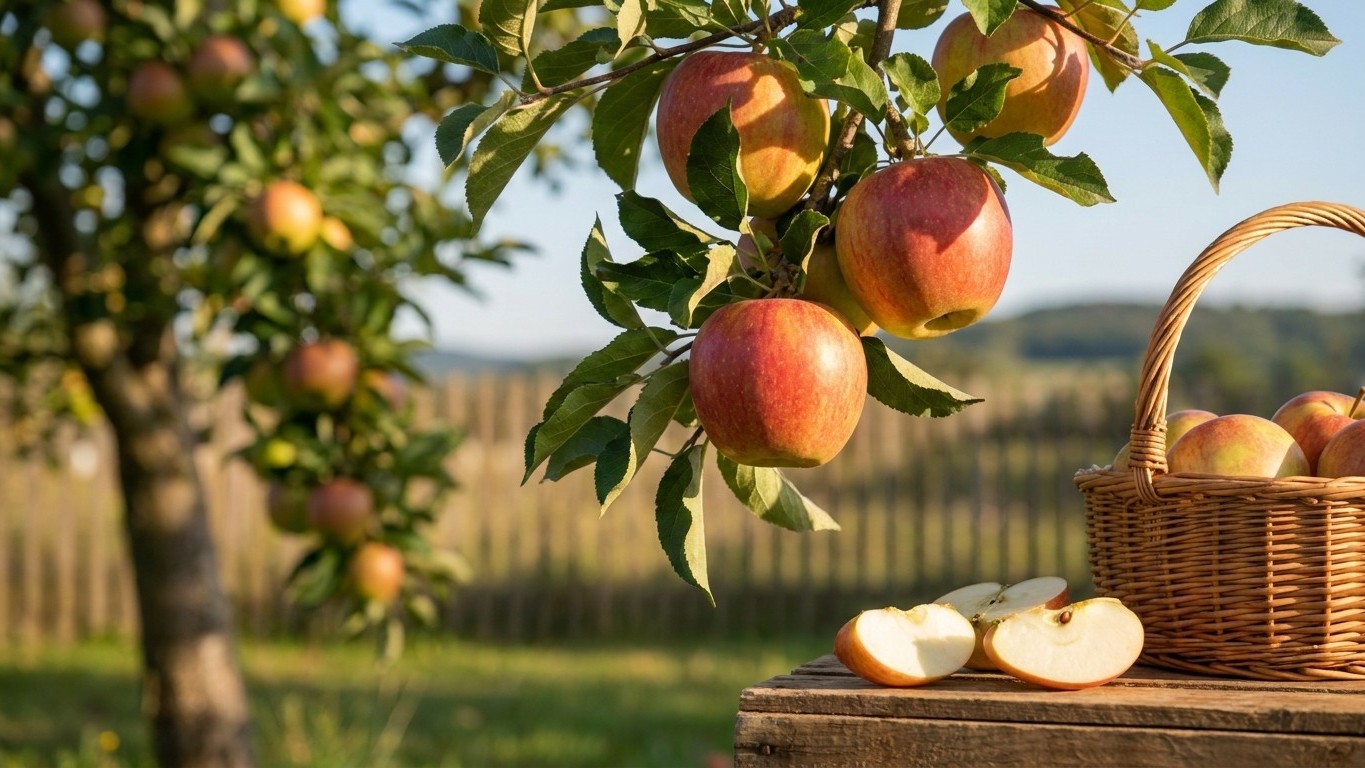

Autumn Crisp ripens in mid September, carries a sweet, lightly tart flavor with crisp, juicy flesh, and grows reliably in USDA zones 4 through 7. What most growers actually need answered, though, is who to plant next to it, since the published research on this variety stops short of naming pollination partners. Here’s what the record shows, and how to fill the gaps yourself.
What Autumn Crisp actually is

Autumn Crisp is a mid-bloom apple bred for a September harvest, and Utah State University Extension lists it among the apples suited to home orchards in the Intermountain West. A grower planting this tree is signing up for four things, and it helps to see them at a glance before digging into the details:
- Ripening time: mid September
- Flavor: sweet with a light tartness, crisp and juicy flesh
- Best use: fresh eating, salads, and lunchboxes rather than baking
- Storage: not published in the source used for this page
The taste profile is the reason this apple shows up in lunch bags more than in pie dishes. Its flesh stays crisp and juicy, and it browns slowly once cut, a detail that matters more than it sounds. A cut apple that browns fast gets tossed after twenty minutes on a counter; one that resists oxidation survives a packed lunch or a party tray without turning gray and unappetizing. That’s a physical trait, tied to how the fruit’s enzymes and acids interact with air, not a marketing label.
Bake it and you get a different story. Pie apples need flesh that holds its shape under heat and acidity that survives baking without going flat and sweet. Autumn Crisp wasn’t developed with that job in mind, and its selling point (the slow-browning, snack-ready flesh) is exactly what a dessert apple like a Gala or a McIntosh doesn’t offer. Choose Autumn Crisp for the fruit bowl and the salad, not the pie plate.
One more thing worth flagging before you buy: some apples sold under a trademarked name are actually a familiar variety wearing new packaging, the way Cripps Pink became Pink Lady or Crispin turned out to be Mutsu. Nothing in the available research on Autumn Crisp points to that kind of rebrand here, so treat the name at face value, but it’s worth asking a nursery directly if you’ve seen the same fruit marketed differently elsewhere.
Will it grow where you are
Hardiness zones
USU Extension places Autumn Crisp in USDA hardiness zones 4 through 7, a range, not a single number. That spread covers a lot of ground: zone 4 includes parts of Minnesota and northern Maine, where winter lows can hit -30°F, while zone 7 stretches through the mid-Atlantic and into the upper South. If your winters fall inside that band, the tree itself should survive them. If you’re gardening in zone 3 or colder, or in zone 8 and warmer, this variety sits outside its tested range and you’re taking on risk the source doesn’t cover.
Winter chill
Hardiness zone is only half the equation, and it’s the half most catalogs advertise. The other half is winter chill, the number of cold hours (usually measured between 32°F and 45°F) a tree needs during dormancy before it will flower properly the following spring. Skip that requirement and a tree can survive the winter physically while still blooming late, sparse, or not at all.
The source used for this page doesn’t publish a chill-hour figure for Autumn Crisp, so it isn’t repeated here as if it were known. What can be said with more confidence is the region this variety is built for. A zone 4-7 apple with a mid bloom season reads as a northern-to-mid-latitude tree, developed for climates with a real winter, the Intermountain West, the upper Midwest, and the northern half of the country generally. Growers in the Deep South or in low-desert zones where winter chill runs short should ask a local extension office whether this variety’s chill needs, whatever they turn out to be, match their climate before planting.
What to plant beside it
This is usually the question that sends someone searching in the first place, and it deserves a straight answer: the source behind this page does not name pollination partners for Autumn Crisp. No variety list exists here to copy down, and rather than guess at one, it’s worth explaining what to do instead.
Nearly all apple varieties crop better with a compatible partner nearby. A handful are partly self-fertile and will set some fruit alone, but even those produce more and better fruit with a second variety blooming at the same time within about 50 feet. Autumn Crisp is listed as a mid-bloom variety, and that’s the detail to build a pairing around: look for another apple, or a flowering crabapple, that blooms mid-season in your area and is known to be a reliable pollen source.
A few points matter regardless of which variety you choose:
- The two trees need overlapping bloom windows, not just the same general season
- A triploid apple (some heirloom and specialty varieties carry sterile pollen) can be pollinated but won’t pollinate anything else, so it can’t serve as your only second tree
- A crabapple with a long, heavy bloom period is often the simplest insurance policy in a small yard
- A local nursery or extension office can confirm which varieties actually bloom together in your specific climate, since bloom timing shifts by region even within the same variety
For a fuller rundown of how apple pollination works, including which combinations reliably cross and which don’t, see our apple pollination guide. Given the gap in the published record here, that’s the more reliable next step than picking a partner off a generic list.
Growing it well
Fire blight
USU Extension doesn’t publish a fire blight rating for Autumn Crisp, which is its own kind of information: it means the resistance level is untested or unreported rather than confirmed as low-risk. Fire blight is a bacterial disease that shows up as blackened, wilted shoot tips that curl into a shape often described as a shepherd’s crook, along with dark, water-soaked blossoms in spring. Without a documented rating to lean on, treat this tree the way you’d treat any unknown quantity: watch new growth closely after bloom, especially in warm, wet spring weather when the bacteria spread fastest, and prune out any blighted wood well below the visible damage, sanitizing tools between cuts.
Habit and biennial bearing
The available source doesn’t detail this variety’s growth habit or its tendency toward biennial bearing, the pattern where a tree produces a heavy crop one year and almost nothing the next. That pattern shows up across many apple varieties and is often triggered by a tree carrying too much fruit one season, which exhausts the buds that would have flowered the following spring.
The practical response works whether or not Autumn Crisp turns out to lean biennial: thin the fruit early. Once young apples reach about the size of a marble, remove the smaller or damaged ones from each cluster, leaving one apple every 6 to 8 inches along the branch. That single step reduces stress on the tree, improves the size and quality of what’s left, and lowers the odds of an off year following a heavy one.
Picking it and keeping it
USU Extension puts Autumn Crisp’s harvest window in mid September, but a calendar date is only a starting point since ripening shifts a week or two either way depending on the season and the microclimate of a given yard. Check the fruit itself using this sequence, in order:
- Lift and twist: cup a fruit in your hand, tilt it upward, and give it a gentle twist. A ripe apple separates from the spur easily. One that resists and has to be pulled or yanked isn’t ready yet.
- Seed color: cut one test apple open. Pale or white seeds mean the fruit is still immature; brown seeds are a strong sign of ripeness.
- Ground color: look at the background color of the skin, not the red blush. As an apple ripens, the ground color shifts from green toward yellow or cream, even on varieties that stay mostly red.
Storage
The source used for this page doesn’t publish a storage duration for Autumn Crisp, so no specific timeline is given here rather than an invented one. General practice for crisp, fresh-eating apples applies as a starting point: refrigerate promptly after picking, ideally in a produce drawer or a spot that stays close to 32-40°F, and keep the fruit away from other produce that gives off ethylene gas, since that speeds ripening and shortens shelf life. Given the fruit’s slow-browning flesh, it holds up well once cut for a few hours in the fridge, longer than a fast-browning variety would.
Common questions
When does Autumn Crisp apple ripen?
Mid September, according to USU Extension, though the exact week can shift with local weather. Confirm with the lift-and-twist test and a check of the seed color rather than relying on the date alone.
What zones can grow Autumn Crisp?
USDA hardiness zones 4 through 7. Outside that range, on either the cold or warm end, the tree falls outside its documented conditions.
What pollinates Autumn Crisp apple trees?
No specific partner variety is documented in the source used for this page. Plant another mid-bloom apple or a flowering crabapple with an overlapping bloom window, and confirm the pairing with a local nursery or extension office.
Is Autumn Crisp good for baking?
It’s better suited to fresh eating, salads, and lunchboxes than to pie, since its slow-browning flesh is prized raw but the variety wasn’t developed for the shape-holding, acid-retaining qualities that baking apples need.
Is Autumn Crisp resistant to fire blight?
That rating isn’t published for this variety. Treat it as an unknown, watch new growth after bloom for blackened, curled shoot tips, and prune out any infected wood promptly.