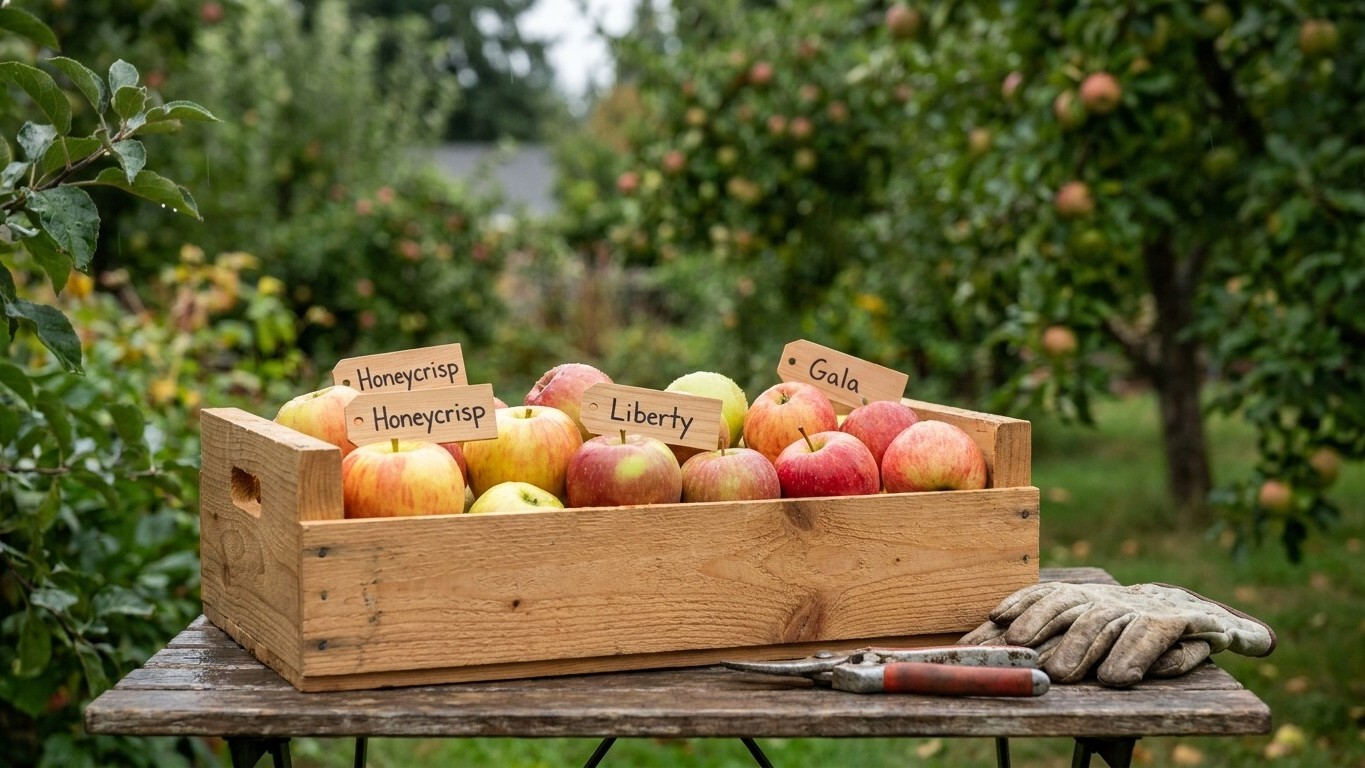

West of the Cascades, near Portland, the growing season stretches close to eight months, from a last frost in March to a first frost in late November — plenty of room for early, mid, and late apples to ripen fully. Winter chill is rarely the problem; even moderate to high-chill varieties get satisfied most years. The real filter is apple scab, since bloom lands right in the valley’s wettest weeks, and wet leaves and young fruit are exactly what scab needs to spread.
The short answer for Oregon
West of the Cascades, near Portland, the growing season runs long and mild. NOAA NCEI’s 1991-2020 normals put the last spring frost there between March 6 and March 21, and the first fall frost between November 11 and November 27. That’s roughly eight months of frost-free growing, enough room for early, mid and late season apples to finish ripening well before the tree has to shut down for winter.
Winter chill, the number of cold hours a tree needs before it will break dormancy and bloom evenly, is rarely the limiting factor here. A coldest-month mean minimum of 35.2°F, per NOAA NCEI, is cold enough that even moderate to high-chill cultivars get satisfied most winters west of the valley floor.
The bigger filter is apple scab. Bloom and early fruit set in the Willamette Valley land inside the region’s wettest stretch of the year, and scab spreads fastest on wet leaves and young fruit. That single fact matters more to which variety will actually produce a clean crop for you than the frost dates do, and it’s the reason a straight answer has to split by disease pressure and by region, not just by chill.
Working through it

Two separate filters decide whether an apple tree works for you, and a third decides how much work it makes. Run a candidate variety through all three before you plant, because a tree that survives fine can still fruit badly, and a tree that fruits well can still bury you in spray days.
Cold hardiness comes first
Hardiness answers whether the wood survives winter at all. With Portland’s coldest month mean minimum sitting at 35.2°F under NOAA NCEI’s 1991-2020 normals, nearly every apple cultivar sold through Pacific Northwest nurseries handles a typical valley winter without dieback. That threshold gets tighter once you move into higher elevation or east of the Cascades, which the next section covers.
Winter chill decides how the tree blooms, not whether it survives
Chill hours are a separate question from hardiness. A tree can survive a mild winter perfectly well and still bloom poorly if it never banked enough cold hours, showing up as a spread-out, weak bloom in April rather than one tight flush. In a valley this mild, that risk only bites in an unusually warm winter, and it bites hardest on cultivars bred for colder climates than western Oregon actually delivers.
Disease resistance decides how much spraying you’ll do
This is where the real cost trade-off sits for Oregon growers. Modern scab-resistant selections cut fungicide programs down dramatically in a wet valley climate, at the cost of usually being newer to the market with less of a track record for storage and flavor than older types. Older, scab-susceptible cultivars often carry better-known eating and keeping qualities, at the cost of a spray calendar you cannot skip in a wet spring.
| Category | Chill need | Scab risk in a wet valley spring | What you’re trading off |
|---|---|---|---|
| Early-season dessert types | Low to moderate | Moderate | Shorter hang time, less storage life |
| Mid-season all-purpose types | Moderate | Moderate to high | Widest eating and cooking use, needs a spray plan |
| Late-season storage types | Moderate to high | High, from long hang time in fall rain | Best keeper, most exposure to wet-season disease |
| Scab-resistant modern selections | Varies by selection | Low, bred in | Less spraying, shorter track record on flavor and storage |
Because named cultivar performance is county-specific and tied to local trial data, the actual variety names that fit your soil and microclimate are worth pulling from your county’s extension office rather than a general list. If you haven’t chosen rootstock and spacing yet, that’s covered in Growing Apples in Oregon, and it changes how much extra vigor or dwarfing you’re layering on top of whatever variety you settle on.
What changes across Oregon
The Willamette Valley, anchored by the Portland reference station used throughout this page, is the mild, wet end of the state’s apple climate. Its long frost-free stretch and easily satisfied chill make variety choice mostly about disease pressure, as covered above.
The Oregon coast runs even wetter and more humid than the valley, with the ocean moderating temperature swings but pushing scab and fire blight pressure higher still. A variety that struggles with scab in Portland struggles more on the coast.
Elevation changes the picture fast once you climb into the Cascades themselves, where colder winters and a shorter frost-free window push growers toward hardier, later-blooming selections that don’t flower into a lingering frost risk.
Central and eastern Oregon’s high desert is a different climate entirely. Winters run colder and drier there than anything the Portland-based figures on this page describe, and the growing season is shorter. Neither NOAA nor OSU data in our sourcing covers that region’s frost dates specifically, so a grower east of the Cascades needs region-specific hardiness and chill numbers from their own county office rather than anything calculated from a Portland station. The upside is that drier air east of the mountains means far less scab and fire blight pressure than the valley or coast carry, which changes the disease trade-off in the table above almost completely in that grower’s favor.
The mistakes this climate punishes
Every one of these shows up at a specific stage, not just “sometime in a bad year.”
- Planting an early-blooming variety where the last frost risk still lingers: Portland’s frost window runs to March 21 under NOAA NCEI’s normals, and a bloom that opens into a frost this late aborts that year’s fruit set.
- Assuming a mild winter guarantees chill: a coldest-month mean minimum of 35.2°F, per NOAA NCEI, is comfortable most years but an unusually warm winter can still leave a high-chill variety short, and it shows as a sparse, drawn-out bloom in April instead of one tight flush.
- Skipping a scab spray plan on a susceptible cultivar in a wet spring: it shows first as dark, scabby lesions on the earliest leaves, then spreads to fruit by early summer.
- Fertilizing late in summer, which pushes soft new growth right as the first fall frost approaches. Portland’s first fall frost falls between November 11 and November 27 under NOAA NCEI’s normals, and unhardened growth caught by that frost dies back and opens the wood to disease the following spring.
- Overcrowding trees on vigorous rootstock, which blocks airflow and spray penetration into the canopy, and shows up as worse scab and mildew than an identical variety grown with proper spacing.
For the stage-by-stage timing that ties bloom, fruit set and harvest to this territory’s own frost dates, see The Oregon Apple Calendar, Stage by Stage, since the month on a calendar matters far less here than what stage the tree is actually in.
Checking this against your county
Everything on this page is anchored to the Portland reference station, and Portland is only one point in a state that runs from wet coastal forest to high desert. Before you commit to a variety, check your own county’s frost dates, chill patterns and disease pressure against what’s written here.
Oregon State University’s Extension Service, part of the USDA NIFA land-grant extension network, keeps county-level tree fruit guidance and variety trial results at extension.oregonstate.edu. That’s the right place to get a named variety list for your specific county rather than a statewide guess.
Common questions
Can I grow apples in Bend or somewhere else in central or eastern Oregon?
Growers do it, but the figures on this page come from the Portland station and don’t apply there. Central and eastern Oregon’s high desert runs colder and drier, with a shorter frost-free season, so check your county extension office for local frost dates and hardy variety recommendations before you plant.
How many chill hours does an apple tree actually need?
It varies by variety, and catalog chill ratings are the figure to check before buying, not a number this page can generalize. In a valley as mild as Portland’s, with a coldest-month mean minimum of 35.2°F under NOAA NCEI’s normals, most commercially sold cultivars get enough chill in a typical winter, but a warm winter can still shortchange a high-chill selection.
Do I need two apple trees for pollination?
Most apple varieties need a different variety blooming at the same time nearby to set a full crop, since a single tree’s own pollen usually isn’t enough. A neighbor’s tree or a crabapple within bee range can sometimes cover this, but don’t assume it without checking your variety’s bloom timing.
When should I start spraying for apple scab in the Willamette Valley?
The spray window is set by the tree’s stage, starting around green tip and continuing through wet weather at bloom and petal fall, not by a calendar date. Check the stage-by-stage breakdown in the Oregon Apple Calendar for how those stages line up with the frost dates for your area.