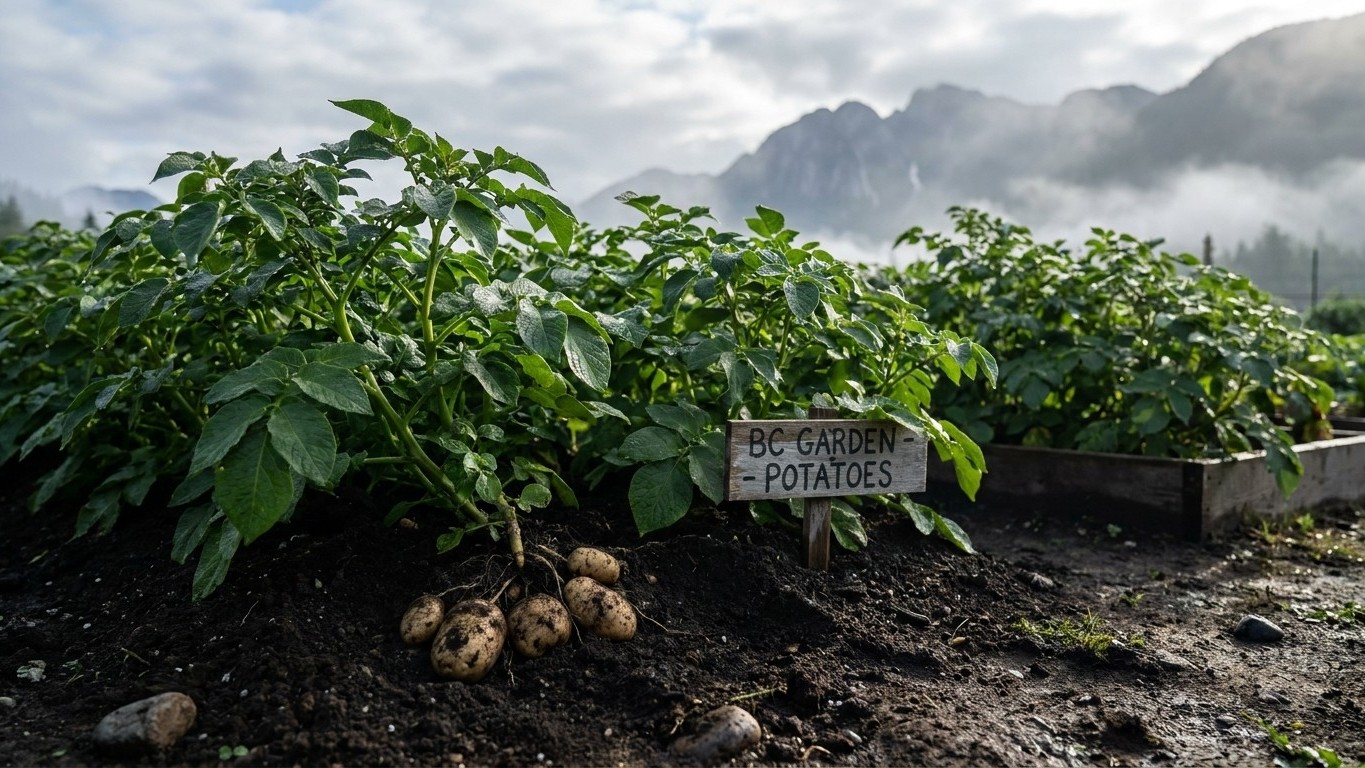

British Columbia’s coastal climate almost never punishes potatoes with heat: the reference station shows zero days a year at 90 F or above. That means the tuber-killing heat ceiling that shapes potato planting in hotter states barely applies here. The real limit on your season is the frost calendar, not the thermometer in July.
The short answer

Two numbers decide how a potato season plays out anywhere: how often the soil gets dangerously hot, and when the last spring frost clears out. For British Columbia, using the Vancouver reference station, the first number is 0.0 days a year at 90 F or higher (ECCC Canadian Climate Normals, 1981-2010). The second is an average last spring frost date of March 18, drawn from Environment and Climate Change Canada’s normals for VANCOUVER INT’L A.
Put those together and the answer is straightforward: summer heat will not stop your tubers from sizing up in this part of the province. Utah State University Extension’s fact sheet on potatoes in the home garden identifies 90 F soil temperatures as the point where tuber set and fill shut down. A location with zero such days a year, on average, simply doesn’t hit that wall. That’s a different situation from a hot interior valley or a desert state, where gardeners have to race the calendar and dig a spring crop before the heat arrives, and it’s part of why Potato Varieties That Suit British Columbia can lean toward types that need a longer season to fill out.
What zero heat days actually changes
In a hot-summer state, the whole planting calendar bends around beating the heat: get the crop in early, get it out early, accept a shorter window. Here, that pressure mostly disappears. You can plant according to the frost date and soil temperature, grow the crop through the summer, and let it finish on its own schedule without watching for a heat spike that stalls the tubers. That’s a real advantage, and it’s worth knowing plainly rather than assuming every potato-growing region faces the same squeeze.
None of this means the season is effortless. The frost date still governs when you can safely get seed potatoes into the ground, and a March 18 average is exactly that: an average, not a promise. Half the years on record, frost arrives after that date. The next section walks through how to use that number without getting burned by it, and once the crop is in and growing, Harvesting and Storing Potatoes in British Columbia covers what comes after planting.
When to plant here
Potato planting isn’t set by a date on a calendar. It’s set by soil temperature, and the frost date is just the anchor you count backward from. Utah State University Extension and the University of Maine Cooperative Extension both peg the target at 50 F soil temperature, reached 14 to 21 days before the last expected frost. Here’s how that math runs for this region, and for a fuller breakdown see When to Plant Potatoes in British Columbia.
- Start with the average last frost date. For the Vancouver reference station, that’s March 18, per Environment and Climate Change Canada’s 1981-2010 normals. Treat this as a midpoint, not a guarantee: in roughly half the years on record, frost shows up after this date.
- Count back 14 days. From March 18, that lands you around March 4.
- Count back 21 days. From the same March 18 anchor, that lands you around February 25.
- Your planting window, using the reference station average, falls roughly between February 25 and March 4. That’s the stretch where soil is likely close to that 50 F mark, ahead of the frost clearing out completely.
- Check the soil, not just the calendar. A soil thermometer pushed a few inches down tells you more than any date on a chart. If it reads below 50 F when your window arrives, wait. Cold, wet soil rots seed pieces before they ever sprout.
Redo this math for your own county by swapping in your local last-frost date, then counting back the same 14 to 21 days. It’s the same arithmetic everywhere; only the anchor date changes.
What the heat does to the crop
The mechanism is simple and it’s the single fact worth remembering from this whole page: once soil temperature climbs above 90 F, tuber set and fill stop. Not slow down, not stall temporarily. They stop, according to Utah State University Extension’s fact sheet on garden potatoes. The plant can look green and healthy above ground while the underground work of building tubers grinds to a halt.
Watering does not fix this. A grower who sees the plant wilting in hot weather and reaches for the hose is treating the wrong symptom. Extra water helps the foliage cope with heat stress, but it doesn’t lower soil temperature enough to restart tuber formation once that threshold is crossed. In states with long stretches of 90-plus-degree days, the practical answer is to plant early, grow a spring crop, and get the tubers dug before the heat settles in for good.
British Columbia, at least at the coastal reference station, doesn’t face that problem. Zero days a year above 90 F means the soil essentially never reaches the range where tuber set shuts down. That’s why this location supports a full-season crop rather than a compressed spring dash: plant per the frost-date arithmetic above, and let the plants run their full course without racing a heat deadline. Gardeners moving here from a hotter state sometimes keep digging early out of old habit. That habit isn’t necessary in a climate where the heat ceiling barely factors in.
What goes wrong here
- Uncertified seed potatoes. Seed saved from a grocery-store potato or an unlabeled bag carries a real risk of virus, which can quietly cut yield without any obvious symptom the first year. Buy certified seed potatoes each season; it’s the one input worth not skimping on.
- Planting into cold, wet soil before it’s ready. Jumping the gun ahead of that 50 F soil mark invites seed-piece rot rather than a head start. Check soil temperature directly rather than trusting the calendar alone, and hold off if it’s still cold and soaked.
- Skipping the hilling and ending up with green tubers. Potatoes that push up near the surface and catch sunlight turn green and develop solanine, which makes them unsafe to eat. Hill soil up around the base of the plants as they grow to keep developing tubers covered and shaded.
- Digging too early out of impatience. Pulling plants before they’ve finished bulking means smaller potatoes and a lower total harvest. Since this region doesn’t carry the heat pressure that forces an early dig elsewhere, there’s little reason to rush; let the plants signal their own finish by dying back naturally.
Checking this against your own county
A province-wide frost date and a single reference station’s heat count are a starting point, not a fixed instruction. British Columbia runs from mild coastal valleys to higher, cooler interior and mountain districts, and elevation alone can shift a frost window by weeks in either direction. A garden a few hundred feet higher than the Vancouver station, or well inland, may see its last frost land well after March 18, and its soil warm to 50 F later as a result.
Before locking in a planting date, check conditions with your own region’s agricultural extension resources through the BC Ministry of Agriculture and Food. Local guidance will reflect the actual elevation, coastal exposure, and microclimate of your specific county rather than a single averaged station.
Common questions
Do I need to worry about heat stress on potatoes in British Columbia?
At the Vancouver reference station, the average is zero days a year at 90 F or above, so the tuber-set shutdown that Utah State University Extension describes for hot climates is not a meaningful risk here. Interior and inland districts can run warmer, so it’s worth checking local extension guidance if you’re gardening away from the coast.
What’s the safest way to time planting if I don’t trust the average frost date?
Use a soil thermometer instead of relying on the calendar alone. Once soil a few inches down reads consistently near 50 F, and you’re within the 14-to-21-day window before your local average last frost, conditions are appropriate. If soil still feels cold and wet, wait, regardless of what the date says.
Should I choose an early, mid-season, or late variety here?
Neither Utah State University Extension nor the University of Maine Cooperative Extension publishes a days-to-maturity figure for specific varieties, only the season class: early, mid-season, or late. Since this region doesn’t force an early dig ahead of a heat spike, growers here have flexibility to choose based on intended use, such as baking or boiling, rather than needing to prioritize a faster-maturing class purely to beat summer heat.
Why does certified seed matter so much?
Uncertified seed potatoes, including ones saved from store-bought stock, can carry viruses that reduce vigor and yield without producing obvious symptoms right away. Certified seed is tested and tracked specifically to avoid that risk, which makes it one of the few inputs in potato growing worth treating as non-negotiable.