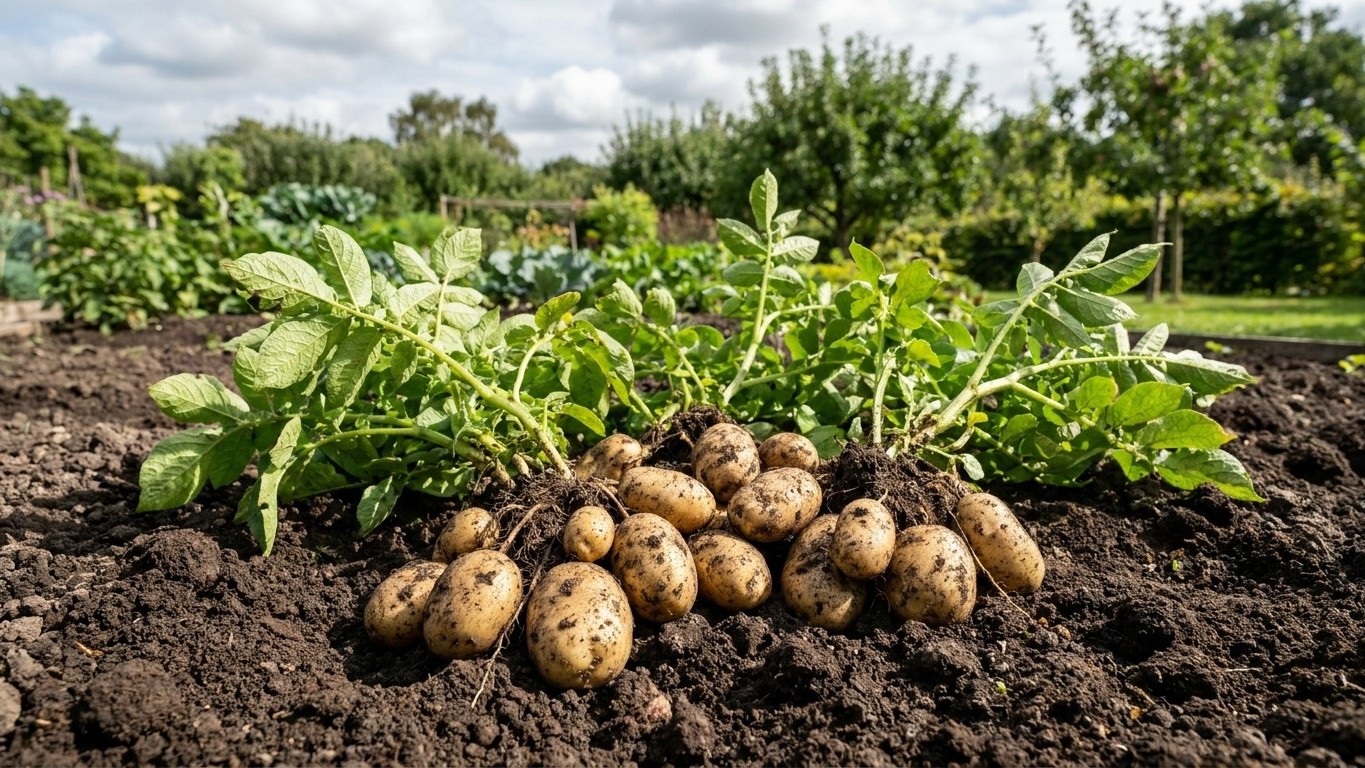

New York can grow potatoes through a full season without summer heat cutting the harvest short. Central Park, the state’s National Weather Service reference point, averages just 12.2 days a year at 90°F or hotter (NOAA NCEI Climate Normals 1991-2020), well under the threshold where tuber growth stalls. For specifics on when to plant potatoes in New York, aim for soil that has reached 50°F, typically 14 to 21 days before the last spring frost (March 23 to April 3 in New York City), and there’s no need to rush the crop out of the ground before summer arrives.
The short answer

Start with the number that actually decides this: 12.2. That’s the average number of days New York City spends at 90°F or higher each year, according to NOAA NCEI Climate Normals covering 1991-2020. Compare that to a desert state where triple-digit heat runs for weeks at a stretch, and the gap explains why a New York gardener doesn’t have to think about heat the way a grower in a hotter climate does.
Utah State University Extension is direct about why that number matters: soil temperatures above 90°F stop a potato plant from setting new tubers and stop the tubers already forming from filling out. That’s not a yield dip, it’s a hard stop. With New York averaging barely a dozen days a year anywhere near that mark, and soil temperature typically running cooler than air temperature besides, the ceiling rarely gets touched here. That’s the mechanical reason a full-season crop works in this state where it wouldn’t in a hotter one, and it’s also why timing Harvesting and Storing Potatoes in New York correctly matters just as much as getting the planting date right.
The other number that matters is the frost window. NOAA NCEI puts New York City’s last spring frost, the date carrying a 30 to 70 percent probability of a 32°F freeze, between March 23 and April 3. That’s the anchor for every planting decision that follows, and it applies specifically to the Central Park station, not the whole state. Upstate counties and the Adirondacks run later, sometimes by a month or more.
Season class and what each is for
Because the growing season here isn’t cut short by heat, gardeners can choose from the full range of season classes rather than rushing an early type to beat summer. Neither Utah State University Extension nor the University of Maine Cooperative Extension publishes a days-to-maturity figure for named varieties, but both describe potatoes by season class and by what they’re suited for at the table.
| Season class | What it’s typically used for |
|---|---|
| Early | Boiling, salads, eating fresh soon after digging |
| Mid-season | All-purpose cooking, moderate storage |
| Late | Baking, long winter storage |
In a state with New York’s heat profile, there’s room to choose from Potato Varieties That Suit New York based on season class rather than racing the calendar’s no agronomic reason to favor early types just to dodge summer temperatures. The choice comes down to what the household wants on the table and how long the crop needs to keep in storage, not the calendar.
When to plant here
The math starts at the frost date and works backward, and any gardener can rerun it for their own county.
- Find the last spring frost date. For New York City, NOAA NCEI puts this between March 23 and April 3. That’s the reference point; a county farther north or at higher elevation will have a later date.
- Subtract 14 to 21 days. Utah State University Extension and the University of Maine Cooperative Extension both describe planting as soon as soil reaches 50°F, and that point lands 14 to 21 days ahead of the last frost date, not after it.
- That gives a planting window. Working from the New York City frost dates, subtracting 14 days from March 23 lands on March 9; subtracting 21 days from April 3 lands on March 13. The practical window for the New York City area runs roughly from early to mid-March.
- Check soil temperature directly rather than trusting the calendar alone. A soil thermometer pushed a few inches into the bed is the only way to know the ground has actually reached 50°F; one warm afternoon after a cold week can mislead a calendar-only approach.
- Adjust for local conditions. Heavy clay soil warms slower than sandy loam, and a north-facing bed lags a south-facing one by days. Push the window later if the ground stayed wet and cold into spring.
Frost after planting isn’t necessarily fatal here: potato foliage nipped by a late frost usually regrows from the seed piece, though it costs the plant time. That cushion is part of why the 14-to-21-day-early window works instead of waiting for the frost risk to fully clear first.
What the heat does to the crop
The mechanism is simple, and it’s the one fact that decides everything else on this page. Once soil temperature climbs above 90°F, according to Utah State University Extension, a potato plant stops setting new tubers and the tubers already underground stop filling out. It isn’t a slowdown that recovers once temperatures drop back down for the evening; the plant’s underground development shuts off for as long as the soil stays that hot.
Watering doesn’t undo this. A gardener can keep the bed perfectly moist and still watch tuber growth stall, because the trigger is temperature, not moisture stress. That’s the detail that trips people up in hotter climates: the instinct is to reach for the hose, and it simply isn’t the lever that controls tuber sizing once the soil crosses that line.
New York’s exposure to this problem is small. With Central Park averaging 12.2 days a year at 90°F air temperature (NOAA NCEI), and soil temperature typically trailing well behind air temperature under a layer of mulch or hilled-up soil, most New York gardens simply don’t spend meaningful time above the 90°F soil threshold in a given season. That’s a very different situation from a state where 90°F days run into the dozens or hundreds annually and gardeners have to plan the whole crop around a hard cutoff.
Practically, this means a New York gardener isn’t forced into the spring-only strategy that heat-driven states rely on, where the crop goes in as early as soil allows and comes out of the ground before the worst of summer arrives. Here, a crop planted in the window described above can generally run through the summer and into fall without hitting a heat wall. The one thing worth watching is a heat wave stacked on top of already-warm soil in July, but it isn’t the baseline risk it is farther south.
What goes wrong here
- Uncertified seed potatoes. Seed saved from a grocery store potato or bought from an uncertified source can carry viruses that stunt the whole crop and linger in the soil for later plantings. Buying certified seed potatoes from a known supplier is the one step that prevents this outright.
- Planting into cold, wet soil. Soil that hasn’t reached 50°F, especially heavy or waterlogged ground common in parts of New York after a wet spring, rots seed pieces before they can sprout. Waiting for an actual soil thermometer reading rather than a date on the calendar avoids this.
- Skipping hilling and ending up with green tubers. Tubers that push up near the surface and get exposed to sunlight turn green and develop solanine, a compound that makes them unsafe to eat. Hilling soil or mulch up around the stems as the plant grows keeps developing tubers covered and out of the light.
- Digging too early. Pulling potatoes before the vines have died back naturally means smaller tubers and thinner skins that don’t store well. Letting the foliage yellow and die on its own, rather than digging on a fixed date, gives the tubers time to finish sizing and cure their skins.
Checking this against your own county
Every figure on this page is anchored to the National Weather Service station in Central Park, a dense urban site in the warmest corner of the state. It’s not a stand-in for Buffalo, the Adirondacks, or the Finger Lakes. Elevation alone can shift a frost date by two or three weeks: a garden at 1,500 feet in the Catskills will see its last frost well after a garden at sea level on Long Island, and its first fall frost correspondingly earlier.
North-south position across the state matters just as much. A county near the Canadian border works with a shorter frost-free season than one in the Hudson Valley closer to New York City, even though both fall under the same state-wide guidance. Local microclimates, low-lying frost pockets, wind exposure, and proximity to Lake Erie or Lake Ontario add another layer of variation no single state figure can capture.
For a planting date and soil temperature reading calibrated to an actual county, Cornell Cooperative Extension is the resource built for that. Its local offices track frost data and soil conditions specific to their region, a level of detail a state-wide normal simply can’t provide.
Common questions
Can potatoes handle a late frost after planting in New York?
Foliage nipped by a light frost after planting usually regrows from the seed piece below ground, though it sets the plant back a few days. That’s part of why the 14-to-21-day-before-frost planting window works rather than waiting until the frost date has fully passed.
Does New York’s heat ever stop a summer potato crop?
Rarely, on average. Central Park logs only 12.2 days a year at 90°F or above (NOAA NCEI), well under the level where Utah State University Extension notes tuber set and fill shut down. A stretch of unusually hot, dry weather in July could still stress a crop, but it isn’t the routine risk it is in hotter states.
Should I water more during a hot spell to protect tuber sizing?
Keeping soil evenly moist is good general practice, but it doesn’t reverse the heat-driven shutdown in tuber development once soil crosses the 90°F line. The fix, where one is needed at all, is timing the crop to avoid extended heat, not adding water on top of it.
Which potato variety should I plant in New York?
Since heat doesn’t force an early harvest here, the choice comes down to season class and use rather than beating the calendar. Early types suit fresh eating and boiling, mid-season types serve as the all-purpose choice, and late types are best for baking and winter storage, following the season classes both Utah State University Extension and the University of Maine Cooperative Extension describe.