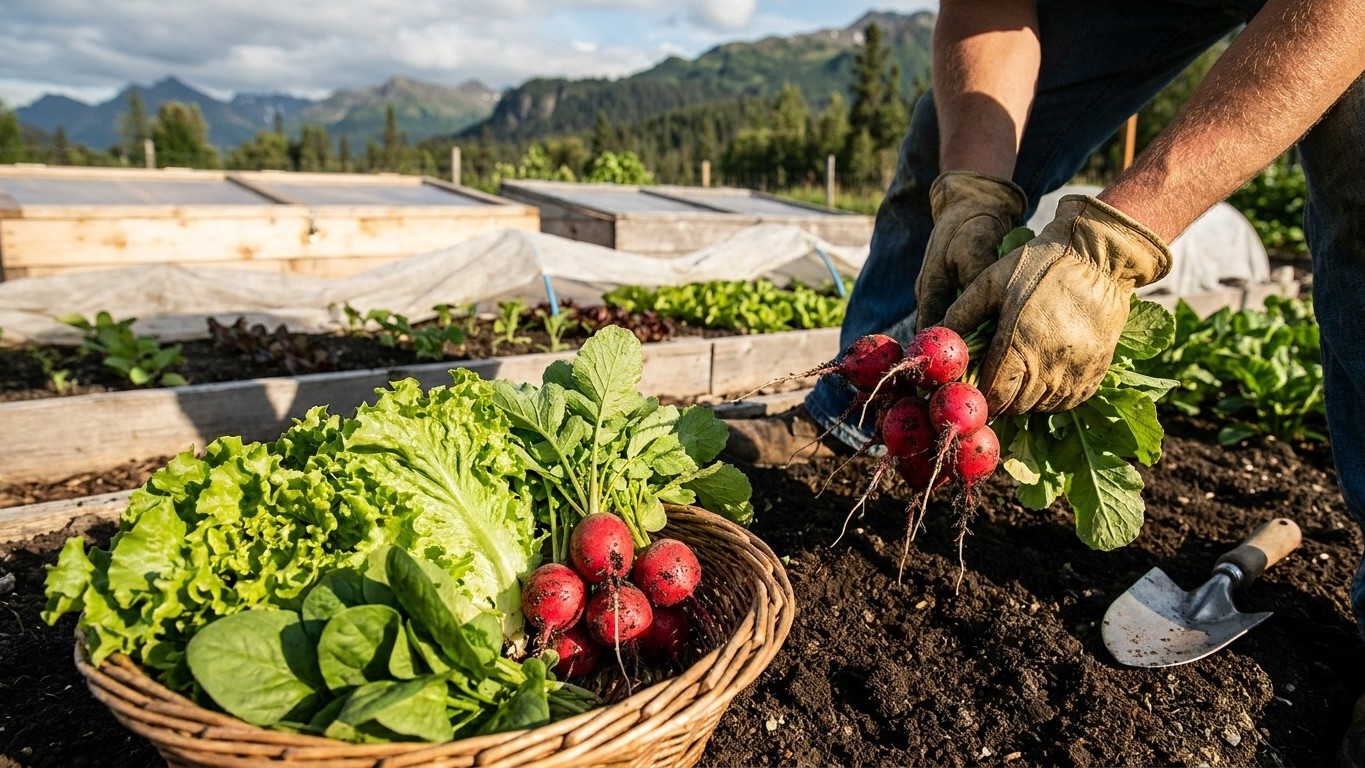

August in Alaska is harvest season, not planting season, but the window isn’t closed yet either. With the first fall frost arriving between September 22 and October 1 around Anchorage, gardeners still have a few weeks to slip in one more round of fast-maturing greens and roots before the season turns. The bulk of the work now is picking, storing, and protecting what’s already growing rather than starting anything new that needs a full season to mature.
What goes in the ground in August

The decision here isn’t the calendar page, it’s the math: how many days are left before that September 22 to October 1 frost window, and does a given crop finish inside that count. Anchorage runs on roughly 143 frost-free days a year, and by August most of that budget is spent. What’s left favors anything that matures in under 40 days.
Direct-sown radishes are the safest bet, many finish in three to four weeks and can go in through the first half of the month with room to spare. Baby lettuce, spinach, and loose-leaf greens sown for cut-and-come-again harvest also fit, especially if a cold frame or row cover is ready to throw over them once nights start dropping into the 40s. Turnips grown for greens rather than roots, and quick Asian greens like mizuna or tatsoi, are reasonable gambles in the first two weeks of the month.
What doesn’t belong in the ground now is anything that needs 60-plus days to bulk up: full-size carrots from seed, storage cabbage, winter squash, or any warm-season crop like beans or squash started from seed outdoors. Transplants of cool-tolerant brassicas (broccoli, kale starts) can still go in during the first week or so if they’re already hardened off, but by mid-to-late August that window is closing fast. Garlic, which many gardeners associate with fall planting, generally goes in later, closer to the first hard freeze, not in August, so hold off unless local guidance says otherwise.
What to start under cover
Counting backward from the September 22 to October 1 frost range, there isn’t much room left to start crops indoors that are meant to go outside this season. Anything sown indoors now for transplanting would need to be in the ground within a week or two, and few vegetable starts are ready that fast unless they’re already several weeks along from an earlier sowing.
Where indoor and cold-frame sowing still earns its keep is in extending the tail end of the season rather than starting something new from scratch. Sowing a fresh tray of lettuce or spinach under cover, then hardening it off for transplant into a cold frame, can buy another harvest window past the point open ground would allow. A cold frame or low tunnel effectively pushes the frost date back by trapping heat, which matters more in August than any seed-starting schedule.
The two failure modes both apply here in mirrored form. Starting too early in the season (back in spring) leaves gardeners with leggy, rootbound transplants by the time it’s warm enough to plant out, a mistake that’s already baked in by August. Starting too late now means sowing something that simply can’t finish before the light and heat drop off, wasting seed and tray space on plants that will get caught by frost before they’re worth eating. If in doubt, favor crops harvested as young greens over anything grown for a mature head or root.
What is ready to pick
August is when the payoff from the short, intense Alaska growing season shows up on the plate. Peas, broccoli, cabbage, and kale are typically in full swing, and root crops like beets and early potatoes (“new potatoes”) can be dug as soon as they’ve sized up, no need to wait for the tops to die back if they’re wanted small and tender.
Lettuce and other leafy greens sown earlier in summer should be cut regularly to keep them from bolting in the long daylight hours, which push many crops toward flowering faster than gardeners farther south expect. Rhubarb, if not already harvested hard through July, can still be cut in moderation. Zucchini and other summer squash, where grown under cover or in a warm microclimate, need daily checking, since a fruit missed for two days can double in size and turn tough.
Berries deserve mention here too: wild and cultivated varieties common in Alaska gardens, including currants and raspberries, tend to ripen through August and are worth checking every few days rather than waiting for a single big harvest day. For anything still a few weeks from ready, like storage cabbage or later potatoes, this is the month to leave them alone and let the remaining frost-free days do their work.
The jobs that matter this month
Watering rhythm is the job most likely to slip in August, because cooler nights can trick gardeners into thinking plants need less. Established vegetable beds still want consistent moisture through the month, especially root crops sizing up underground where dry spells aren’t visible until the harvest disappoints.
Succession sowing has a hard deadline now rather than a loose one. Any fast green going in for a fall harvest needs to happen in the first half of the month to have a real shot at maturing before the frost window opens in late September. Waiting until the back half of August to make that decision usually means the crop runs out of season before it runs out of growth potential.
Pest scouting matters more in late summer than most gardeners expect, since aphid populations and root maggot pressure often peak as the season winds down and plants under stress become more attractive targets. A quick check under leaves every few days catches problems while a hose blast or row cover can still fix them.
Staking and support checks also belong on the list: heavy-fruited plants like peas on trellises or top-heavy brassicas can topple in an August windstorm if stakes were installed loosely back in spring and never revisited. And storage prep starts now too, not after the first frost. Curing onions and garlic in a dry, airy spot, and checking early-dug potatoes for damage before they go into storage, saves losses later. Finally, this is a sensible month to order garlic sets ahead of the actual fall planting window, since good varieties sell out before gardeners think to look.
What not to do in August
The most common mistake this month is starting warm-season crops outdoors because a stretch of sunny days felt like summer is just getting started. Air temperature is a poor guide; soil temperature and the shrinking number of days before the September 22 to October 1 frost window are what actually matter. A tomato or squash seed sown outdoors in mid-August in most Alaska gardens simply won’t finish.
Feeding a heavy dose of nitrogen fertilizer late in the season is another trap. Nitrogen pushes soft, leafy growth, and that new growth is exactly what gets hit hardest and fastest when the first frost arrives. If anything, August calls for backing off nitrogen on crops headed into fall and instead favoring potassium-rich feeds that help plants harden off naturally.
Letting harvest slide is a quieter mistake but a costly one. Peas, beans, and summer squash left on the vine “for a few more days” in August often bolt past their prime quickly given the long daylight hours still pushing growth. And removing row covers or cold frame lids too readily during a warm afternoon, then forgetting to replace them before an evening chill, undoes weeks of season-extension work for crops that were counting on that protection to survive into September.
Checking this against your own county
Everything above is built around the Anchorage frost data, and Alaska’s size makes that a starting point, not a rule. Elevation, coastal versus interior location, and simple latitude can shift a frost window by weeks in either direction; the Interior and northern regions run far shorter and colder seasons than the milder, coastal Anchorage area used here. The state-wide USDA hardiness range of 1a to 8a says it all: that’s not one climate, it’s dozens.
Before betting seed or transplants on any date in this article, check local conditions against the University of Alaska Fairbanks Cooperative Extension Service, which tracks regional frost data and planting guidance specific to Alaska’s growing regions.
Common questions
Can I still plant vegetables in Alaska in August?
Yes, but only fast-maturing ones. Radishes, baby lettuce, spinach, and quick Asian greens can still be direct-sown in the first half of August and have a reasonable shot at maturing before the first fall frost, which typically falls between September 22 and October 1 around Anchorage.
Is it too late to plant garlic in August in Alaska?
Garlic is generally planted closer to the first hard freeze rather than in August, so this month is early for it. It’s a good time to order seed garlic for fall planting so preferred varieties aren’t sold out when the actual planting window arrives.
What vegetables are ready to harvest in Alaska in August?
Peas, broccoli, cabbage, kale, early potatoes, beets, and berries are typically ready through August. Leafy greens should be cut regularly to prevent bolting in the long summer daylight.
How many frost-free days does Anchorage typically get?
Anchorage averages about 143 frost-free days, based on NOAA’s 1991-2020 climate normals, with the season running from a last spring frost between May 3 and May 12 to a first fall frost between September 22 and October 1. That makes Anchorage one of the milder, longer-season parts of Alaska; the Interior and northern regions run shorter.