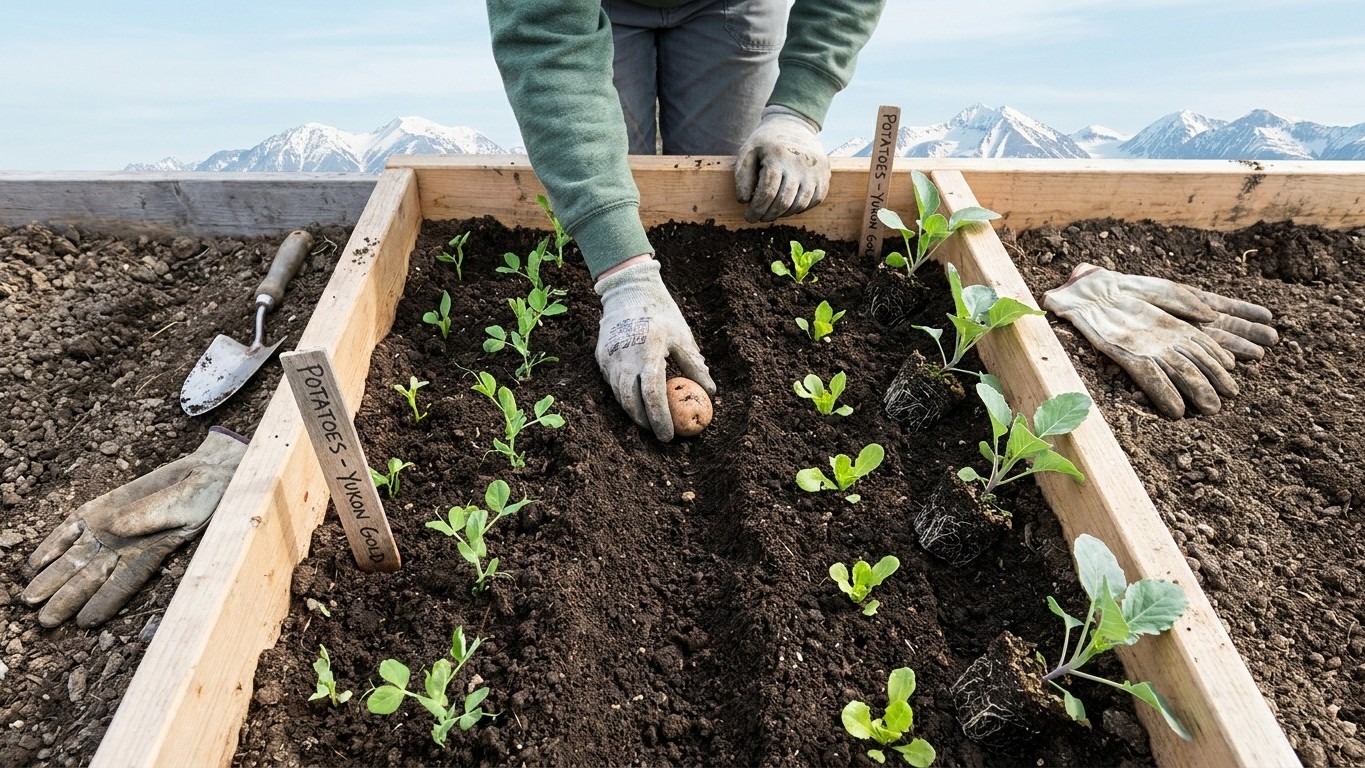

June is Alaska’s green light month. With the last spring frost typically wrapping up between May 3 and May 12 at the Anchorage reference station, the calendar has already cleared the biggest hurdle by the time June opens. Nearly everything on a short-season gardener’s list, from potatoes to peas to hardy transplants, can go into the ground this month without a frost blanket standing by.
What goes in the ground in June

The frost window matters more than the month itself, and June in Alaska sits comfortably past it. NOAA’s 1991-2020 Climate Normals put the last spring freeze at the Anchorage station between May 3 and May 12, which means by the time June starts, the 32°F risk has already dropped out of the picture for most of the season. That does not mean soil is warm, though. Alaska ground holds winter’s chill longer than the air does, and a sunny 60°F afternoon can sit over soil that is still in the low 50s a few inches down. Root vegetables and brassicas tolerate that. Heat-loving crops sulk in it.
Direct-sowing works well this month for peas, carrots, beets, radishes, spinach, and lettuce. Onion sets and transplanted onion starts go in now too, along with seed potatoes, which actually prefer the cooler early-June soil to sprout evenly rather than rot. Cabbage, broccoli, cauliflower, and kale transplants started indoors weeks earlier can go outside once hardened off, since they shrug off the occasional cool night that still shows up in the first half of the month.
Tomatoes, peppers, cucumbers, and squash are the gamble crops. They can go outside in June, but only under cover: a hoop house, wall-o-water, or clear cloche buys them the heat Alaska’s open air will not reliably give. Planted bare in a garden bed, they will often sit stalled for weeks even without a frost touching them.
| Crop group | Where it goes in June | Note |
|---|---|---|
| Peas, carrots, beets, radishes | Open ground, direct-sown | Tolerates cool early-June soil |
| Onion sets, seed potatoes | Open ground | Prefers cooler soil to establish |
| Cabbage, broccoli, kale transplants | Open ground, after hardening off | Handles occasional cool nights |
| Tomatoes, peppers, cucumbers, squash | Under cover only | Needs added heat even without frost risk |
What to start under cover
By June, the clock for the big head-start crops has mostly run out, and that is worth saying plainly rather than pretending there is still time. Tomatoes and peppers typically need six to eight weeks indoors before they go out, which counted backward from the May 3-12 frost window means those seeds should have gone into trays in April. Starting them now under cover produces small, late plants that struggle to size up before the first fall frost, which lands between September 22 and October 1.
What still makes sense to start under cover in June is anything fast. Lettuce, spinach, and Asian greens sown indoors now, or directly in a cold frame, are ready to transplant or thin within three to four weeks, giving a second wave to fill in behind the first sowing. Cucumbers and summer squash started in pots in early June can still be moved into a hoop house within a couple of weeks and catch enough of the frost-free stretch, roughly 143 days at the reference station, to produce before the season closes.
The two ways this goes wrong are familiar to anyone who has gardened a short season. Start too early relative to your outdoor date and the plants get rootbound and leggy sitting in trays waiting for warmer soil. Start too late, as June risks doing with slow crops like tomatoes, and there simply are not enough frost-free days left to finish the job. Fast crops are forgiving of a June start. Long-season crops are not.
What is ready to pick
June is early, and for most Alaska gardens the harvest basket stays light for the first few weeks. Anything that came out of the ground already established, though, starts paying off now. Chives and rhubarb, both perennials that push up as soon as the soil thaws, are ready to cut through June, and rhubarb stalks pulled while young and firm are the sweetest they will be all season.
Overwintered or early cold-frame greens sown in April give the first real salads. Spinach and lettuce sown outdoors in early May, before June even starts, hit baby-leaf size within three to four weeks and can be cut through the month. Radishes follow the same math: sown in early May, many varieties mature in 25 to 30 days, putting a first pull squarely in June.
For a household eating from storage rather than fresh cuts, June is also the month to check what is left in the root cellar or pantry before it turns. Potatoes that have started sprouting eyes, onions going soft at the neck, and winter squash with a give at the stem end should get used first. None of that is a failure of storage, it is simply the calendar catching up to what was put away.
The jobs that matter this month
Hardening off transplants is the job that decides whether everything started indoors survives its move outside, and June is when most of that transition happens. Skipping the seven to ten days of gradually increasing outdoor exposure leaves tender leaves sunscalded or windburned within a day of planting out, setting growth back by weeks in a season that has none to spare.
Watering rhythm changes with Alaska’s June daylight, which runs long enough in much of the state to keep photosynthesis going nearly around the clock. Plants pull moisture faster under that light than a gardener used to Lower 48 day lengths expects, so beds that seemed adequately watered on a normal schedule can dry out faster than anticipated. Checking soil moisture by hand, not by the calendar, catches this before wilting does.
Staking peas and early brassicas before they sprawl saves a July cleanup, and mulching beds now locks in the soil moisture June’s long days pull out. Succession sowing lettuce, spinach, and radishes every two weeks through the month keeps a steady harvest coming instead of one glut followed by a gap. Pest scouting matters here too: root maggot flies lay eggs at the base of young brassicas and radishes in early summer, and a floating row cover set down at transplant time keeps them off before an infestation ever starts. Thinning overcrowded direct-sown rows, painful as it feels to pull healthy seedlings, gives the remaining plants the room they need to size up properly in a season that will not give them a second chance.
What not to do in June
The most common mistake is trusting the air temperature over the soil. A stretch of 65°F afternoons feels like permission to set out tomatoes and squash bare in the garden, but Alaska soil lags weeks behind the air, and those crops planted without a cover will often sit stunted through most of the month even with no frost touching them. Cover crops need heat trapped at the root zone, not just warm air brushing their leaves.
The second mistake shows up with cold-frame and row-cover crops that got tucked in during a cool stretch and then uncovered too early after a few mild days. Alaska’s early-June weather swings enough that a warm weekend can be followed by a sharp cool snap, and tender greens that lost their cover in between take the hit.
The third is timing nitrogen wrong on root crops. Feeding a heavy dose of nitrogen to carrots, beets, or potatoes once they are established pushes lush leafy top growth at the expense of the root or tuber below ground, the opposite of what a gardener actually wants from those beds. A balanced feed early, followed by restraint once the plants are growing, produces better roots than a steady stream of nitrogen all month. Finally, watch bolting: the extended daylight that makes Alaska summers so productive also pushes spinach and lettuce to flower early if they sit too long in full sun without succession sowing behind them to replace what bolts.
Checking this against your own county
A statewide answer for June is a starting point, not an instruction, and nowhere is that truer than in Alaska. The state spans USDA Plant Hardiness Zones 1a to 8a, and the frost dates above come from a single reference station. Elevation, coastal versus interior exposure, and simple latitude shift planting windows by weeks across the state: a garden in the Interior faces a shorter, more intense frost-free stretch than one on the milder south-central coast, and the far north operates on an entirely different clock.
Before committing a full bed to any of the crops above, check local conditions against the University of Alaska Fairbanks Cooperative Extension Service, which maintains region-specific planting guidance for the state’s growing zones.
Common questions
Is it too late to start tomatoes in June in Alaska?
For an outdoor crop finishing before the first fall frost, between September 22 and October 1, yes, it is late. Tomatoes started in June under cover can still produce in a hoop house or greenhouse, but plants started from April seed will be noticeably ahead by midsummer.
Can I still direct-sow peas and carrots in June?
Yes. Both tolerate the cooler soil common in early June and have enough of the roughly 143 frost-free days left at the Anchorage reference station to mature before the fall frost window opens.
Why are my lettuce and spinach bolting so fast in June?
Alaska’s long June daylight pushes cool-season greens to flower earlier than gardeners in shorter-day climates expect. Succession sowing every two weeks keeps a fresh supply coming as earlier plantings bolt.
Do I need to cover tomatoes and squash even though frost has passed?
Frost risk and heat are separate problems. Even with the last spring frost behind the calendar, Alaska’s cool summer air keeps warm-season crops stalled unless a hoop house, cloche, or wall-o-water traps extra heat at the root zone.