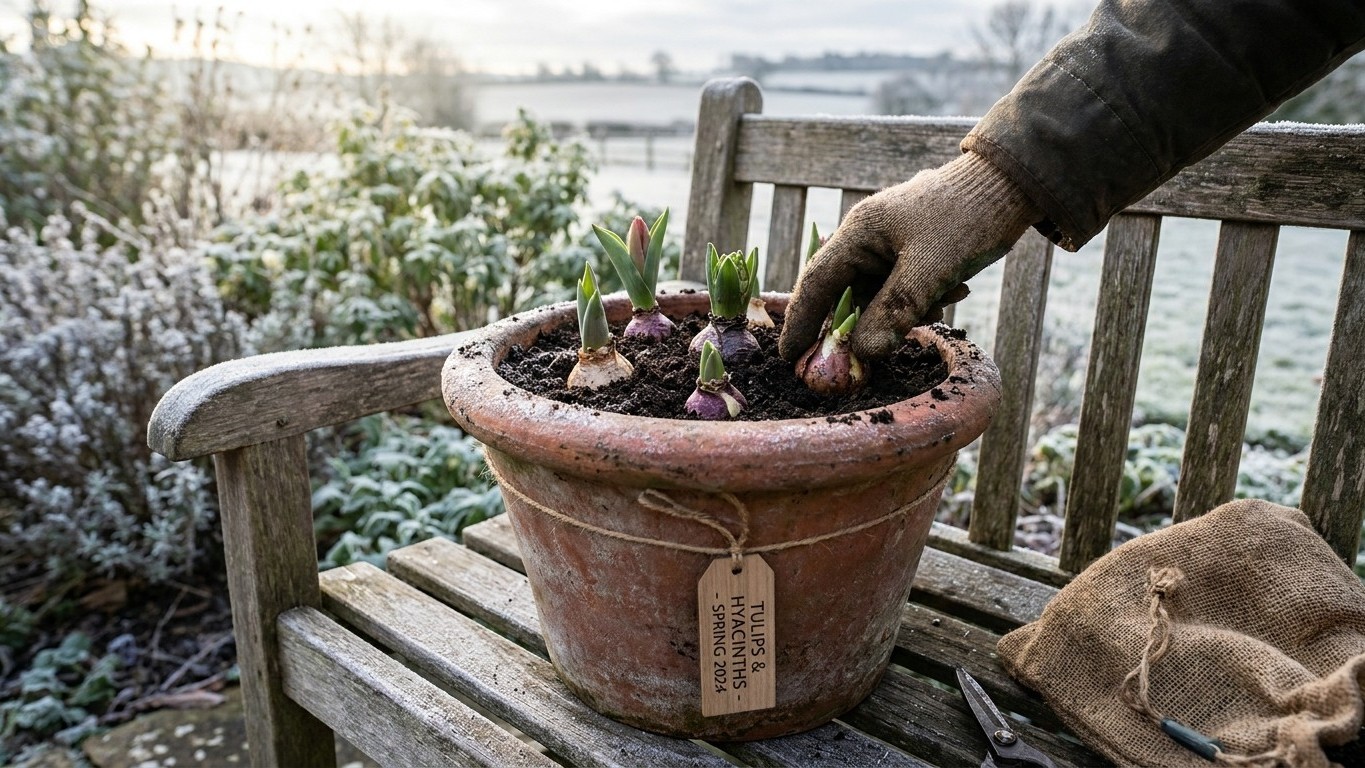

In Calgary, the coldest month averages a nightly low of 8.2°F, and the region sits in Canadian hardiness zone 4a. That number changes the whole conversation about forcing bulbs indoors here: the ground has no shortage of cold. The problem is the opposite one, and it decides how you should store a pot, how long you chill it, and which bulbs are worth the effort at all.
Why this matters in Alberta

Forcing bulbs indoors usually solves one of two unrelated problems, and it’s worth being clear about which one applies before you buy a single bulb. In mild-winter regions, the ground never gets cold enough for the twelve to fourteen weeks below 45°F that a tulip or hyacinth needs to bloom, so the gardener manufactures that cold artificially, in a refrigerator, because the climate won’t provide it. That is not Alberta’s situation. With a coldest-month mean minimum of 8.2°F, this region has far more chill than any spring bulb requires. Left in open ground, a bulb here gets its winter dormancy handled for free.
The second problem is a container problem, and it’s the one that actually applies here. Garden soil freezes from the surface down, and the mass of earth below insulates roots from the worst of the air temperature. A pot has no such buffer. A bulb sitting in a few inches of potting mix in an unprotected container freezes solid, roots and all, at whatever temperature the air reaches, and 8.2°F average for the coldest month is well past the point where most tender bulb tissue survives that kind of exposure. Zone 4a describes the ground. It does not describe a terracotta pot left on a deck.
That distinction is the whole reason forcing indoors makes sense here. It isn’t about supplying missing cold. Alberta has plenty of that. It’s about giving a potted bulb its required chilling period at a controlled temperature, somewhere between 33°F and 45°F, instead of exposing it to conditions that would kill it outright before spring ever arrives. A bulb planted directly in a garden bed in this region needs no help. The same bulb in a container does, and the help it needs is protection from the very cold that the open ground handles without any intervention at all.
This is also why the same catalog of “hardy” spring bulbs splits into two very different lists once containers enter the picture, covered in the next section. A daffodil rated hardy to zone 4a in the ground is not automatically safe in a pot through an Alberta winter, and treating the two situations the same way is the single most common reason forced bulbs fail before they ever get the chance to bloom.
How to do it here
The steps below assume you’re working with a dormant, dry bulb bought in early fall, and that your goal is either an indoor bloom in the dead of winter or a protected container bulb that will survive to spring. Each step is something you can check yourself, with no guesswork about whether it’s “cold enough.”
- Pick the storage spot first. You need a location that holds steady between 33°F and 45°F for the full chilling period. An unheated garage in this region works only if it reliably stays above freezing all winter; check it with a min-max thermometer for a week before trusting a bulb to it. If the garage swings below 32°F on cold nights, use a refrigerator instead.
- Pot the bulb in well-draining mix, with the pot itself at least two Canadian hardiness zones hardier than the bulb’s rating, or plan to move it indoors rather than leave it outside for the chill period.
- Water once at planting, then keep the mix barely moist, never wet, for the entire cold treatment. Standing water in a cold pot is the fastest route to rot.
- Log the start date and count the weeks. Most spring bulbs need twelve to fourteen weeks below 45°F before they’re ready to sprout; short-chill types like crocus and muscari can finish closer to ten.
- If using a refrigerator, keep the bulbs away from ripening fruit. Apples, pears, and bananas release ethylene gas, and ethylene damages the flower bud inside a bulb before it ever gets planted, producing blind growth later.
- Check for root growth through the drainage holes around week ten. Roots showing at the bottom, without yet pushing leaf growth, is the signal the chilling period is nearly done.
- Move the pot to a cool, dim spot around 50-60°F for one to two weeks once shoots reach about an inch, then into bright light at normal room temperature to finish.
Which bulbs are worth it
Not every bulb pays back the effort of a fourteen-week fridge commitment. The bulbs that force well share a short chilling requirement and a stem short enough to stand on its own once it’s blooming indoors in warm, dry air with none of the wind or rain that would normally hold a taller plant upright outdoors. The ones that sulk tend to be either long-chill varieties that never quite finish on an indoor timeline, or tall growers that flop the moment they’re pushed into bloom under artificial conditions.
It also helps to remember that many forced bulbs, tulips especially, are spent after one indoor bloom cycle and were never going to naturalize back into an Alberta garden bed anyway. Treating them as a one-season purchase, the way you’d treat a poinsettia, removes any guilt about the process and makes the short chill requirement of paperwhites or amaryllis look like a bargain rather than a shortcut.
- Paperwhite narcissus, no chilling period required at all, blooms in three to four weeks from a dry bulb
- Amaryllis, also needs no cold treatment, reliable indoor bloomer
- Hyacinths, short chill near ten to twelve weeks, sturdy stem that holds up indoors
- Crocus, short chill near ten weeks, low growth habit that never topples
- Muscari (grape hyacinth), short chill, compact and forgiving
- Tall trumpet daffodils, long chill requirement and stems that lean or fall over indoors without staking
- Most tulip varieties, need the full fourteen weeks, and tall cultivars topple once forced into bloom
- Alliums, chilling requirement runs long and the eventual stem height makes indoor display impractical
What goes wrong, and when you can still fix it
Leaves but no flower
This means the chilling period was cut short before the flower bud inside the bulb had fully developed. Leaf growth needs less cold than flower formation, so the bulb produces green growth and stops there. There’s no fix for this season. The bulb can go into the compost or, if it’s a hardy type, into the garden bed, where the ground’s natural chill will finish the job next winter.
Flower stuck low, hidden in the leaves
This is a warming problem, not a cooling one. The bulb was moved from its cool, dim transition spot into bright, warm light too quickly, and the stem never got the chance to elongate before the flower opened. It can’t be reversed once it’s happened. Next time, hold the pot at 50-60°F for the full one to two weeks before moving it into full warmth and light.
Rot in the pot
Soft, discolored bulb tissue and a sour smell almost always trace back to standing water during the chilling period, either from overwatering or a pot with no real drainage. This bulb is not salvageable this season, and often the rot has spread far enough that discarding it is the only option. For the next attempt, use a pot with actual drainage holes and let the mix dry to barely moist between waterings rather than keeping it consistently wet through the whole twelve to fourteen weeks.