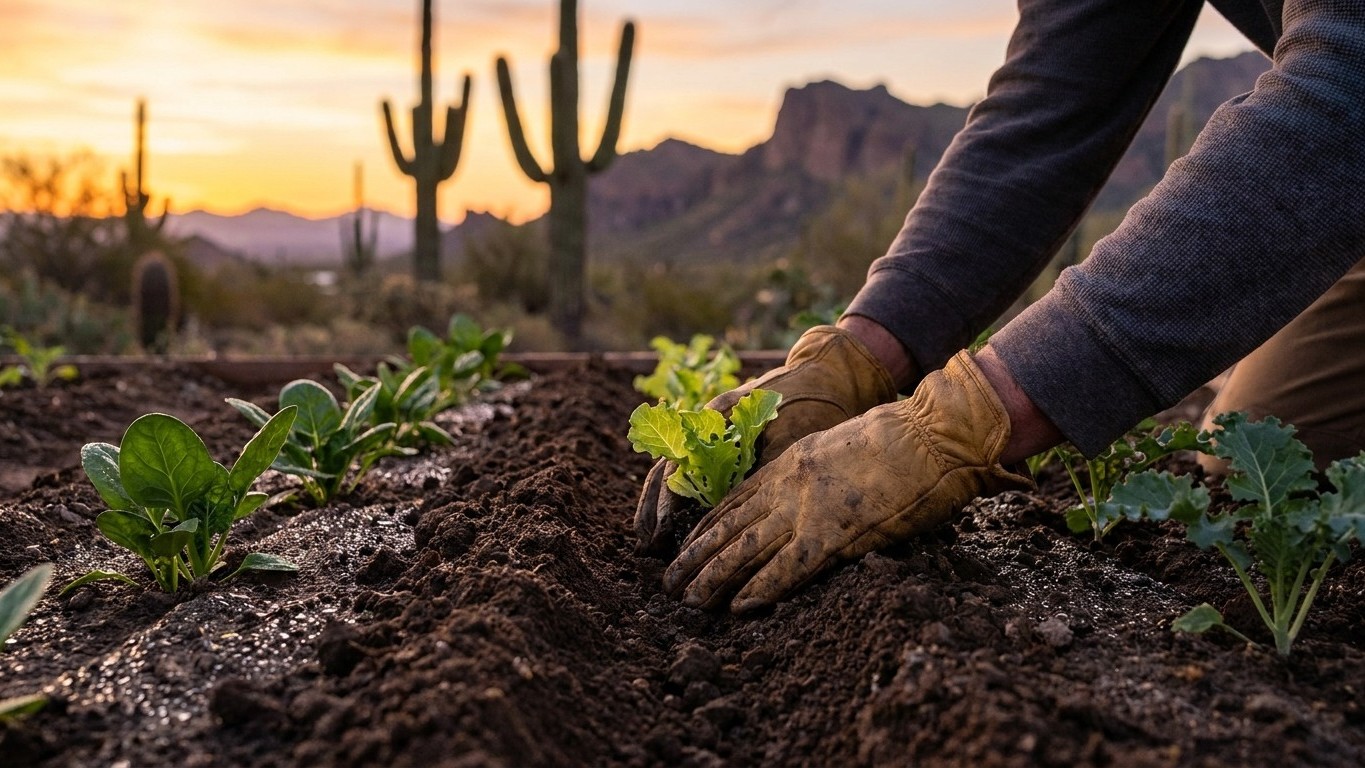

In Arizona’s low desert, November is one of the best planting windows of the year: the summer heat that shuts down most vegetable growth has finally broken, and cool-season crops go straight into the ground. Above roughly 6,000 feet, the season has already turned the other way. Flagstaff and the high country are heading into hard winter, with the ground closing for dormant work rather than sowing. What matters this month is knowing which part of the state you’re gardening in.
What goes in the ground in November

Most planting calendars are built around a frost date, but that framework doesn’t hold for Arizona’s low desert. At the Phoenix station (USW00023183), NOAA’s 1991-2020 climate normals list the frost-free season as 365 days, and the site reached 32°F in only 6 of the last 30 springs. There is no reliable frost window to count from. The real limiting factor is summer heat, which shuts down fruit set and germination for months. Once that heat breaks, usually by the time nighttime lows settle into the 50s, the ground opens up for the crops that can’t handle the heat: lettuce, spinach, arugula, mustard greens, carrots, beets, radishes, turnips, peas, and fava beans all go in directly. Garlic and onion sets go in now too, and broccoli, cabbage, and cauliflower transplants can go out if they’re already a few weeks old.
Move up in elevation and the picture reverses. Above roughly 6,000 feet, hard freezes have typically already arrived, and by November the growing season outdoors is closed. What still makes sense there: garlic and shallots pressed into ground that’s still workable, cold frames and low tunnels over anything hardy enough to hold on, and dormant bare-root plantings of trees and shrubs while the soil isn’t frozen solid.
| Region | Frost status this month | What goes in the ground |
|---|---|---|
| Low desert (Phoenix area) | Rarely freezes; heat, not frost, sets the calendar | Lettuce, spinach, carrots, peas, garlic, onions, brassica transplants |
| Mid-elevation basins (Tucson, Prescott) | Cooling fast; light frost possible | Hardy greens, garlic, cold-frame crops |
| High country (Flagstaff and above) | Ground closing for winter | Garlic, dormant bare-root plantings, cold frames only |
The USDA Plant Hardiness Zone Map (2023 edition, built on the 1991-2020 normals) places Arizona anywhere from 4b to 10b depending on elevation, which is exactly why a single statewide answer for this month doesn’t exist.
What to start under cover
In the low desert, the arithmetic runs backward from the rare cold snap rather than from a reliable frost date. NOAA’s records show that when a freeze does hit Phoenix, it lands somewhere between late December and mid-January, and it’s the exception, not the rule. If you’re starting warm-season transplants (tomatoes, peppers, eggplant) indoors to have ready for late winter planting, count back six to eight weeks from that window rather than treating it as fixed. Start too early and the seedlings get leggy and rootbound sitting in trays; start too late and they miss the stretch of mild weather before the desert heat returns and germination odds drop.
In the high country, seed starting this month is mostly about getting ahead of spring rather than reacting to fall. Cold-hardy crops that need a long head start, onions, leeks, some brassicas, can go into trays under lights now so they’re stocky and ready to transplant once the ground thaws. The same failure modes apply in reverse: starting too soon under cover means plants outgrow their pots long before it’s safe to move them outside, and starting too late means losing weeks of the short growing season that high-elevation gardens depend on.
Either way, the fix is the same: work backward from the actual event that matters (a rare cold snap in the desert, a spring thaw in the high country) rather than from a date on a calendar that doesn’t apply to your elevation.
What is ready to pick
Low desert gardens are usually finishing out the last of their summer crops this month: tomatoes, peppers, and eggplant that survived the heat are winding down and worth picking before the odd cold night sets them back. Citrus trees are typically just starting to color up, though ripeness varies enough by variety that squeezing and tasting a sample fruit tells you more than the calendar does.
In the high country, there’s little or nothing coming out of open ground. What still feeds the table: greens tucked under cold frames or low tunnels, sprouts and microgreens started indoors on a windowsill, and whatever made it into storage earlier in the fall. That stored harvest needs regular checking, not just stacking and forgetting. Squash with a soft spot near the stem, potatoes that have started to sprout or shrivel, and onions gone soft at the neck should all get pulled and used before they spread rot to the rest of the bin. A quick weekly pass through the root cellar or pantry shelf catches problems before they cost you the whole batch.
The jobs that matter this month
Low desert gardeners have bed prep to do before the cool season really gets going: working compost into beds that just finished a summer crop, laying mulch to buffer the swings between warm afternoons and cool nights, and shifting the watering rhythm since cooler soil holds moisture longer than it did in July. Succession sowing matters here too. Putting a new round of lettuce or spinach seed in every couple of weeks keeps the kitchen supplied through the whole cool season instead of one big harvest and a gap. Aphids and whiteflies still find their way onto fresh transplants even as temperatures drop, so a quick scouting pass under leaves catches an infestation while it’s still small.
Higher up, this is the month dormant pruning pays off. Fruit trees and cane berries that have dropped their leaves can be cut back while they’re not actively growing, which reduces disease risk compared to pruning live wood in season. It’s also the moment to order seed before the varieties worth growing sell out, something that happens earlier than most gardeners expect. Testing and amending soil now, while beds are empty, gives amendments time to break down before spring planting. Turning the compost pile, cleaning and sharpening tools before they sit unused all winter, and repairing raised beds or fencing while there’s no crop in the way are all jobs that are easier to do now than to squeeze in once spring planting starts. None of this is filler. Skipping it just moves the work, and the deadline pressure, into spring.
What not to do in November
The most common mistake in the high country is trusting a warm afternoon. A mild stretch doesn’t undo a freeze that already happened weeks earlier, and pulling row covers off cold-hardy greens to “give them some sun” often exposes them to a hard overnight refreeze right after. Leave the covers on unless the forecast is genuinely settled.
In the low desert, the reverse mistake shows up: gardeners hold off on cool-season planting because it still feels warm during the day, and miss the window while soil and air temperatures are actually right for germination. Waiting for it to “feel like fall” costs weeks that lettuce and spinach seed need to sprout evenly.
Fertilizer timing trips people up in both climates. Feeding nitrogen to a fruit tree that’s already gone dormant pushes soft new growth right before the coldest stretch of the year, and that growth is exactly what gets killed back hardest. Hold off on nitrogen for dormant trees and shrubs until they’re actively growing again. And in either region, resist planting frost-tender crops, tomatoes, peppers, basil, into soil that’s cooled off just because the calendar says it’s still technically fall. Soil temperature, not the date, decides whether seed germinates or just sits and rots.
Checking this against your own county
A statewide answer for this month is a starting point, not an instruction. Arizona spans USDA hardiness zones 4b to 10b, and elevation moves the growing calendar by weeks between a low desert backyard and a high-country plot just a few hours’ drive away. Local microclimates, cold air pooling in a low spot, a south-facing wall that holds heat, shift things further still. For a planting calendar built for your specific county, the University of Arizona Cooperative Extension is the reliable source, and it’s worth checking before committing seed to the ground.
Common questions
Can you plant tomatoes in Arizona in November?
Not outdoors in most of the state. Low desert soil and air have shifted into cool-season mode, and the high country is already past its growing season. Tomato transplants belong indoors under cover this month, timed for planting once the frost risk passes.
Does Phoenix get frost in November?
Rarely. NOAA’s 1991-2020 normals for the Phoenix station list a 365-day frost-free season, and the site reached 32°F in only 6 of the last 30 springs. When a freeze does happen, records show it’s more likely between late December and mid-January.
What USDA hardiness zone is Arizona in?
The USDA Plant Hardiness Zone Map (2023 edition) places Arizona across a wide range, from 4b to 10b, depending on elevation. Low desert cities sit at the warm end of that range; high-country towns sit at the cold end.
Is it too late to plant garlic in Arizona in November?
No. Garlic is one of the few crops that goes into the ground across most of the state this month, low desert or high country, as long as the soil is still workable.