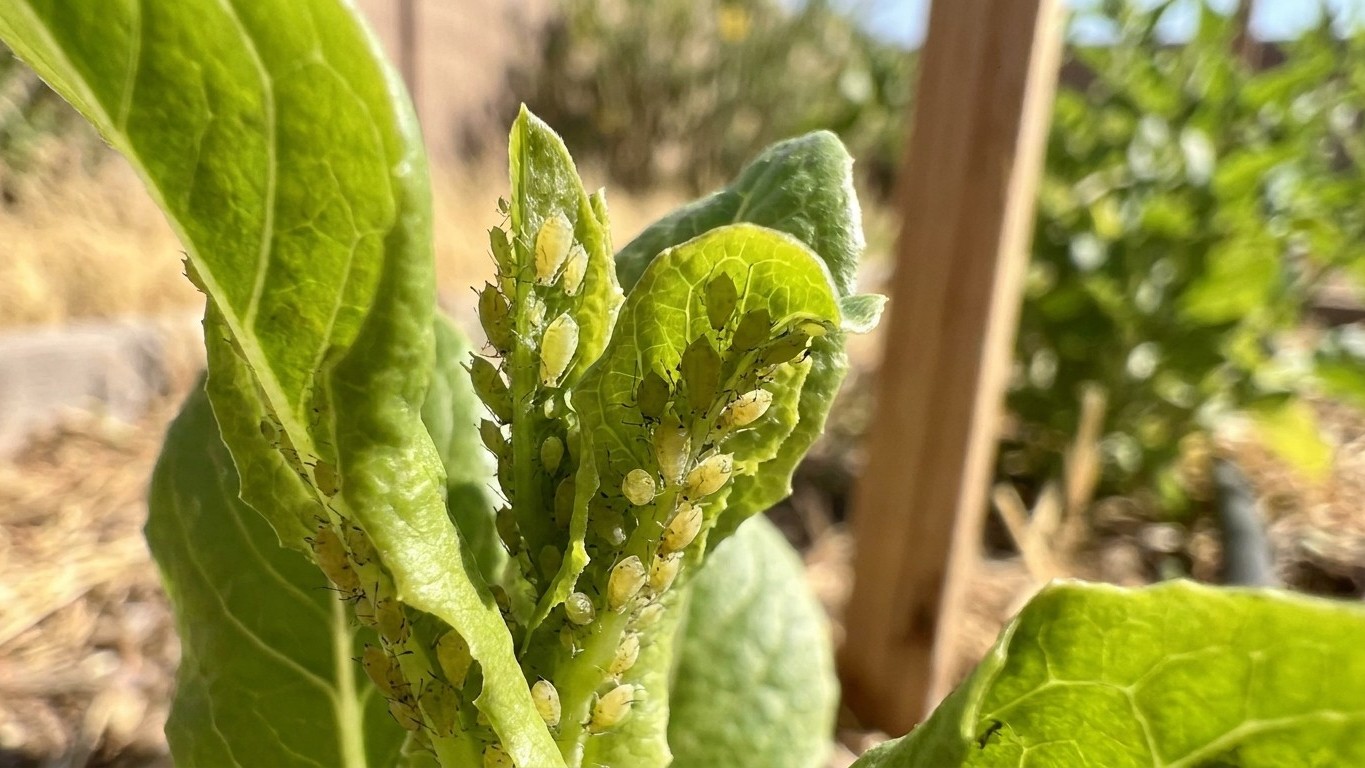

Aphids in Arizona follow a predictable calendar tied to the state’s split growing seasons. They surge on cool-season vegetables and ornamentals from late February through May, dip hard once summer heat hits triple digits, then come back on fall crops and citrus flush from October through December. The soft-bodied insects cluster on new growth, undersides of leaves, and flower buds, and they’re most numerous in irrigated landscapes, community gardens, and citrus groves across Phoenix, Tucson, and the low desert valleys.
Knowing that timing matters because Arizona’s heat does something most other states can’t rely on: it kills aphid populations outright for weeks at a stretch. That gives homeowners a natural control window if they know when to act instead of reaching for a spray every time they spot a few bugs on a rose bud.
When Aphids Show Up in Arizona

Low desert regions (Phoenix, Yuma, Tucson) see two distinct aphid windows each year. The first and heaviest runs from late February into May, when mild temperatures and new plant growth create ideal breeding conditions. Winter vegetables like lettuce, broccoli, and kale, along with spring roses and citrus blossoms, get hit hardest during this stretch.
Summer brings relief that has nothing to do with pest control products. Once daytime highs consistently top 105°F, aphid reproduction slows dramatically and populations often collapse within a couple weeks. Arizona State University Cooperative Extension entomologists note that sustained heat above the mid-90s stresses aphid colonies faster than it stresses most garden plants, which is why summer aphid complaints in the low desert are rare compared to spring.
The second wave arrives with the fall garden, typically October through early December, as temperatures cool back into aphid-friendly range and gardeners plant another round of cool-season crops. Higher elevation areas like Flagstaff and Prescott run on a different schedule entirely: their single growing season means aphid activity concentrates from May through September, mirroring patterns seen in cooler states rather than the desert floor.
Which Plants Attract Them First
Aphids in Arizona show a strong preference for succulent new growth over mature foliage. Roses are often the earliest and most visible host, with colonies forming on bud tips before flowers even open. Citrus trees, especially young ones with frequent flush growth, run a close second. Vegetable gardeners see the heaviest pressure on brassicas (broccoli, cabbage, kale), leafy greens, and any legume putting out tender shoots. Oleander aphids, a bright yellow species specific to the Southwest, target oleander shrubs almost exclusively and can be spotted from across a yard because of their color.
What Actually Stops Them
Water pressure is the first tool worth trying, and it costs nothing. A strong jet from a garden hose dislodges aphid colonies from stems and leaf undersides, and because the insects move slowly and can’t fly well in early instar stages, most don’t make it back onto the plant. This works best on woody ornamentals and citrus where the spray won’t damage tender growth.
Biological control already exists in most Arizona yards without anyone doing anything. Lady beetles, lacewing larvae, and parasitic wasps are established predators throughout the state, and a single lady beetle larva can consume dozens of aphids a day. The catch is that broad-spectrum insecticides kill these predators along with the aphids, which often triggers a worse rebound infestation two or three weeks later, once beneficial insect numbers have crashed but aphids have started reproducing again. Gardeners who avoid spraying and instead let predator populations build tend to see faster long-term control, even though it looks slower in the first week.
Insecticidal soap and horticultural oil remain the most reliable low-toxicity options when populations are heavy enough to warrant treatment. Both work by coating the aphid’s body and disrupting its respiration or cell membranes, and neither leaves the lingering residue that harsher chemical sprays do. University of Arizona Extension guidance recommends applying either in early morning or evening, since midday application in desert heat can scorch leaf tissue on top of whatever pest damage already exists. Coverage matters more than concentration: aphids cluster on leaf undersides and inside curled new growth, so a spray that only hits the top of the plant misses most of the colony.
Timing Treatment to the Desert Calendar
Because aphid populations crash naturally once summer heat sets in, treating a light infestation in late April often isn’t worth the effort if the plant can hold on for another three or four weeks. Roses and vegetables that show moderate aphid presence in March or April frequently clear up on their own by June without any intervention beyond hosing off visible clusters. The calculation changes for citrus, where aphids can vector diseases and heavier, sustained treatment during the spring flush is worth the effort to protect fruit set.
Fall infestations tend to run shorter than spring ones simply because the cool season itself is shorter in the low desert, often just eight to ten weeks before the first light frost slows plant growth and, with it, aphid reproduction. Gardeners who plant fall crops in September should expect the aphid window to open by mid-October and start closing by late November in most Phoenix-area yards.
Ants, Honeydew, and the Signs Homeowners Miss
Aphids excrete a sugary substance called honeydew as they feed, and in Arizona’s dry climate this sticky residue often shows up before the aphids themselves get noticed. A tacky film on a patio table under a tree, or a sudden trail of ants climbing a rose bush, is frequently the first real sign of an active colony overhead. Ants farm aphids deliberately, protecting them from predators in exchange for the honeydew, so an unusual ant trail on a plant stem is worth checking even if no aphids are immediately visible.
Sooty mold is the second-stage sign. This black, powdery fungus grows directly on honeydew deposits rather than on the plant itself, and it can make leaves look diseased or dying when the actual problem is an aphid colony a few branches up. Wiping a leaf clean with a damp cloth usually confirms whether the black coating is mold sitting on residue or actual leaf damage. Citrus growers in particular should treat sooty mold as a signal to inspect new growth for aphids rather than treating the mold directly, since it clears up on its own once the aphid source is controlled.
Curled or yellowing new leaves, especially on roses, citrus, and vegetable transplants, round out the visible damage list. Heavy feeding distorts leaf shape as the tissue grows around aphid-damaged cells, and severely affected shoots sometimes stop elongating altogether. None of this usually kills an established plant, but it can stunt a young citrus tree’s spring flush or reduce a rose’s bloom count for the season.
What Doesn’t Work in Arizona’s Climate
Systemic insecticides applied as a preventive measure before any aphids appear tend to be overkill for most home landscapes, and they carry a real cost: they also affect pollinators visiting the same blooms. Given how reliably summer heat suppresses aphid populations in the low desert, blanket preventive treatment in February for a problem that might not show up until March, and will collapse on its own by June anyway, rarely pencils out for a typical yard.
Reflective mulch and companion planting with strong-scented herbs get recommended frequently in general gardening advice, but neither has strong backing specific to desert conditions, and Arizona Cooperative Extension materials focus instead on water spray, biological control, and targeted soap or oil applications as the tools with actual track records in the state’s climate. Homeowners chasing a quick fix with these secondary methods often end up disappointed while the more basic tools sit unused.
One more practical note for anyone in the Phoenix or Tucson metro areas: aphid pressure tends to be noticeably worse in yards with heavy nitrogen fertilization. Fast, lush new growth from over-fertilized roses or citrus is exactly what aphids prefer, and cutting back on nitrogen during peak aphid season (without starving the plant entirely) is one of the simplest adjustments that reduces infestation severity without any spray at all.
Related guides
- Aphids in Nevada: When It Shows Up and What Stops It
- Aphids in Utah: When It Shows Up and What Stops It
- Aphids in Arkansas: When It Shows Up and What Stops It
- Aphids in British Columbia: When It Shows Up and What Stops It
- Aphids in Georgia: When It Shows Up and What Stops It
- Aphids in Ontario: When It Shows Up and What Stops It