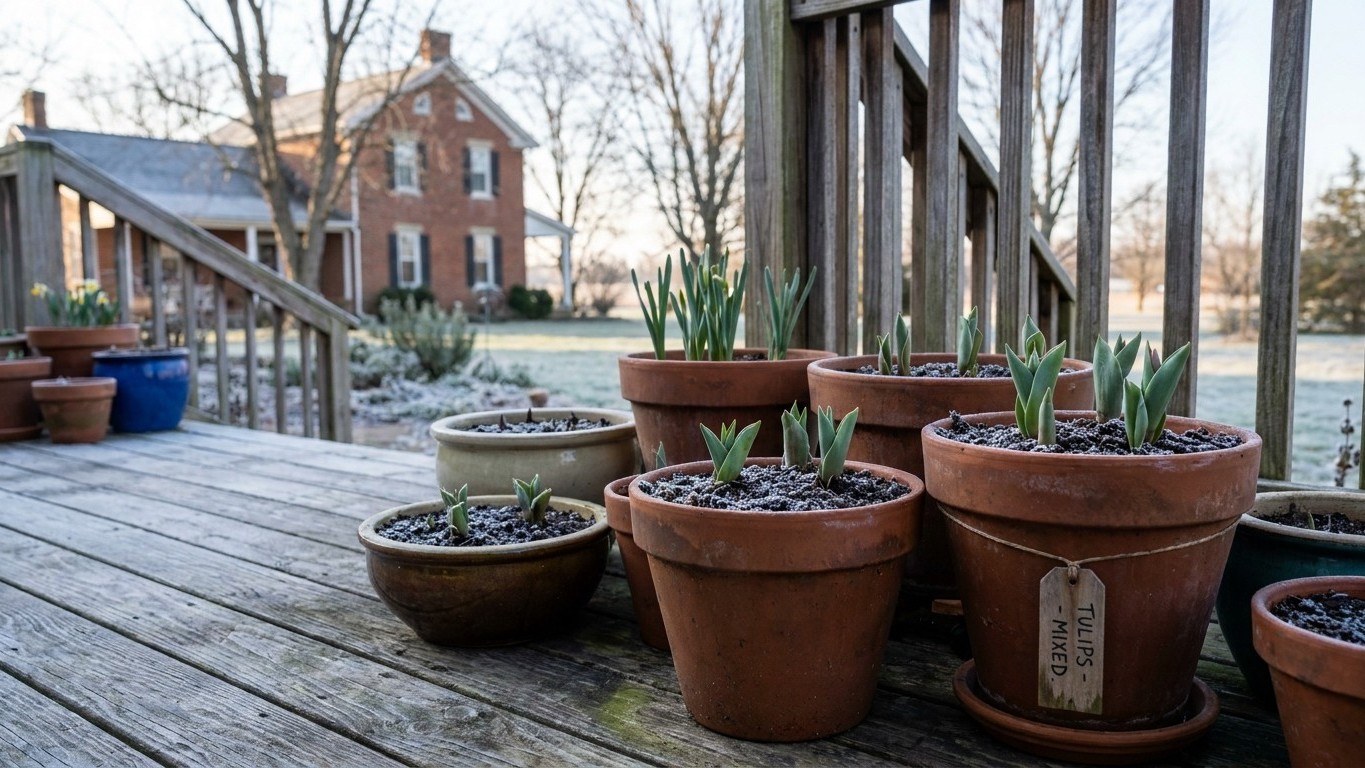

Kentucky’s coldest month averages a 27.8°F low, according to NOAA climate normals for Louisville, cold enough that ground-planted spring bulbs get all the chill they need without help. The real risk here isn’t a missing winter. It’s a container that freezes solid, roots and all, while the same bulb in the ground stays protected by several feet of insulating soil. That distinction decides almost everything below.
Why this matters in Kentucky

Start with the number that settles the question: 27.8°F. That’s the mean daily minimum for the coldest month at the Louisville reference station, based on NOAA NCEI’s 1991-2020 climate normals. Spring bulbs need roughly twelve to fourteen weeks below 45°F to complete the internal chilling process that triggers flowering. A coldest-month average nearly eighteen degrees under that threshold, sustained across a Kentucky winter that typically runs three full months, means the ground here delivers far more chill than any tulip, daffodil, or crocus requires. Forcing, in the sense of artificially supplying missing cold, is not something outdoor plantings in this territory need. The soil does the work on its own.
That’s not the whole story for a gardener working with pots instead of beds. The USDA Plant Hardiness Zone Map places Kentucky at 6a-7a, using the 2023 edition built on 1991-2020 normals, and that rating measures one thing: the average annual extreme minimum temperature at ground level. A container sitting on a deck or patio doesn’t experience ground-level conditions. It has air on every side, no surrounding soil mass to buffer temperature swings, and a root ball that can drop toward the same temperature as the surrounding air far faster than garden soil at planting depth ever would. A bulb rated hardy for zone 6a-7a in the ground is not automatically hardy in an unprotected pot within that same zone.
This is why the two problems this guide’s parent covers, timing a planting window and picking varieties, don’t answer the container question. A pot behaves like a colder zone than the map shows, sometimes described in nursery practice as two zones harsher than the ground rating at that same address. So the working answer for this territory is: outdoor ground plantings need no forcing at all, but a container left outside all winter needs to be treated as though it sat in a zone well below 6a-7a, unless the gardener actively protects it.
How to do it here
There are really two separate jobs, and they call for two separate approaches: forcing bulbs indoors for early bloom, or keeping potted bulbs alive outdoors through a Kentucky winter. Both follow a checkable sequence.
- Decide the goal first. Indoor winter color calls for forcing. A container left on a porch or patio through the season calls for cold protection, not forcing, since the ground here already supplies enough chill.
- For forcing: pot the bulbs in a well-draining mix, water thoroughly, then hold them at a temperature below 45°F for twelve to fourteen weeks. An unheated garage works as long as it never drops much below the mid-20s and stays above freezing on most nights. A spare refrigerator drawer works too, but keep it away from apples, pears, or any ripening fruit, the ethylene gas they release will kill the flower bud forming inside a chilling bulb.
- Check the bulbs after roughly twelve weeks. Tip a pot out gently. A dense white root system reaching the drainage holes, paired with pale shoots an inch or two tall, means the chilling period is complete.
- Bring pots into indirect light first, not a warm sunny window right away. A slow transition over a few days keeps stems from stretching and flopping.
- For containers staying outside all winter, choose bulbs hardy at least two zones below 6a-7a, meaning varieties rated for zone 4 or hardier, since an exposed pot won’t hold the ground’s insulation.
- Mulch heavily or relocate. Bank several inches of straw or shredded leaves around grouped pots against a sheltered wall, or move containers into an unheated garage or shed for the coldest stretch.
- Confirm drainage before the first freeze. Every pot needs open drainage holes and should sit on feet or a stand, never directly on cold pavement, so roots aren’t left sitting in trapped ice water.
Which bulbs are worth it
Not every bulb rewards the effort of a container, and the difference usually comes down to how long the plant needs cold and how tall it grows once it’s blooming. A short chilling requirement forces faster and finishes before a Kentucky container has to survive too many hard nights outside. A tall flower stem, meanwhile, tends to topple in a pot that doesn’t have the root depth or weight of open ground to anchor it. Where a bulb was already a one-season purchase, forcing it costs nothing long-term, since hybrid tulips and many large-flowered varieties rarely rebloom reliably in Kentucky soil anyway.
- Crocus
- Muscari (grape hyacinth)
- Hyacinth
- Miniature and species tulips
- Standard narcissus/daffodil varieties
Bulbs that tend to sulk in containers or under forcing:
- Tall Darwin and Emperor tulips (prone to toppling in a pot)
- Giant ornamental alliums (long chilling requirement, top-heavy bloom)
- Fritillaria (inconsistent forcing results, sensitive to disturbance)
- Large trumpet daffodil hybrids bred for garden height, not pot proportion
What goes wrong, and when you can still fix it
Leaves but no flower
This means the chilling period was cut short. The bulb had enough stored energy to push leaves but never completed the internal process that sets a flower bud. There’s no fixing it this season: once the leaves emerge without a bud already formed, the bloom isn’t coming back this cycle. The bulb can usually be planted in the ground afterward and given a full, uninterrupted chilling season next winter instead.
A flower on a stem too short to see
This happens when the pot was warmed too early, before the shoot had a chance to elongate normally. The plant rushes to bloom under sudden heat and light before the stem has stretched. It’s not saveable this season, but it’s a scheduling problem, not a health problem, so the same bulb usually performs normally the following year if it’s given a slower transition out of cold storage.
Rot in the pot
Rot almost always traces back to drainage, not the chilling method. A container without free-draining holes, or one sitting flush against cold, wet pavement, lets water pool around the bulb through the winter, and the bulb breaks down before it ever gets the chance to sprout. This one usually can’t be saved this season. The fix is for next time: raise the pot, confirm the drainage holes are actually open, and use a mix that doesn’t hold standing water through a Kentucky winter’s freeze-thaw cycles.