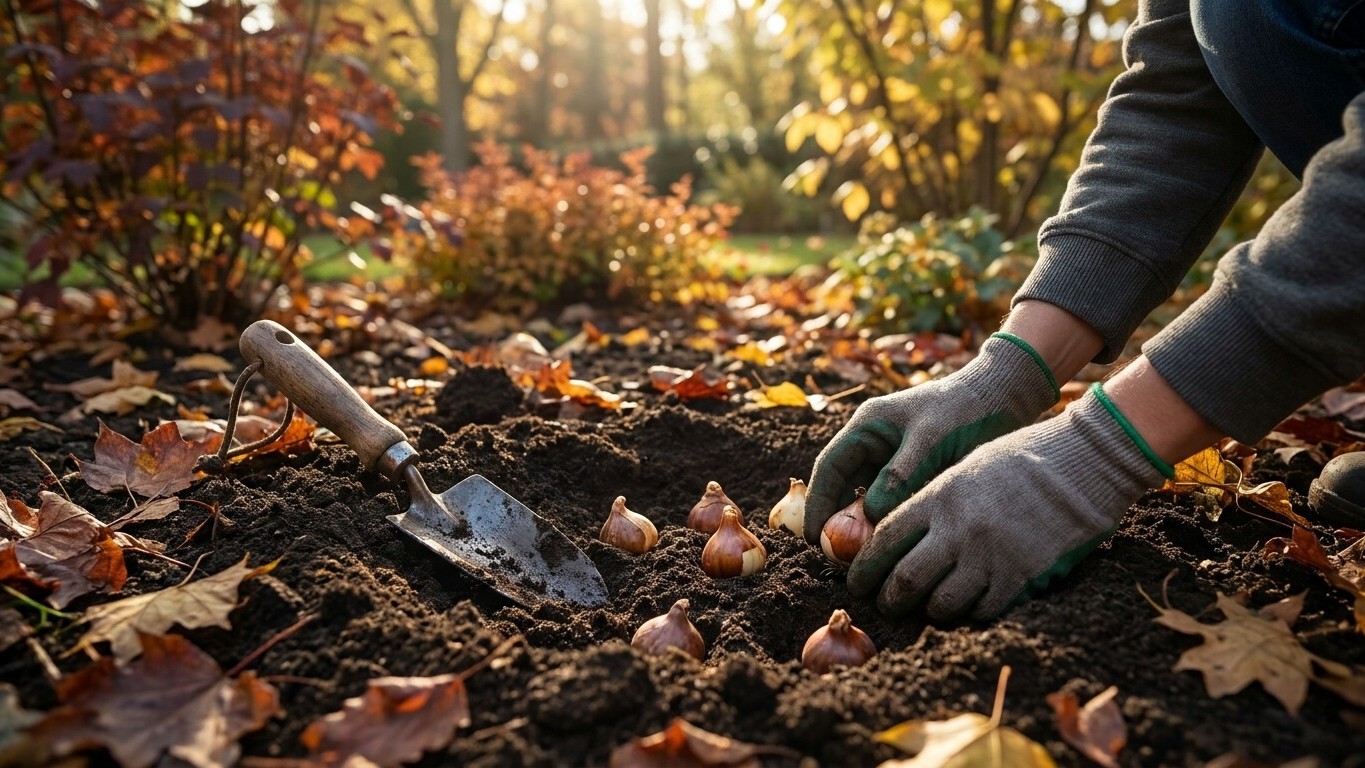

Spring bulbs succeed almost everywhere in Kentucky because the state’s winters run cold enough, long enough, for tulips, daffodils, crocus, and hyacinths to bloom without any special handling. The catch isn’t cold, it’s timing and choice: plant too early or too late, or pick a bulb built for a warmer zone, and you’ll get leaves with no flowers, or nothing at all.
When to plant bulbs in Kentucky

The planting window in Kentucky is anchored to the first fall frost, which lands between November 2 and November 12 across the reference weather station used for the state’s climate normals. Spring bulbs want roughly six weeks in the ground before that hard freeze locks up the soil, which puts the sweet spot somewhere in the last two weeks of September through mid-October for most of the state.
Plant earlier than that and the soil is still warm enough to push top growth. That growth gets caught by the first freeze and dies back, and a bulb that spends its early energy on leaves instead of roots comes up weaker the following spring. Plant later, closer to or after that frost window, and the bulb goes into cold soil without enough time to grow the root system it needs before winter locks everything down. The flower the next spring is either stunted or absent.
An average, not a promise
That November frost date is a 30-year average, built from three decades of data, and it means exactly what an average means: half the years in the record fell earlier than November 2, and half fell later than November 12. A gardener who plants on the calendar date alone, without watching the actual forecast in a given year, is gambling on the wrong half about as often as the right one. Watch the ten-day forecast in late September and adjust rather than trusting a fixed date.
Whether your winter is cold enough
This is the question that decides whether a bulb catalog’s promises hold up once the bulb is actually in Kentucky dirt. Spring bulbs flower through a process called vernalization: the bulb needs a sustained stretch of cold, typically twelve to fourteen weeks with soil temperatures below about 45°F, before it can build a flower stalk. Skip that cold exposure, or cut it short, and the bulb either produces leaves with no bloom or sends up a flower on a stem too short to clear the foliage.
Kentucky doesn’t come close to falling short on this measure. The coldest month at the reference station averages a daily low of 27.8°F, which sits more than 17 degrees under the 45°F line that starts the vernalization clock. Winter here doesn’t creep up to that threshold and hover, it blows past it in November and stays well below it through February, covering the twelve-to-fourteen-week requirement several times over with room to spare. That margin means gardeners in Kentucky can buy standard spring bulbs and plant them directly in the ground with no extra steps, and for those who want blooms ahead of the outdoor season, it also leaves room for Forcing Spring Bulbs Indoors in Kentucky, and it’s more than enough cold for anyone Growing Spring Bulbs in Containers in Kentucky to succeed as well.
Where pre-chilling still matters
The one exception is a bulb grown somewhere the ground never gets that cold, or one grown in a container kept in a garage or against a heated foundation wall where soil temperatures stay artificially mild. In those specific situations, a gardener has to fake the winter the bulb didn’t get: twelve weeks in a refrigerator crisper drawer, kept away from apples, pears, and other ripening fruit, because the ethylene gas they give off kills the flower bud forming inside the bulb. For anyone planting in actual Kentucky ground, though, that step is unnecessary. Skipping it there costs nothing; skipping it in a climate that can’t deliver the cold on its own means the tulips never bloom at all.
| Bulb | Weeks of cold required (below 45°F) | What Kentucky delivers | Verdict |
|---|---|---|---|
| Tulips | 12-16 weeks | Full winter well under 45°F, mid-November through February | Thrives, no pre-chill needed |
| Daffodils | 12-14 weeks | Same | Thrives |
| Hyacinths | 12-14 weeks | Same | Thrives |
| Crocus | 8-15 weeks | Same | Thrives |
| Alliums | 8-10 weeks | Same | Thrives |
Which bulbs suit Kentucky
Kentucky’s hardiness zones, 6a-7a on the USDA Plant Hardiness Zone Map, cover the full range that classic spring bulbs need. That map is built on one number, the average annual extreme minimum temperature, so it tells you whether a bulb survives the coldest nights it’s likely to face here, not whether it will flower well. Combined with the cold-exposure numbers above, the bulbs below are safe bets across nearly all of the state:
- Daffodils (Narcissus), hardy zones 3-8
- Tulips, hardy zones 3-7
- Crocus, hardy zones 3-8
- Hyacinths, hardy zones 4-8
- Alliums, hardy zones 3-9
- Grape hyacinth (Muscari), hardy zones 4-8
- Snowdrops (Galanthus), hardy zones 3-7
The bulbs that disappoint gardeners here are the ones bred for warmer winters, not colder ones. Freesia and ranunculus, both rated for zones 8-10, are the two most common letdowns: sold in the same bins as daffodils and tulips at garden centers, they go into the ground in fall and rot before spring in Kentucky’s wetter, colder soil, or they sprout and then get killed outright by a hard freeze they were never built to survive. A gardener who plants them expecting a repeat of a Southern California or Gulf Coast display usually gets one thin season of bloom, if that, and nothing the year after.
None of these hardiness ranges are hard lines. A tulip rated to zone 7 planted against a south-facing brick wall in Louisville, in a spot that traps heat, may survive winters that would kill the same bulb in an exposed bed a mile away. The zone number is a starting point for a decision, not a guarantee either way.
What digs them up here
Squirrels and voles are selective, and the reason comes down to chemistry rather than taste alone. Daffodils and other bulbs in that family contain lycorine, a compound that makes them bitter and mildly toxic, so animals learn to leave them alone. Alliums carry the same sulfur compounds that make onions and garlic unappealing to most mammals. Tulips and crocus have no such defense, and both squirrels and voles treat them as food.
- Bulbs squirrels and voles dig up: tulips, crocus, hyacinths (occasionally)
- Bulbs they leave alone: daffodils, alliums, snowdrops, grape hyacinth
For anyone planting tulips or crocus anyway, the one measure that reliably works is a physical barrier: lay galvanized wire mesh flat over the planting bed, pin it down, and leave it in place until the ground freezes solid, which locks the bulbs out of digging range for the season it matters most. Repellent sprays and granules get pitched at the same problem, but rain washes them off within days and most need reapplying every week or two through fall, which is more upkeep than most gardeners keep up with.
Where to check for your own county
Every figure above, the frost date window, the 27.8°F coldest-month minimum, comes from a reference weather station, and Kentucky stretches across enough latitude and terrain that conditions three counties away can run meaningfully different. A planting date calculated for one urban station can be off by two or three weeks at either edge of the state, and a hillside garden with poor air drainage can see frost weeks before a valley floor nearby does.
The University of Kentucky Cooperative Extension Service, the state’s land-grant extension system, publishes county-level planting guidance that accounts for these local differences, and every county in the state has its own extension office staffed by agents who know the local soil and frost patterns firsthand. Before finalizing a planting date based on statewide averages, it’s worth checking with the University of Kentucky Extension office for your specific county.