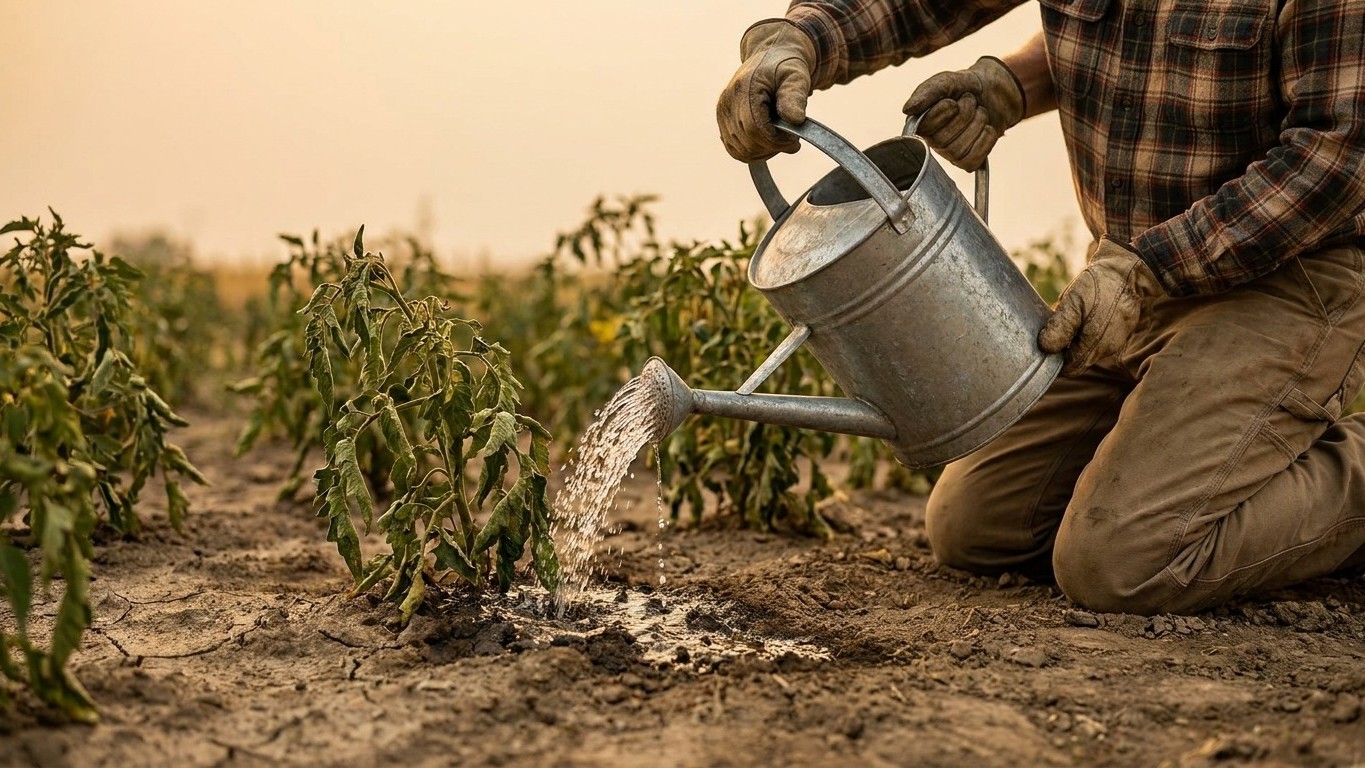

Getting a garden through a North Dakota dry spell comes down to timing and depth, not volume alone: soak the root zone deeply, less often, at the base of the plant, in the morning. The reason is written into the state’s own weather numbers, where the driest summer month barely covers half of what a bed actually needs.
What changes here

North Dakota’s driest summer month, August, brings just 2.6 inches of rain on average, and the state’s reference station logs 11.7 days a year at 90F or hotter. Put those two numbers side by side and the picture is simple: right as heat pushes water demand up, the sky’s contribution drops to its lowest point of the growing season.
Run the numbers a gardener can actually use. A vegetable bed or a stretch of lawn wants roughly an inch of water a week to keep growing without stress. Spread that 2.6 inches of August rain across an average month of roughly 4.3 weeks, and the sky is only delivering about 0.6 inch a week. That leaves close to 0.4 inch a week for the gardener to supply, every week, just to keep pace during the driest stretch of the year.
The squeeze doesn’t arrive all at once. June averages 4.29 inches and July 3.07, so a bed that coasted through early summer on natural rainfall can suddenly find itself short once August’s numbers kick in. A gardener watching the calendar rather than the soil often misses that shift until leaves already show it.
What the sky delivers isn’t what the roots receive, either. Sandy ground drains fast, so an inch applied today can move below the root zone within a day, meaning that same 0.6 inch of natural August rain does less real good than the number suggests. Heavy clay holds water far longer, sometimes close to a week, so one good soaking on clay can carry a bed through several dry days that would leave sandy ground wilting by the second afternoon. The inch is the same. What it does underground depends entirely on what kind of dirt it lands on.
How to water when it matters
The method that fits North Dakota’s summer is deep and infrequent, delivered at the base of the plant, in the morning. Deep soaking pushes water past the top couple of inches, which trains roots to follow it downward instead of clustering near a surface that can dry out within hours once a 90-degree afternoon sets in. Watering at the base rather than overhead keeps leaves dry, which matters in a summer that averages 11.7 days at or above 90F, since wet foliage under direct sun can scorch and wet foliage left overnight invites the fungal trouble covered below. Morning watering gives plants several cooler hours to draw up moisture before the heat of the day arrives, and lets any splashed leaves dry off well before evening.
Knowing when to water beats watering on a fixed schedule. Push a finger, or a trowel, about two inches into the soil near the base of the plant. If it’s dry at that depth, water. If it’s still cool and damp, hold off, even if the surface looks parched, because surface soil in this heat can dry out within hours of a soaking and tells you almost nothing about what the roots are actually drinking.
Start with one number and adjust from there based on what the finger test tells you:
- Apply about 1 inch of water a week, split into one or two sessions, then check soil at two inches down before deciding whether to add more or hold back.
- On sandy ground, break that inch into two or three shorter sessions a week rather than one big soak, since sand lets water pass through faster than clay holds it.
- On heavy clay, apply the full inch in a single slower soaking and wait several days before testing again, since clay releases moisture slowly and re-watering too soon drowns roots that haven’t used what’s already there.
- During the driest weeks, especially August when average rainfall drops to 2.6 inches, add a finger-depth check every three days instead of relying on the weekly rule alone.
What goes wrong
Watering a little every day
This is the mistake that costs the most in a place with 11.7 days a year over 90F. A light daily sprinkle wets only the top inch of soil, so roots have no reason to grow deeper. They stay near the surface, which is exactly the layer that bakes hardest once a hot afternoon rolls in. The plant ends up more fragile the more it’s watered this way, not less.
Watering the leaves in the evening
Wetting foliage after the sun goes down leaves moisture sitting on leaves overnight, with no heat or breeze to dry it off. That damp surface is exactly what fungal diseases need to take hold, and by morning the damage is already starting even though nothing looked wrong the night before.
Trusting a rain shower to do the job
A summer thunderstorm can look convincing and still leave the soil barely touched. Much of the rain behind July’s 3.07-inch average, for instance, likely arrives in short, heavy bursts that run off a dry surface faster than it soaks in. A visible downpour can wet the top half-inch of soil and stop there. The only way to know for sure is the same finger test used everywhere else, not a glance out the window.
Skipping mulch
Bare soil left exposed to direct sun loses moisture fast, and on a day pushing toward 90F it can give back most of what was just watered in before the roots get much use of it. A layer of mulch slows that evaporation and keeps the soil at root depth from swinging between soaked and bone-dry as quickly.
Local help
North Dakota State University Extension is the state’s land-grant resource for county-level watering guidance, plant recommendations suited to local soil and heat, and seasonal advice that statewide averages can’t fully capture. Watering restrictions vary by city and rural water district and can tighten as a dry summer wears on, so confirm current rules with your own water provider before locking in a schedule.
Common questions
How much should I water my garden during a North Dakota dry spell?
Aim for about 1 inch of water a week at root depth, adjusting the split between sessions based on whether your soil is sandy or heavy clay, and confirming with a finger test at two inches down rather than watering on a fixed calendar.
What’s the driest month in North Dakota, and how dry is it exactly?
August is the driest summer month, averaging 2.6 inches of rain, compared with 4.29 inches in June and 3.07 in July, based on NOAA climate normals from 1991 to 2020.
How many days a year does North Dakota reach 90F?
The state’s reference station averages 11.7 days a year at or above 90F, a figure that drives how fast water evaporates from soil and how quickly a bed can dry out between waterings.
Is it better to water in the morning or evening in North Dakota?
Morning. It gives plants cool hours to absorb water before peak heat and lets any moisture on leaves dry before nightfall, avoiding the damp overnight conditions that invite fungal disease.