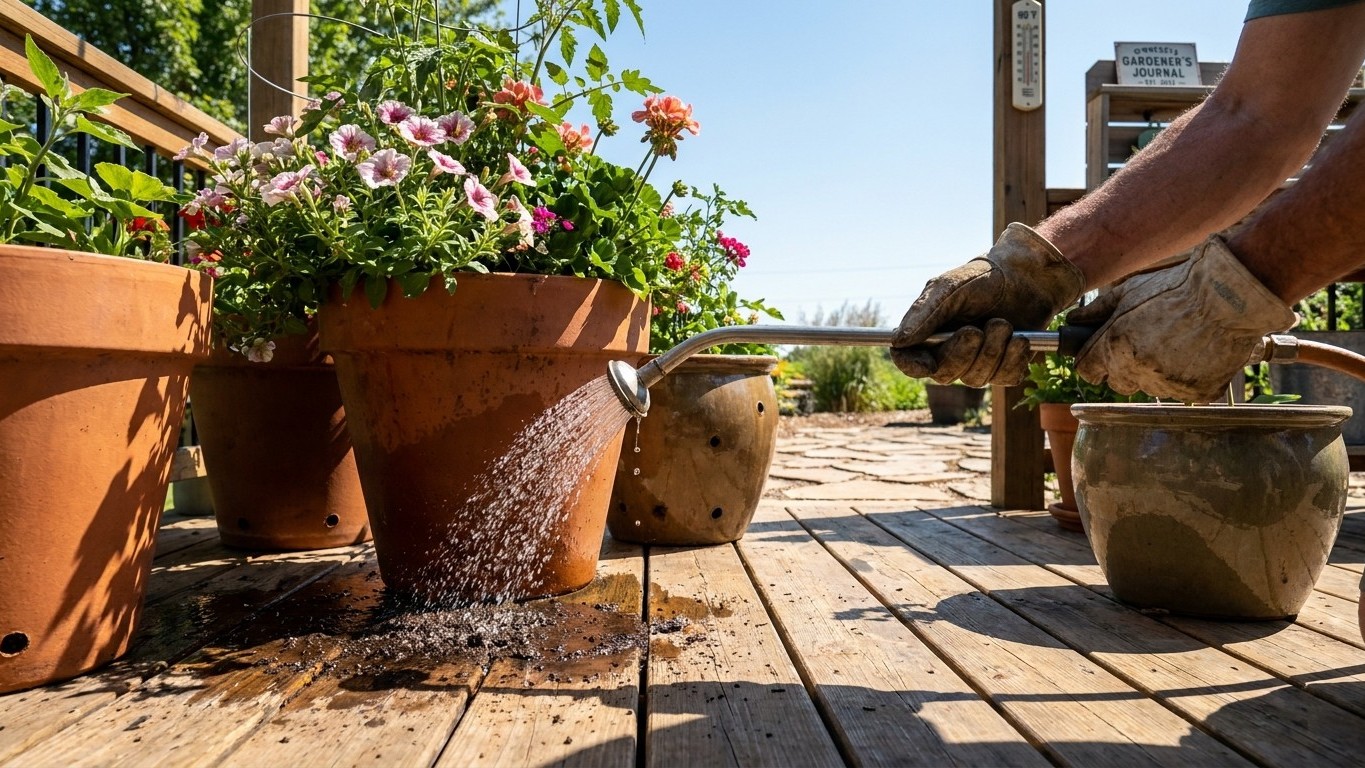

Minnesota’s growing season swings between short bursts of real heat and stretches where the sky does most of the watering for you. The safest container choice for both patios and garden beds is one with generous drainage holes and enough volume to hold moisture through a 90-degree afternoon, paired with a watering can or hose wand that lets you soak the base slowly rather than spraying the top.
What changes here

Start with two numbers that don’t usually sit side by side in a gardening conversation: Minneapolis-area records show 10.6 days a year that reach 90F or higher, and the driest summer month, July, still delivers 4.06 inches of rain on average. Read together, that means Minnesota isn’t a dry-summer state in the way Arizona or Nevada is, but it has enough hot days scattered through the season to pull moisture out of soil and Containers faster than the rain replaces it.
Do the arithmetic and the picture sharpens. A vegetable bed or a large container generally wants about an inch of water a week. July’s 4.06 inches, spread across roughly 4.3 weeks in the month, works out to about 0.93 inch arriving from the sky in an average week. That leaves a gap of only about 0.07 inch for the gardener to make up by hand, on paper close to nothing. But rain in July rarely falls in neat, even installments. It tends to arrive as a thunderstorm that dumps half an inch in twenty minutes and then nothing for ten days, which means the weekly average hides long dry stretches right in the middle of the state’s 10.6 hot days.
Soil texture decides how far that inch actually reaches. On sandy ground, water drains through within hours, so a container or bed on sand can look dry again the same day it was watered. On heavy clay, the same inch sits near the surface for days, which sounds convenient until a hot afternoon bakes a crust on top while the deeper soil stays soggy and starves roots of oxygen. Minnesota gardeners often deal with both extremes on the same property, sandy fill near a patio and dense clay in an older garden bed, so the “how much” answer has to be checked against the ground actually in front of you, not just the regional average.
How to water when it matters
The method that works with Minnesota’s rain pattern rather than against it comes down to three habits: water deeply, water less often, and water at the base in the morning. Each one has a mechanical reason behind it. A deep soak pushes moisture several inches down, which encourages roots to grow downward chasing it, so the plant becomes more resilient during the next dry stretch between storms. Watering at the base instead of overhead means the leaves stay dry, which matters because wet foliage sitting overnight is exactly what fungal disease needs to take hold. Morning watering gives any splashed leaves time to dry in the sun before evening, when temperatures drop and humidity climbs.
Before turning on the hose, check the soil rather than the calendar. A finger pushed two inches down, or a trowel pulled up for a quick look, tells you more than glancing at dry-looking topsoil ever will. Surface soil dries first and fastest; root-zone moisture is what the plant is actually using.
- Push a finger or trowel two inches into the soil near the plant’s base; if it’s dry at that depth, it’s time to water.
- Water slowly at the soil line, avoiding the leaves, until the top six to eight inches are moist.
- On sandy soil, split the weekly total into two shorter waterings rather than one large soak, since sand drains before a single watering can carry a plant through the week.
- On heavy clay, water once and let it dry fully at root depth before watering again, since clay holds moisture long enough that a second soak too soon drowns the roots.
- Start from about one inch of water a week as a baseline, then adjust up or down after checking how your specific soil holds moisture over the following days.
What goes wrong
“It rained yesterday, so I skipped watering”
A passing shower can look convincing from a kitchen window and still only wet the top half-inch of soil, especially the fast, heavy storms common in a Minnesota July. Check with a finger before crossing watering off the list; if the soil is dry two inches down, the shower didn’t do the job it looked like it did.
“I water a little every day to keep the leaves happy”
Frequent shallow watering trains roots to stay near the surface, where the sun bakes the top inch of soil hardest on any of those 10.6 days that push past 90F. Those shallow roots have nowhere to retreat when a real dry stretch hits.
“I water in the evening after work”
It’s convenient, but water sitting on leaves overnight in cooler, damper evening air is close to an invitation for fungal disease. Morning watering gives foliage hours of daylight to dry before the humidity rises again at dusk.
“I don’t bother with mulch”
Bare soil loses moisture straight back to the air, undoing a chunk of the work each watering just did. A couple of inches of mulch slows that evaporation and helps stretch the gap between the sky’s contribution and the gardener’s.
“I water anyway even when the bed is still damp”
On the state’s heavier clay soils, this is the mistake that costs more than skipping a watering. Clay holds a week’s worth of moisture already; adding more before it has dried pushes air out of the soil and can drown roots outright, especially in a season with several wet weeks bunched together.
Local help
The University of Minnesota Extension publishes guidance on garden watering, soil testing and container gardening suited to the state’s growing conditions. Watering restrictions during dry stretches are set locally and vary by city or water utility, so check with your own water provider for any current rules before setting a watering schedule for the season.
Common questions
How often should I water container plants in Minnesota during summer?
Check the soil two inches down every day or two; on the hottest days above 90F, small containers can dry out daily, while larger pots may go two to three days between waterings.
Is Minnesota’s rainfall enough to skip watering altogether?
Not reliably. July’s average of 4.06 inches sounds close to the weekly target of an inch, but it usually arrives in uneven bursts rather than a steady drip, leaving gaps during the state’s warmest stretches.
Do clay soils need less watering than sandy soils in Minnesota?
Yes, but with a caution: clay holds water longer, so it needs watering less often, but it also drowns roots if watered again before it has dried, which is a common mistake on the state’s heavier garden soils.
What time of day should I water outdoor containers?
Morning is best. It lets any moisture on the leaves dry before evening humidity rises, cutting the risk of the fungal problems that take hold overnight.