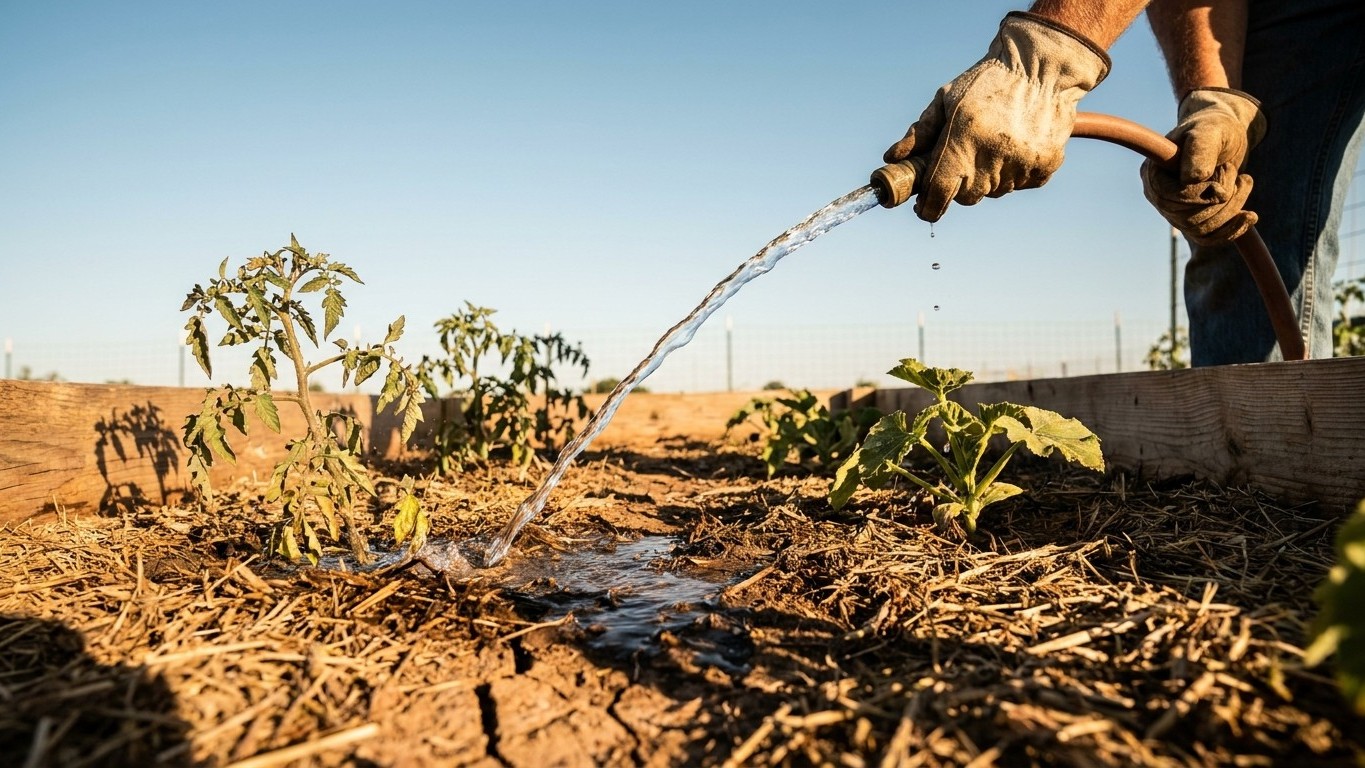

Oklahoma summers hand a garden about 3.59 inches of rain in July, the driest month of the season, while the thermometer tops 90F on 70.7 days a year on average. That combination means most beds run a water deficit through the hottest stretch, and the gardener has to make up the difference by hand rather than wait for the sky to catch up.
What changes here

Two numbers set the terms for the season: 3.59 inches of rain in July, and 70.7 days a year when the temperature reaches 90F or higher. Together they say the same thing a different way: the month when plants need the most water is the month the sky provides the least of it, and the heat load pushing that demand keeps climbing for weeks on either side of July.
Run the arithmetic and the shortfall gets concrete. A vegetable bed or a young shrub wants roughly an inch of water a week to keep growing without stress. Spread July’s 3.59 inches evenly across the month’s roughly 4.4 weeks, and the sky delivers about 0.81 inch a week on average. That leaves close to a fifth of an inch a week for the gardener to carry, and that’s the generous version of the math. Oklahoma rain rarely arrives in neat, even doses. It tends to come as a single thunderstorm that dumps an inch in an hour and then nothing for ten days, which means a lot of that 3.59 inches runs off a dry, baked surface instead of soaking down to where roots can use it.
Soil changes how far that inch actually travels once it lands. Sandy ground lets water pass through fast, so a storm’s worth of rain can be gone from the root zone within a day, even if the monthly total looks decent on paper. Heavy clay holds onto that same inch for a week or more, but it also seals over on the surface during a dry spell, so the next storm’s water may run sideways instead of down. Neither texture makes the July numbers less real. They just change how a gardener should respond to them, which is the difference the next section is built around.
How to water when it matters
The method that works in Oklahoma isn’t complicated, but it depends on doing a few things in the right order and for the right reason. Watering deep and infrequently, at the base of the plant, in the morning, trains roots to grow down toward moisture that stays available, keeps water off leaves where fungus takes hold, and gives plants a full day to dry out before the cool night air invites disease. Skipping any one of those three changes the outcome.
Before turning on the hose, check the ground rather than the calendar. Push a finger or a trowel about two inches into the soil near the plant. If it feels dry at that depth, water. If it’s still damp, wait, even if the surface looks parched and cracked. Surface dryness in Oklahoma heat is normal by early afternoon and tells you almost nothing about what roots are actually experiencing.
Soil texture sets the rhythm from there. Sandy ground holds little water and drains fast, so it asks for shorter, more frequent soakings rather than one big weekly dose. Heavy clay holds a week’s worth of water, but soaking it again before it’s had the chance to dry invites root rot, since roots suffocate in waterlogged clay far faster than they wilt from thirst.
Here’s a starting sequence to work from, adjusted against your own soil once you’ve watched how it behaves over a few weeks:
- Check soil moisture two inches down with a finger or trowel before deciding to water at all.
- Water at the base of the plant, using a soaker hose or drip line rather than an overhead sprinkler.
- Water early in the morning, ideally before 9 a.m., so leaves and soil surface dry out during the day.
- Aim for about one inch of water a week total, delivered as one deep soaking on clay soil or split into two shorter soakings on sandy soil.
- Spread two to three inches of mulch around the base to slow evaporation between waterings.
- Recheck soil moisture more often during stretches of 90F-plus days, since evaporation demand rises faster than most gardeners expect.
That one-inch figure is a place to start, not a rule to follow blindly. A bed in full sun on sandy soil during a run of 90F days will ask for more; a shaded, mulched bed on clay after a storm may need nothing for a week.
What goes wrong
A little bit every day
Giving a plant a quick splash every evening feels responsible, but it keeps moisture in the top inch of soil and never pushes it down to where deep roots live. Roots respond by staying shallow too, right in the zone that bakes hardest under an Oklahoma sun. This is the costliest habit in a state that racks up 70.7 days a year above 90F, because shallow-rooted plants have almost no buffer once a heat wave settles in.
Watering the leaves at night
Wetting foliage after dinner seems harmless, but leaves that stay damp through a warm, humid night give fungal spores exactly the conditions they need to spread. Powdery mildew and leaf spot both take hold faster on plants watered overhead in the evening than on the same plants watered at the base in the morning.
Trusting the rain that just fell
A loud thunderstorm can drop half an inch in twenty minutes and still leave the root zone dry, because that much water landing fast on hard, dry ground mostly runs off rather than soaking in. The only way to know is to check with a finger two inches down after the storm, not to assume the bed is covered because the yard looks soaked.
Skipping the mulch
Bare soil under an Oklahoma summer sun gives back a surprising share of the water just applied, sometimes within hours. A two- to three-inch layer of mulch slows that evaporation enough to stretch the interval between waterings, which matters most in the weeks when the sky is only offering that 0.81 inch a week and the gardener is covering the rest.
Local help
Oklahoma State University’s Oklahoma State University Extension office is the state’s land-grant resource for garden and lawn watering questions, soil testing, and local growing conditions. Watering restrictions vary by city and water district and change during drought years, so check current rules directly with your local water provider rather than assuming a statewide standard applies to your address.
Common questions
How much should I water an Oklahoma vegetable garden in July?
Start from about one inch of water a week total, counting both rainfall and hose water, then adjust based on how dry the soil feels two inches down and how many 90F days you’re getting in a row.
Is it better to water in the morning or evening in Oklahoma?
Morning. It gives leaves and soil surface the whole day to dry, which cuts down on the fungal problems that overnight moisture invites.
How do I know if a rain shower was enough?
Check with a finger or trowel two inches into the soil an hour or two after the rain stops. If it’s dry at that depth, the shower didn’t do the job, no matter how heavy it looked.
Does soil type really change how often I should water in Oklahoma?
Yes. Sandy soil drains fast and needs shorter, more frequent watering, while clay holds moisture for close to a week but risks root rot if watered again before it’s had time to dry out.