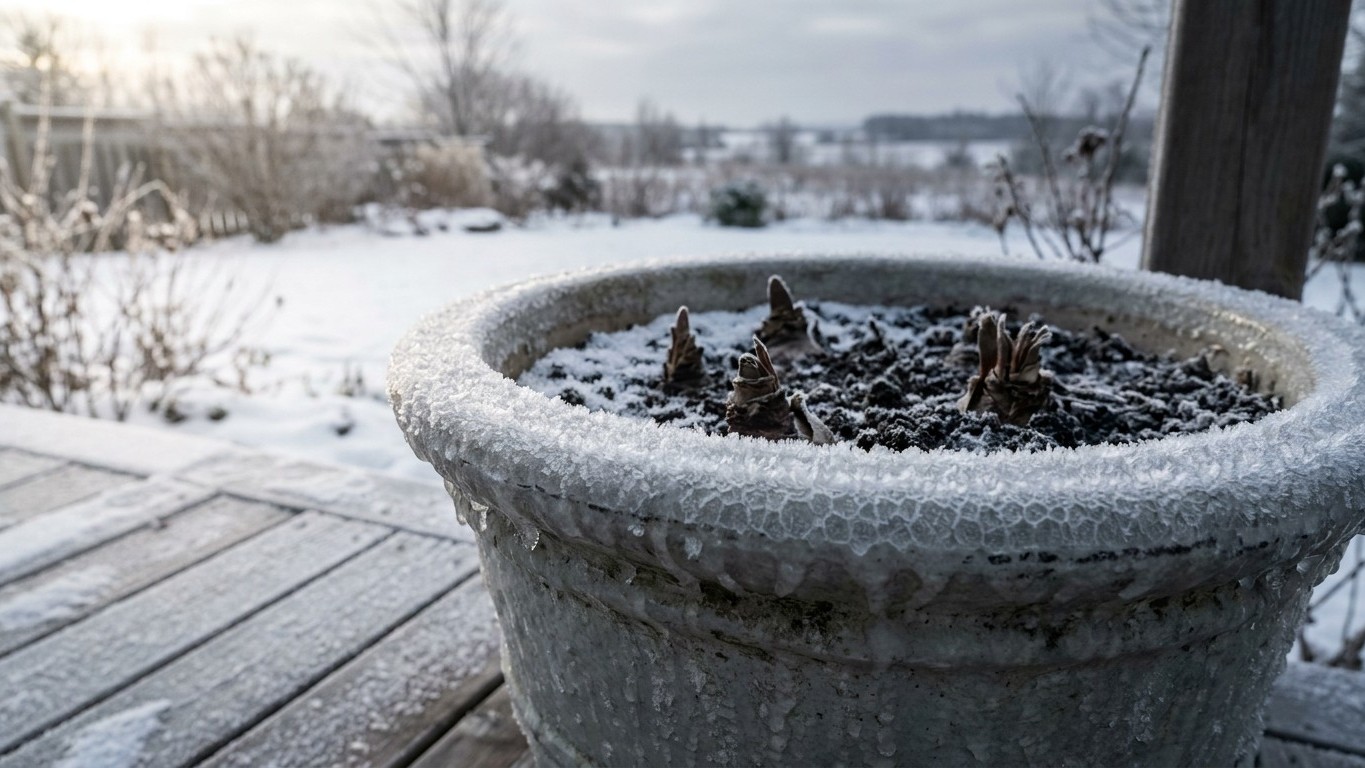

In containers, Ontario’s winter cold isn’t the problem, it’s already deeper and longer than most spring bulbs need. The problem is that a pot freezes solid, roots and all, in a way the open garden never does. That single fact changes almost every decision a container gardener has to make here, from bulb selection to what happens to the pot in January.
Why this matters in Ontario

The coldest month here averages a daily minimum of 13.6°F at the Toronto reference station (ECCC Canadian Climate Normals, 1981-2010). That number matters because it’s nowhere near the 45°F threshold a spring bulb needs to break dormancy. A tulip or daffodil planted straight into the ground gets its twelve to fourteen weeks of chilling without any help, and usually gets it several times over before spring. Forcing, the technique of manufacturing that cold artificially in a fridge or garage, solves a problem this region simply doesn’t have. If you’re growing in a garden bed, you can skip that step entirely.
Containers flip the equation. Natural Resources Canada rates this area at hardiness zone 7a under the Canadian Plant Hardiness system, which is not the same scale as the USDA zones used on plant tags imported from the US. The Canadian system weighs seven climate variables, not one, so a Canadian 7a and a USDA 7a can behave very differently in practice. That distinction matters less for bulbs planted in the ground than for bulbs sitting in a pot above ground, exposed to air on all sides. Garden soil below the frost line stays a few degrees warmer than the air all winter, insulated by the earth around it. A container has no such buffer. Once the sides and bottom of a pot are exposed to a stretch of nights near 13.6°F, the root ball inside freezes through completely, not just at the surface.
That’s why a bulb rated hardy for this zone in a garden bed can still die in a pot the same winter. The bulb isn’t the variable that changed. The soil mass around it did. A gardener growing tulips or daffodils in containers here needs to treat the pot as if it were sitting in a colder zone than the thermometer outside actually says, because in effect, it is.
How to do it here
Growing Spring Bulbs in Containers in this climate comes down to matching the pot’s exposure to the bulb’s actual cold tolerance, then managing drainage so the bulb doesn’t rot before it ever freezes. The sequence below assumes bulbs planted in fall for bloom the following spring, using the ground’s own cold rather than a refrigerator.
- Pick bulbs rated at least two Canadian hardiness zones colder than 7a for anything left outdoors in an unprotected pot. A bulb rated for zone 5 or lower has a real chance of surviving a container winter here; one rated exactly for 7a often does not, because the pot strips away the insulation the ground normally provides.
- Use a pot with a drainage hole no smaller than half an inch, and raise it off the ground on pot feet or bricks so water doesn’t pool underneath and refreeze against the base.
- Plant at the depth recommended for that species in the ground, then add an extra inch of potting mix on top as buffer, since containers lose depth insulation compared to garden beds.
- Group pots together against a wall, in an unheated garage that stays above freezing, or bury the whole container in a garden bed up to its rim. Any of these three reduces the number of surfaces exposed to open air.
- Mulch the surface with four to six inches of straw or shredded leaves once the ground has started to firm up in late fall, and leave it on until the coldest weeks have passed.
- Check the pot after any thaw longer than two or three days. Standing water at the bottom means the drainage hole is blocked, and that has to be cleared before the next freeze traps water against the bulb.
- Move mulch aside gradually as new growth appears at the soil surface, rather than pulling it all off in one day.
None of these steps require special equipment. A garage thermometer and a bag of straw cover most of what’s needed to get a container through a winter with a coldest-month minimum in the mid-teens.
Which bulbs are worth it
Some bulbs tolerate container life in this climate without much fuss. Others sulk, rot, or simply never survive the freeze-through that a pot delivers and a garden bed doesn’t. The difference usually comes down to two things: how much cold the bulb actually needs before it’s satisfied, and how tall and top-heavy the resulting stem gets, since a pot offers less anchoring than open ground.
Bulbs that do well in containers here
- Crocus, thanks to a short cold requirement and a low, stable growth habit
- Grape hyacinth (Muscari), which tolerates container freezing better than most true bulbs
- Species tulips (the smaller wild types, not the tall hybrid tulips), which stay short and don’t topple
- Snowdrops, reliable in cold containers and among the earliest to bloom
- Dwarf daffodils, which combine cold tolerance with a stem short enough to stay upright
Bulbs that tend to disappoint in pots here
- Tall hybrid tulips, which frequently snap or lean once the flower head opens on a container-grown stem
- Hyacinths, sensitive to the uneven freeze-thaw cycle a pot goes through compared to garden soil
- Large trumpet daffodils, prone to toppling in wind without the root anchoring that ground planting provides
Where a bulb is treated as a one-season display anyway, none of this is really a loss. Many gardeners buy tulip bulbs each fall knowing full well they won’t return with the same vigor a second year, container or not. In that case, the risk of a hard freeze killing the bulb costs nothing beyond the price of the bulb itself, since it was a single-season purchase either way.
What goes wrong, and when you can still fix it
Plenty of leaves, no flower
This means the bulb didn’t get enough cold before it started growing. In a container, that usually points to a pot that was moved indoors or against a heated wall too early in the season, cutting the chilling period short. There’s no fix for the current season: the bulb will grow leaves and quietly rebuild its reserves for another year, but it won’t flower now no matter what you do to it.
A flower on a stem too short to see above the pot rim
This is the opposite problem: the bulb was warmed up before it had finished its full cold period, so it rushed into bloom on a stunted stem. It’s not fixable this season either, but the plant usually isn’t damaged long-term. Next fall, leave the pot in its cold spot a few weeks longer before bringing it into warmer conditions.
Soft, rotted bulbs when the pot is dug up
Rot in a container almost always traces back to drainage, not the cold itself. Water pooling at the bottom of the pot froze and thawed repeatedly against the bulb, or the drainage hole was blocked by compacted soil. Once a bulb has gone soft and rotted, it can’t be saved this season or any other. The pot itself can still be reused, but check that the drainage hole is fully clear and consider raising it slightly higher off the ground before planting again.