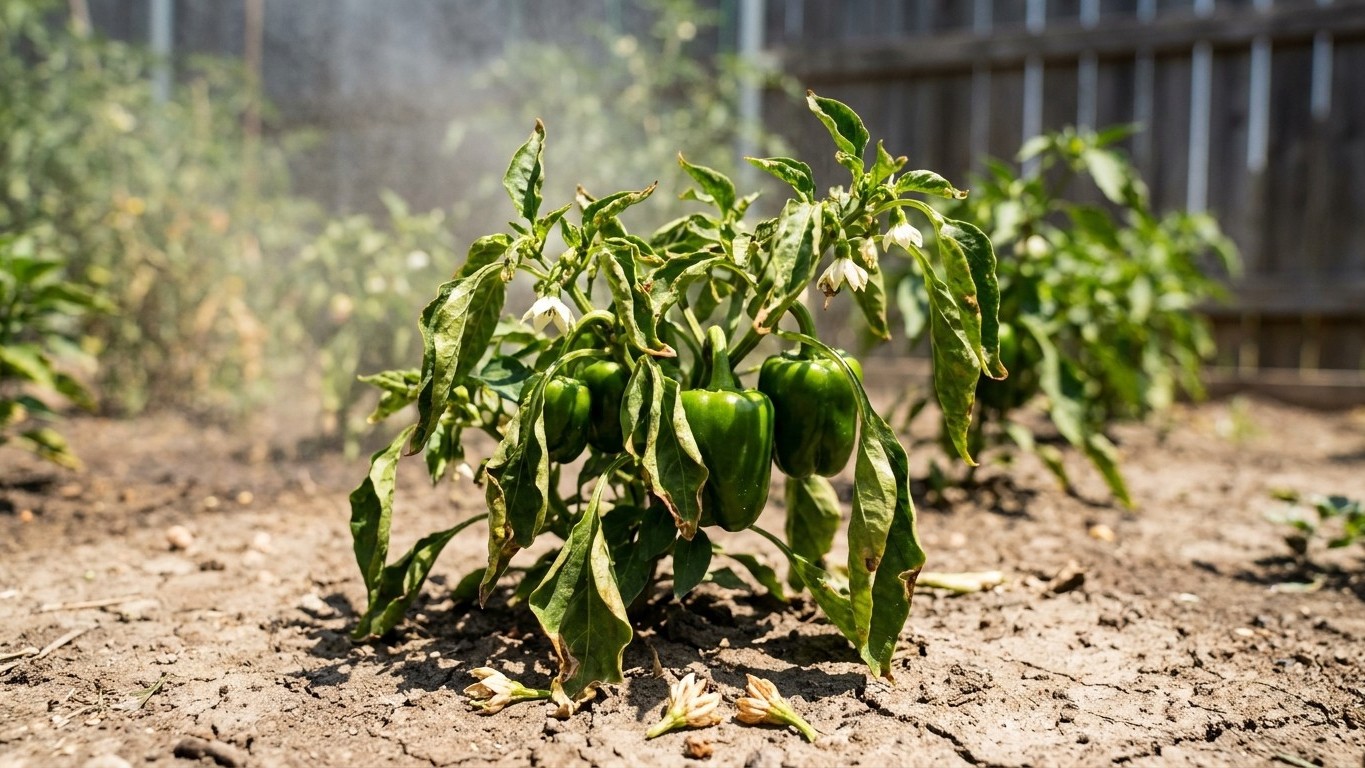

Houston averages 102.4 days a year at or above 90 F, based on NOAA NCEI Climate Normals for 1991-2020. That single number explains more about pepper struggles in this part of Texas than any planting calendar does. On the other end, fruit set also fails when nights drop below 55 F, but this site doesn’t track summer night minimums for any territory, so that half of the equation is on you to watch, county by county, week by week.
The short answer

Pepper plants stop setting fruit when daytime highs push past 90 F for stretches, and with 102.4 such days a year on average around Houston, that’s not a rare event. It’s roughly one out of every 3.5 days across the year, though the real concentration falls in June, July and August, when Gulf humidity and heat combine to shut down pollen viability. Flowers may still open, plants may still look healthy, but the fruit simply doesn’t form. Growers sometimes call this blossom drop, and understanding Why Peppers Fail to Set Fruit in Texas is the single most common question from pepper gardeners in this region.
The flip side gets far less attention, but it’s just as real. Pepper flowers also refuse to set fruit when nighttime temperatures fall below 55 F, according to Utah State University Extension. That threshold matters most in early spring and late fall, the shoulder seasons when a plant looks ready to produce but the calendar hasn’t caught up with warm enough nights yet. The trouble is that this site, and most planting guides in general, publish daytime heat data far more often than nighttime lows. There’s no dataset here for Houston’s typical summer night minimums, and frankly there shouldn’t be one guessed at either.
That gap means a Texas gardener has to do something the almanacs won’t do: track their own nights. A cheap min-max thermometer in the garden bed, checked over a week or two in April and again in September, tells you more about fruit set than any zone map. Nights under 55 F are common enough in early spring in inland Texas that transplanting too early can cost you your first flush of blooms even after the frost risk is gone. Knowing When to Start Pepper Seed in Texas helps align that first transplant with warmer nights, since waiting for warm days without checking warm nights is one of the most common timing mistakes made here.
Put together, that’s the real shape of the Texas pepper problem. It isn’t just heat, and it isn’t just cold. It’s a narrow band in between, roughly nights above 55 F and days below 90 F, and in a state where summer temperatures blow past 90 for a third of the year, that band can be surprisingly short. Growers who track both ends tend to get far more usable harvest weeks than those chasing a single “safe to plant” date, and choosing among Pepper Varieties That Ripen in a Texas Season can make that narrow window far more forgiving.
When to start seed here
Working out a seed-starting date for peppers in Texas means counting backward from two separate conditions that both have to be true at once: the last frost has passed, and the soil has warmed to 60 F. Skipping either one, or guessing instead of checking, is how transplants end up sitting in cold, wet soil doing nothing for three weeks.
- Find your frost window. For the Houston area, NOAA NCEI’s 1991-2020 freeze probability data (station USW00012960 at Bush Intercontinental) puts the last spring frost somewhere between February 4 and March 1. That’s a 30 to 70 percent probability band, not a guaranteed date, and it applies specifically to that station. Hobby Airport, just miles away on the other side of the same metro area, runs about two weeks milder. Texas spans four separate USDA hardiness zones, so a Panhandle or Hill Country gardener is working with an entirely different calendar, sometimes by two months or more in either direction.
- Wait for 60 F soil, not just frost-free air. Air temperature clearing 32 F doesn’t mean the ground has caught up. Soil holds cold longer than air does, so even after the frost date passes, ground temperature can lag a week or two behind. A basic soil thermometer, pushed 2 to 4 inches down, is the only reliable way to confirm this rather than guessing from the calendar.
- Count back 8 to 10 weeks from your transplant date. Utah State University Extension recommends starting pepper seed indoors 8 to 10 weeks before transplanting outdoors. If your soil is projected to hit 60 F in early to mid-March, for instance, that means starting seed indoors sometime in early to mid-January, adjusting within that 8 to 10 week window based on how fast your particular seedlings grow.
- Redo the math for your own county. The Houston window above is just one point on a large state. A gardener in Amarillo or Lubbock is working from a much later last-frost date and colder spring soil, which pushes the entire indoor-seeding schedule later by weeks, sometimes over a month, compared to the Gulf Coast.
None of this accounts for the flowering stage itself. Once transplants are in the ground and start blooming, fruit typically takes another 35 to 45 days to develop, counted from flowering, not from the transplant date and not from when the seed went into soil. That distinction matters for anyone trying to time a harvest around the hottest weeks of summer.
What goes wrong here
- Blossom drop during a hot spell. When daytime highs sit above 90 F for several days running, flowers open and fall without setting fruit. With Houston averaging 102.4 such days a year, this is close to the default summer condition rather than an occasional setback. The remedy is timing production around the heat rather than fighting it: aim for a spring crop that flowers before the hottest stretch sets in, and expect a lull in new fruit set through the peak of summer even on healthy, well-watered plants.
- Blossom drop from a cool night. The same failure shows up at the other end, when nights fall under 55 F, which is more common in early spring and again in fall as temperatures shift. Since this site carries no published summer night-minimum data, the only fix is direct observation: a thermometer left in the garden bed for a week tells you whether your specific yard, which may run cooler than a nearby weather station depending on shade, elevation and wind exposure, is still dipping below that threshold.
- Sunscald on exposed fruit. Texas sun is intense enough that peppers left directly exposed on a thinly-leaved plant can develop pale, papery patches on the side facing the sun. This tends to show up on plants that have lost lower foliage to heat stress or pruning, leaving fruit with no natural shade. Keeping a fuller leaf canopy, or adding light shade cloth during the hottest weeks, protects the fruit without blocking pollination.
- Blossom-end rot. Fruit develops a dark, sunken patch at the base, usually tied to uneven watering rather than a soil nutrient shortage outright. Texas heat speeds up soil drying between waterings, and that inconsistency, wet then dry then wet again, is often the real trigger. Mulching to hold consistent soil moisture and watering on a steady schedule rather than reactively tends to reduce it more reliably than adding calcium products.
Checking this against your own county
Everything above is built from Houston-area station data, and Texas is too large and too climatically varied for one metro area to stand in for the whole state. A grower in El Paso, Lubbock or Tyler is working from different frost dates, different soil warming timelines and a different count of days above 90 F entirely.
The most reliable next step is checking those specifics against Texas A&M AgriLife Extension, which maintains county-level guidance and local agents who can speak to conditions in your specific area rather than a regional average. They’re also the source most likely to have current frost-date and soil-temperature guidance tailored to your county, rather than a single reference station miles or hundreds of miles away.
Common questions
Can peppers recover after a hot spell causes blossom drop?
Yes. Healthy plants typically resume flowering and fruit set once daytime highs drop back under 90 F for a stretch of days. The plant itself usually isn’t damaged, just paused, so there’s rarely a need to replace it.
Does mulch help with the heat as well as the watering issue?
Mulch mainly helps by keeping soil moisture more consistent, which reduces blossom-end rot risk. It can also moderate soil temperature swings, but it won’t change air temperature enough to prevent heat-driven blossom drop on its own.
Is there a published summer night-temperature figure for Texas I should use instead?
Not on this site, and not from any source used in this article. That data point isn’t published here, so the only accurate approach is to measure your own garden’s nighttime lows directly rather than relying on a regional estimate.
Should I start seed indoors earlier just to be safe?
Starting much earlier than the 8 to 10 week window Utah State University Extension recommends usually backfires, producing leggy, stressed seedlings that transplant poorly. It’s more useful to nail down your local 60 F soil date and count back from there than to simply start earlier across the board.